Heavy-Traffic Durability
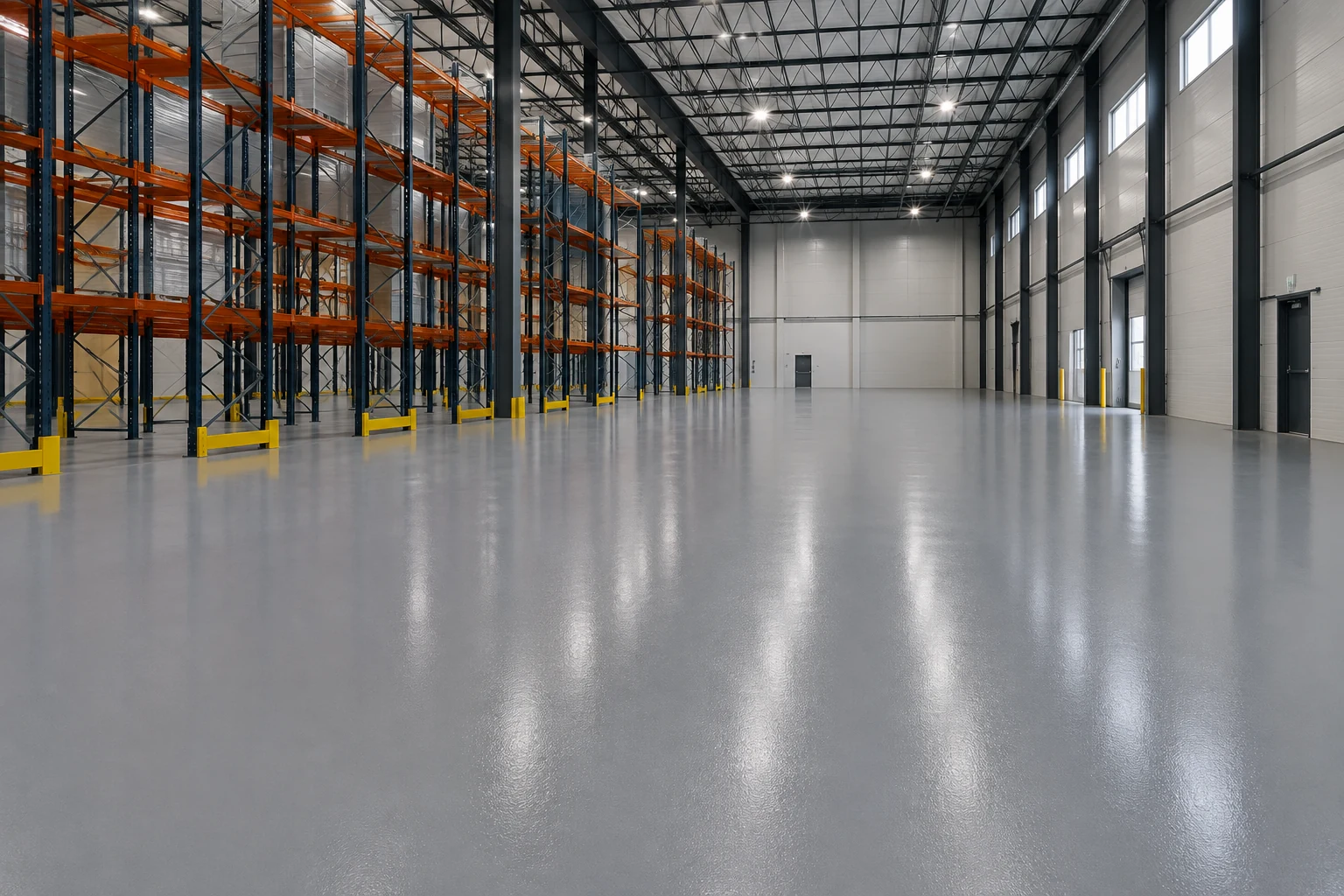
Industrial systems are built for repeated vehicle, cart and foot traffic. The coating build is selected around the use of the facility instead of relying on a thin decorative film.

Industrial · Chilliwack, BC
Industrial floors are working surfaces. Forklifts turn on them, pallets drag across them, chemicals and oils get spilled, and cleaning happens repeatedly. The coating system has to be selected for those real operating conditions rather than for appearance alone.
Drip installs industrial epoxy flooring and high-performance coating systems in Chilliwack and throughout the Fraser Valley. Every project starts with an assessment of the slab, the traffic it carries and the environment it operates in, followed by mechanical diamond grinding so the coating bonds to properly prepared concrete.
Why it lasts
Industrial systems are built for repeated vehicle, cart and foot traffic. The coating build is selected around the use of the facility instead of relying on a thin decorative film.
The right resin system creates a sealed surface that is easier to clean after oils, fluids and common facility spills. Chemical exposure is reviewed before the coating is specified.
Texture can be adjusted for the environment, and a seamless coated floor eliminates much of the dusting and absorption associated with bare concrete.
Diamond grinding removes weak surface material and opens the concrete profile before coating. Repairs are completed before the system is installed, not hidden beneath it.
Industrial Floor Systems
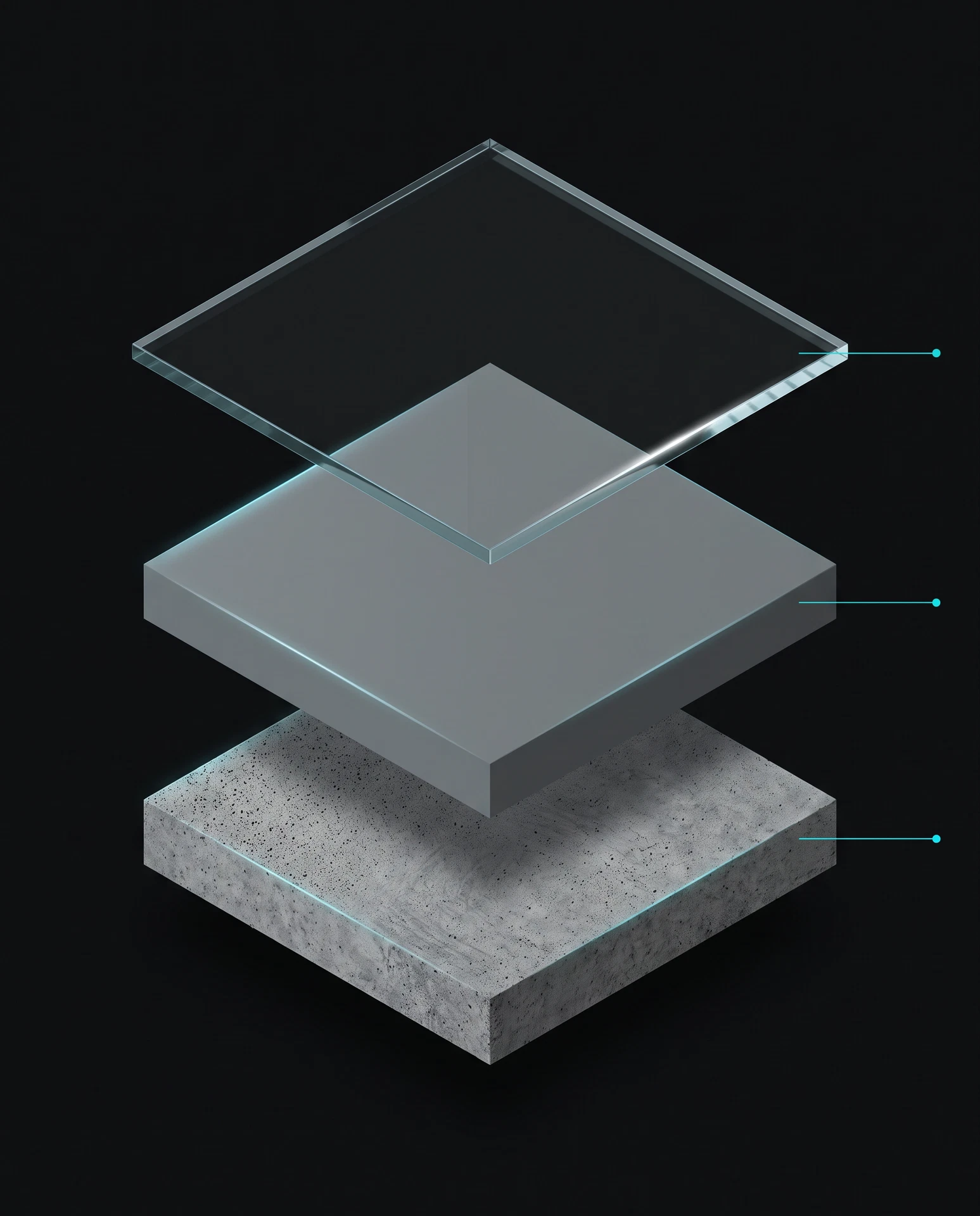
Build-up · top to bottom
A restrained, uninterrupted field of color. The quietest system we install and the most unforgiving — it shows every shortcut in the preparation beneath it.
Warehouses · Garages · Basements · Plant floors
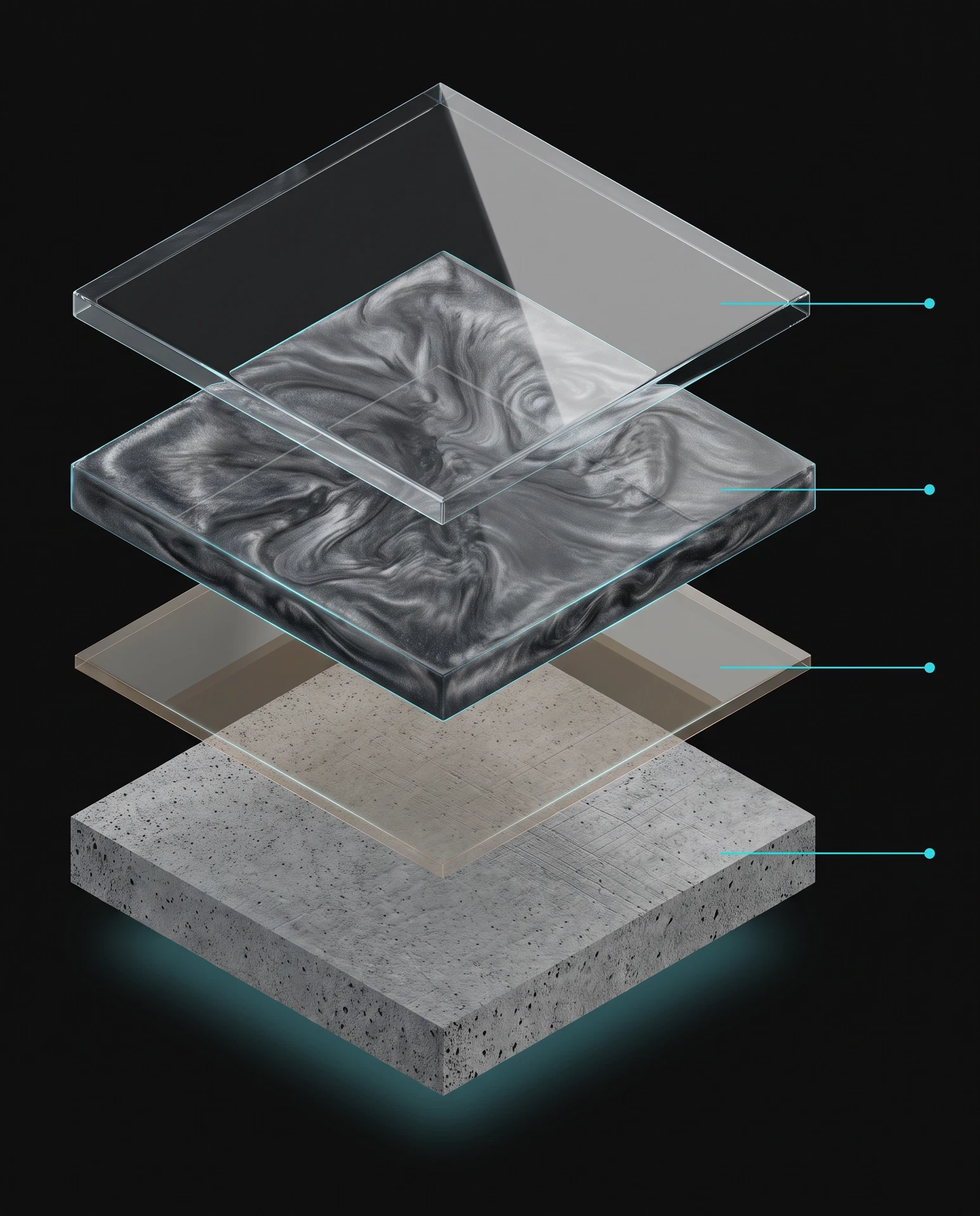
View Solid ColorSolid Color system layers
Read this solid color flooring build from the finished surface down to the prepared concrete.
Clear polyaspartic topcoat
Provides the represented finish layer over the coloured epoxy build.
Why it matters: It separates the visible colour field from the final exposed surface.
Pigmented epoxy resin build layer
Creates the continuous solid-colour field of the system.
Why it matters: This is the layer that gives the floor its uninterrupted colour and visual restraint.
Mechanically prepared concrete substrate
Provides the prepared slab under the resin build.
Why it matters: A solid-colour finish makes the preparation and repair work below especially important.
There is no single industrial epoxy system that is correct for every building. A dry warehouse aisle, an automotive service bay and a food-production area place very different demands on a floor. Traffic type, expected contaminants, cleaning methods, slip-resistance requirements, temperature and downtime all affect the specification.
That is why the first step is understanding how the space actually works. The goal is not to sell the thickest or most complicated system. It is to install the coating build that makes sense for the slab and the operation using it.
Industrial epoxy flooring is well suited to warehouses, manufacturing and production areas, automotive and mechanical shops, storage facilities, commercial kitchens, utility rooms and other concrete spaces that need a cleanable, hard-wearing surface. On a warehouse epoxy floor, forklift routes, racking and storage zones and loading areas are reviewed separately so each part of the facility gets a suitable build.
Different areas inside the same facility may need different finishes. A forklift route may call for a heavier build, while a pedestrian area may prioritize texture and cleanability. Colour can also be used to separate work zones, walkways or designated areas where that is useful to the operation.
Coatings do not correct a poorly prepared slab. We mechanically diamond grind the concrete to remove weak laitance, contamination and old material while creating the surface profile required for adhesion. Cracks, spalls and damaged areas are repaired before coating begins.
Existing coatings require special attention because the new floor can only be as reliable as what it is bonded to. Unsound material is removed rather than buried. Moisture conditions and slab contamination are also considered before the coating system is selected.
Solid-colour epoxy systems are a common choice where durability, cleanability and straightforward maintenance matter most. Quartz and textured systems can add grip and additional wear resistance, while polyaspartic materials are useful where UV stability, fast cure or specific topcoat performance is required.
We will recommend the system based on the facility rather than force every project into the same product. For larger projects, staging and access can be planned around operations to reduce disruption wherever the installation sequence allows it.
Our Installation Process
Four stages, in order, on every project. Nothing optional.
01
We mechanically diamond grind the concrete to remove contaminants and open the surface profile. This is the step that decides whether a floor lasts, and it is never substituted with an acid wash or a chemical etch.
02
Cracks, joints, spalls and surface imperfections are repaired before any coating is installed. Defects left in the slab telegraph through the finish, so they are resolved first.
03
Industrial-grade epoxy and polyaspartic systems are applied to specification — correct primer, correct build thickness, correct recoat window, monitored throughout.
04
Every floor is inspected for consistent coverage, cure and finish before handover, along with the care guidance that keeps it performing.
Common questions
Something not covered here? Call and ask — we would rather answer it before the quote than after.
604-991-8069Request a free quote
Related services
Professional coating systems for retail, service and commercial interiors.
Fast-curing, UV-stable coating options for demanding environments.
Textured decorative systems for garages, shops and lighter-duty spaces.
Residential garage systems built on professional concrete preparation.
Plan a production-support floor around equipment, access and concrete conditions.
Plan warehouse traffic lanes, storage zones and staging before a system is chosen.