Easy to Clean
A sealed, non-porous surface will not absorb oil, brake fluid or road grime. Spills stay on top of the coating instead of soaking into the slab, so cleaning is a broom and a mop rather than a degreaser and a stiff brush.

Residential · Chilliwack, BC
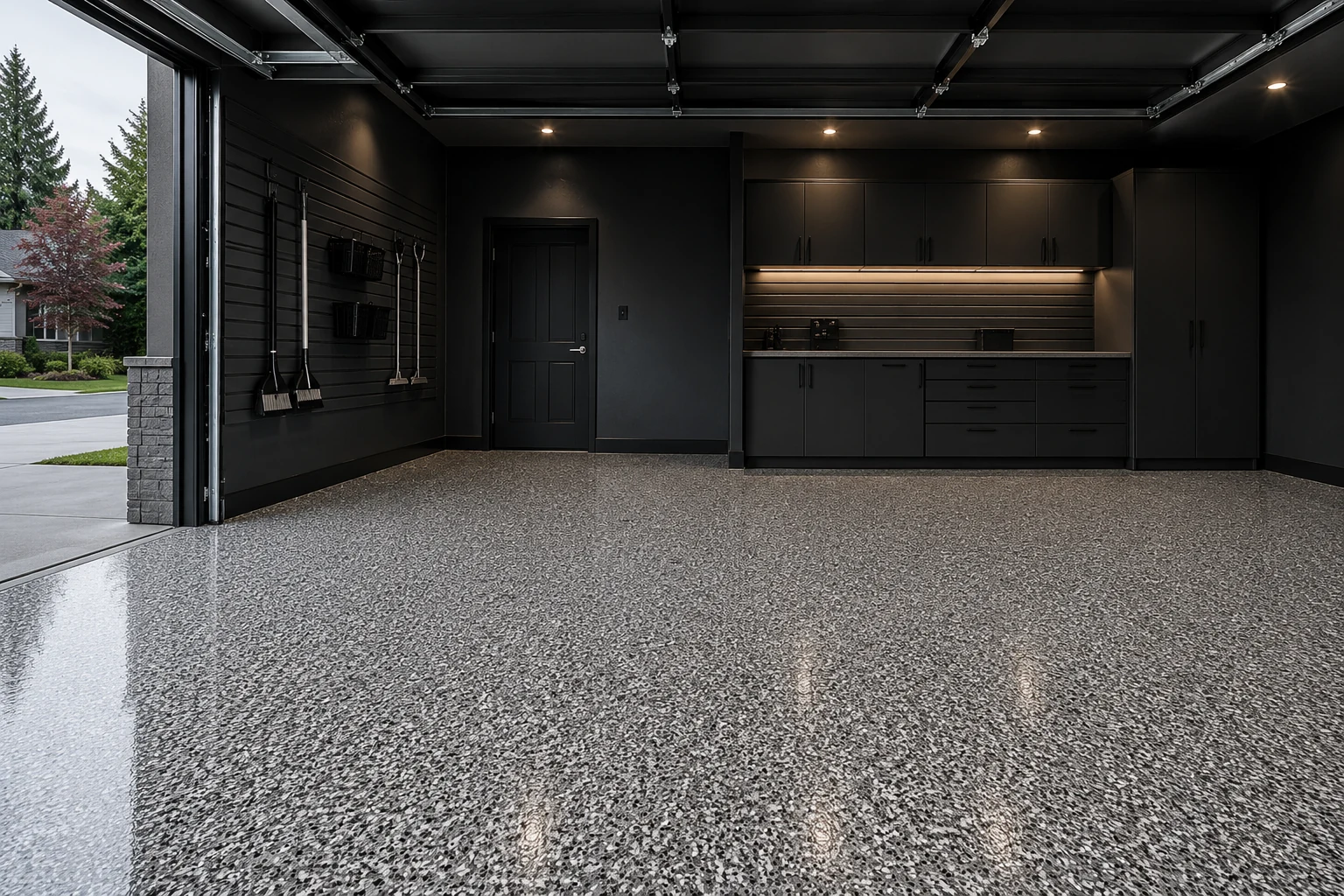
A garage slab takes more abuse than any other floor in a house. Hot tires park on it, road salt drips off it all winter, and dropped tools and spilled fuel land on bare concrete that was never sealed to cope with them. A coating turns that slab into a finished surface you can wipe clean and park on without worry.
We install epoxy and polyaspartic garage floor coatings across Chilliwack and the Fraser Valley. Every floor starts with mechanical diamond grinding rather than an acid wash, because preparation determines whether a coating stays bonded for years or peels in its second winter.
Why it lasts
A sealed, non-porous surface will not absorb oil, brake fluid or road grime. Spills stay on top of the coating instead of soaking into the slab, so cleaning is a broom and a mop rather than a degreaser and a stiff brush.
Tires come off the highway hot and soften whatever they sit on. Thin roll-on kits release and lift in patches at each contact point. A properly bonded epoxy build-up with a polyaspartic topcoat resists that hot tire pickup.
Epoxy on its own ambers where daylight reaches it, which shows up fastest just inside an open garage door. A polyaspartic topcoat holds its colour, and cures fast enough to keep installation on a tight schedule.
We grind the slab with diamond tooling to open the concrete and give the coating a real mechanical key. Acid etching cannot achieve the same profile, and no topcoat compensates for a surface that was never properly prepared.
Garage Floor Systems
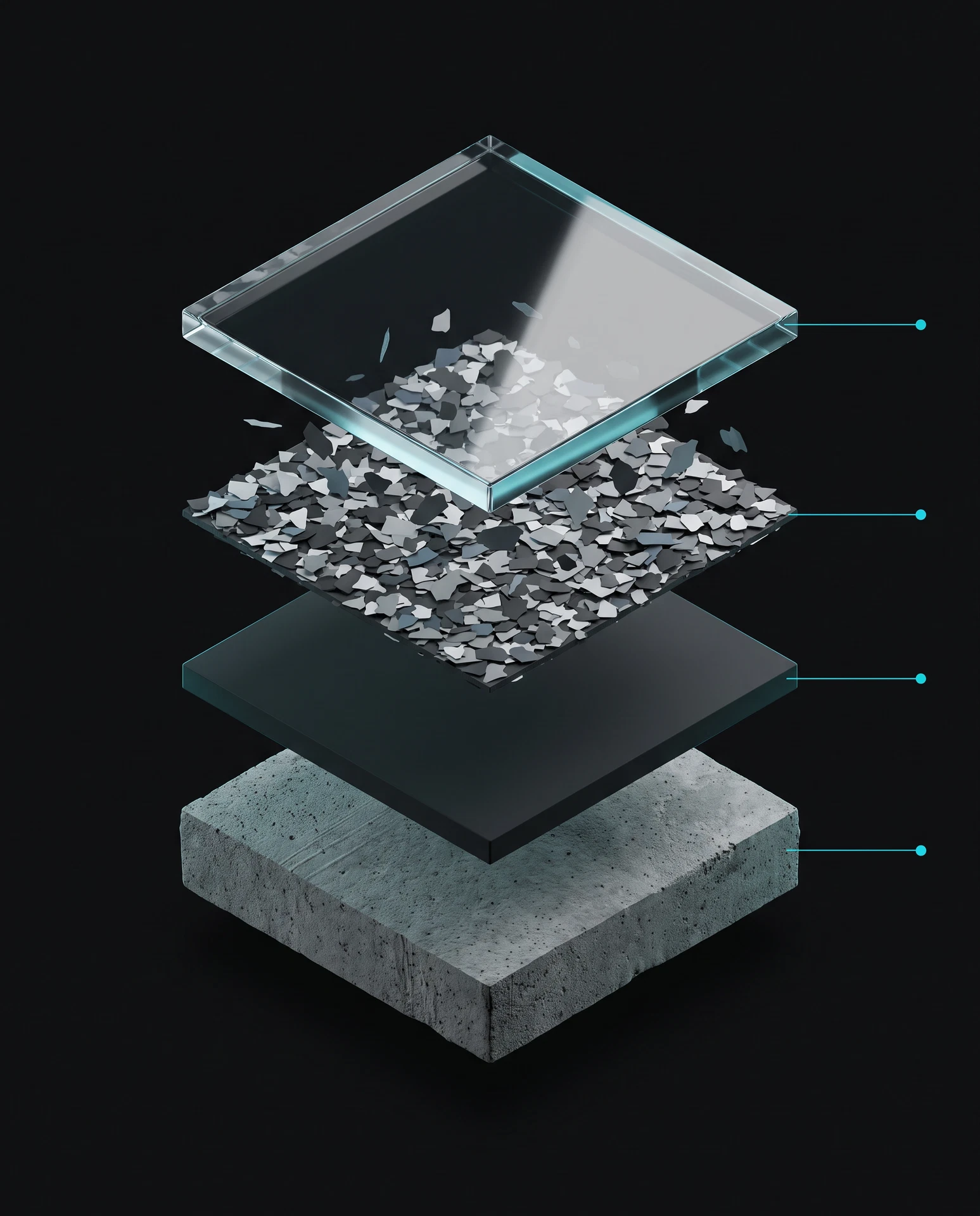
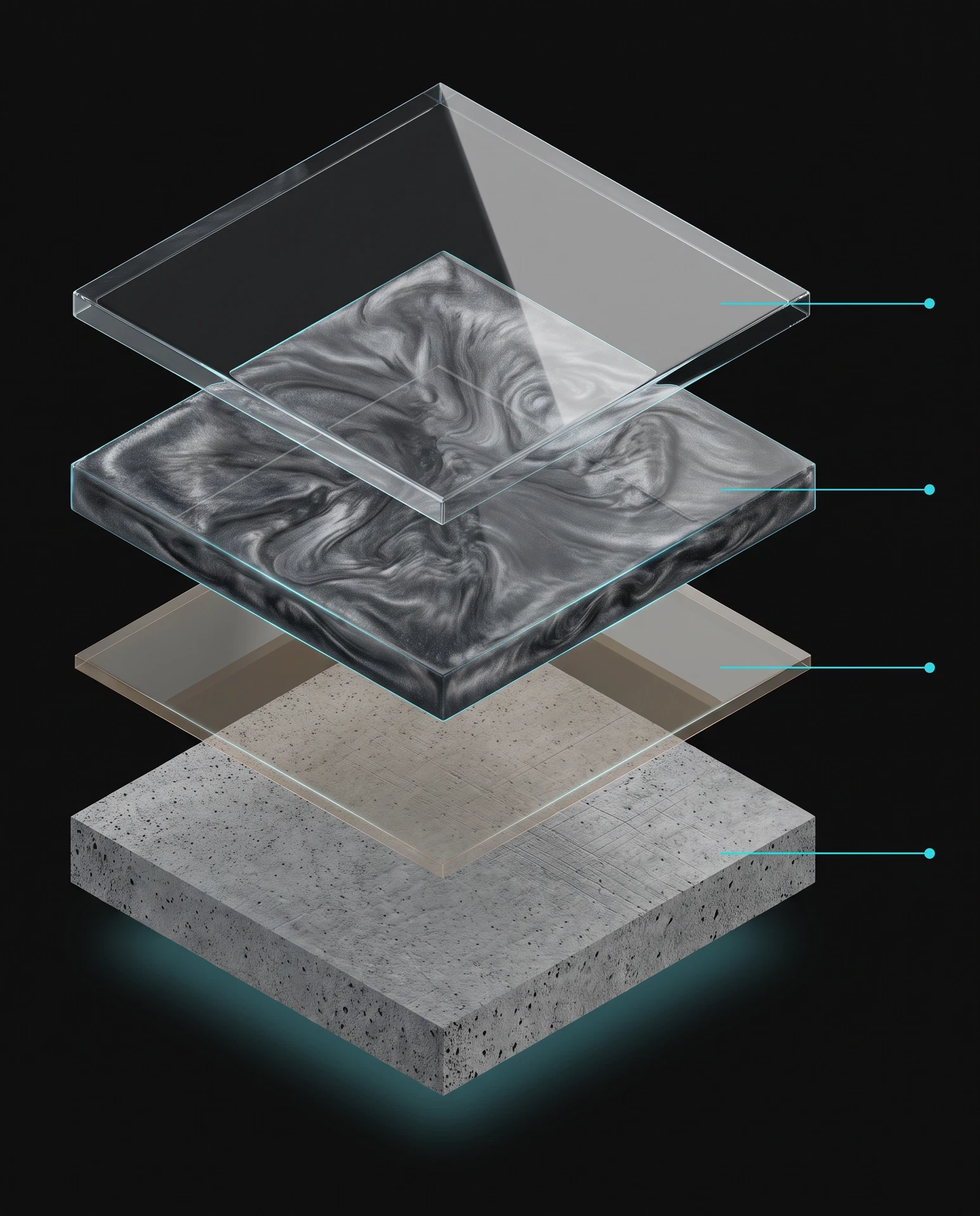
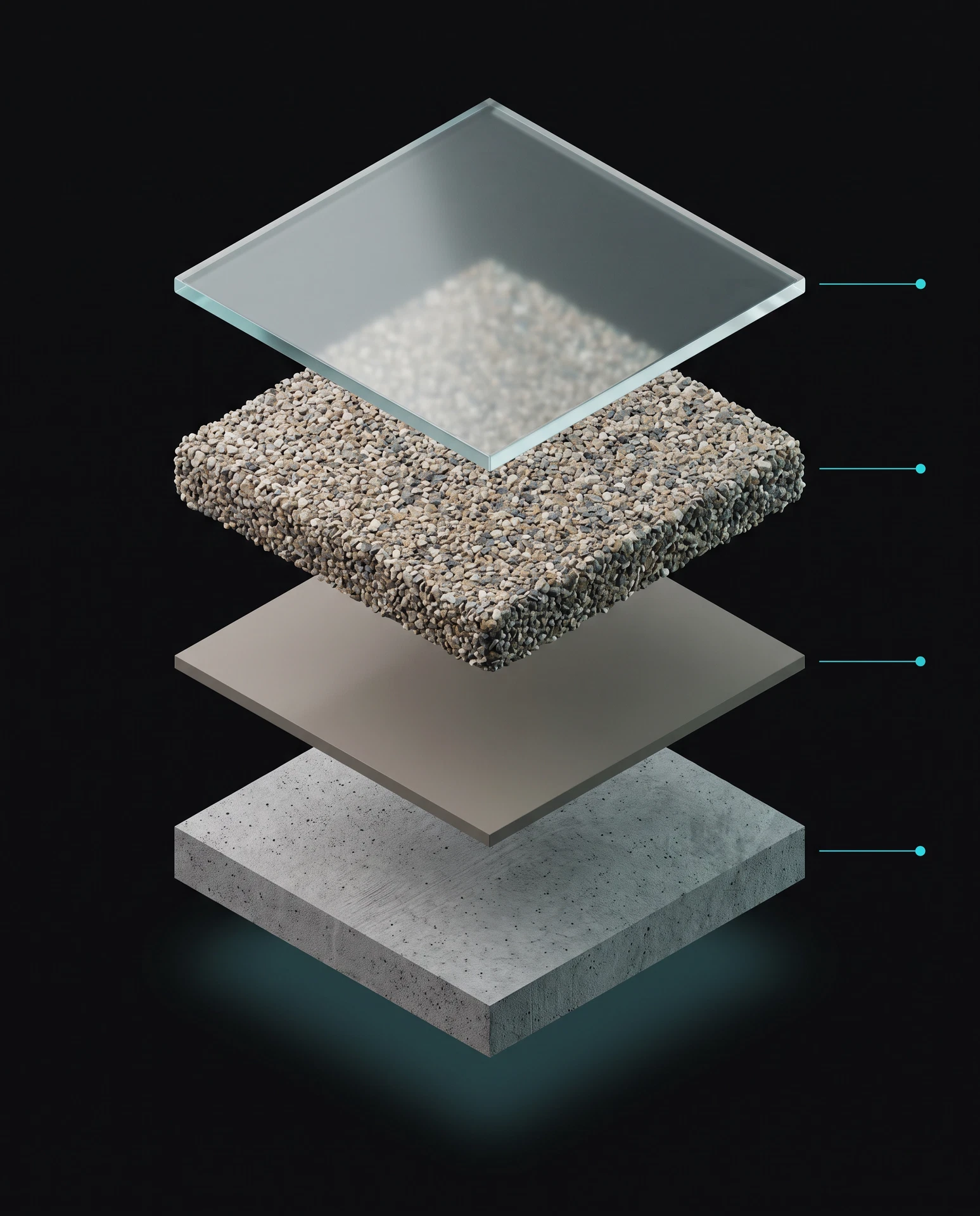
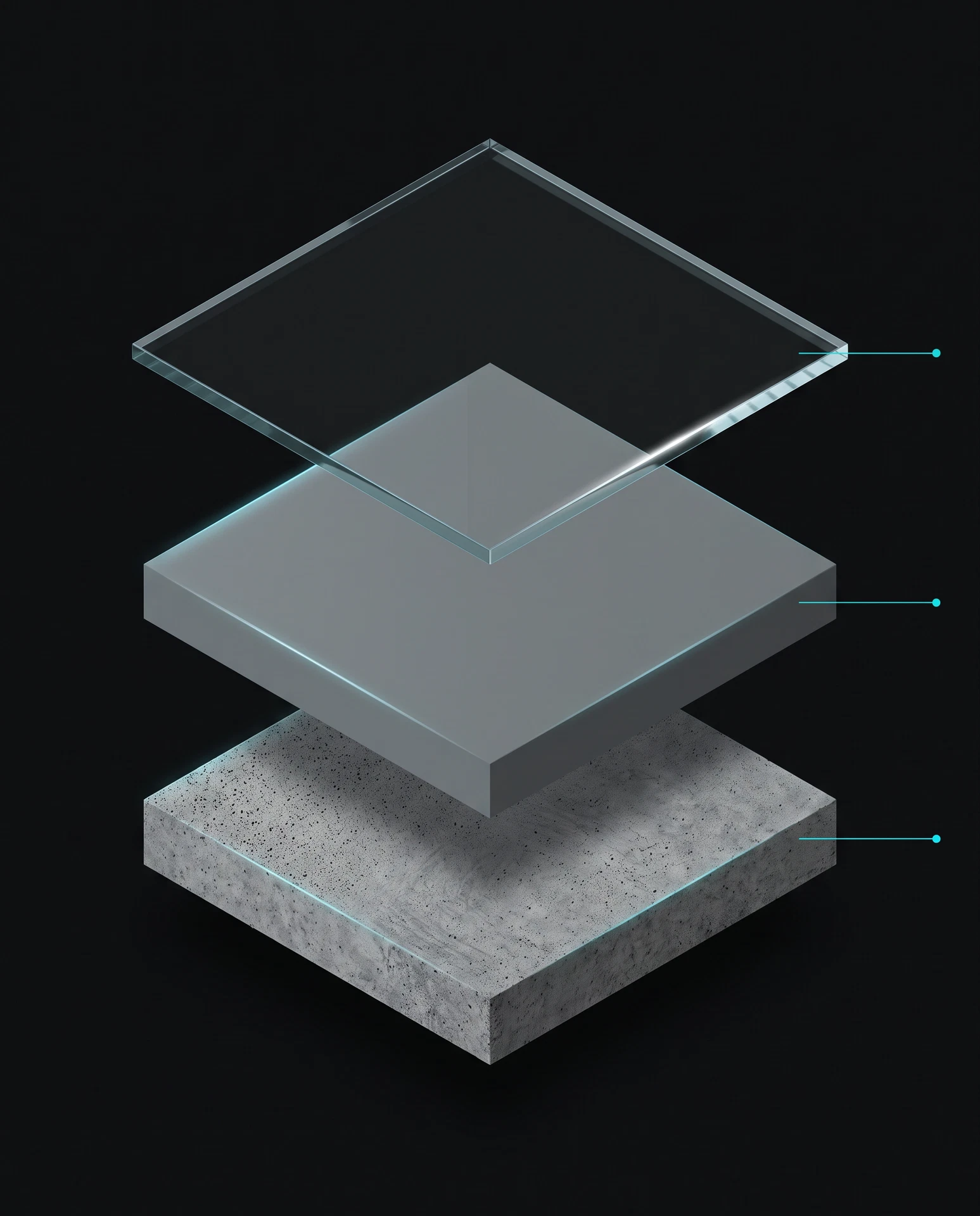
Build-up · top to bottom
Vinyl flake is broadcast to refusal, then ground back and sealed under a UV-stable polyaspartic topcoat. Texture underfoot, traction when wet, and a surface that hides everyday use.
Residential garages · Workshops · Commercial floors
View Decorative FlakeDecorative Flake system layers
Read this decorative flake flooring build from the finished surface down to the prepared concrete.
UV-stable polyaspartic topcoat
Seals the represented flake broadcast beneath the final exposed surface.
Why it matters: It completes the build above the decorative flake layer.
Vinyl flake broadcast
Creates the blend, texture and visual variation associated with a flake floor.
Why it matters: The broadcast provides the system’s selected decorative character rather than a flat colour field.
Pigmented epoxy resin base layer
Provides the resin stage into which the vinyl flake is broadcast.
Why it matters: It connects the decorative broadcast to the prepared concrete below.
Mechanically prepared concrete substrate
Provides the prepared slab under the flake system.
Why it matters: The bond of the full build begins with the prepared concrete surface.
The gap between a weekend garage floor coating kit and a professionally installed system is not the colour or the gloss. It is what happens underneath. A hardware store kit is a thin single coat rolled onto concrete rinsed with acid, measuring a few thousandths of an inch. A professional garage epoxy flooring build-up is several times that thickness, over a slab that has been mechanically ground, with cracks and pitting repaired first.
That difference shows up in year two. Thin coatings fail at the edges, then lift under the tires, and the repair costs more than the original job because the failed material has to be ground off before anything new goes down. Doing it once, properly, is the cheaper path.
A coated slab also changes the rest of the house. Unsealed concrete releases dust continuously, and it travels inside on shoes. Sealing it stops the problem at source.
These two materials get discussed as if you have to choose, but on most garage floors they work together. Epoxy is the body of the system: it builds thickness, bonds tenaciously to prepared concrete and carries the decorative flake or colour. Polyaspartic is the protection. It goes on last, resists abrasion and chemicals, holds its colour under daylight and cures quickly across a wide temperature range.
That last point matters more here than people expect. A polyaspartic garage floor can be installed in cooler conditions where straight epoxy would stall, which keeps shoulder-season projects moving instead of waiting for a warm week. We specify the build-up around the floor in front of us — how the slab tests, how much daylight reaches it, and how long you can be without the garage.
Garage flake flooring is the most common choice in residential garages, for practical reasons rather than appearance alone. Flake is broadcast into the wet base coat and then sealed, producing a lightly textured surface with more grip underfoot than smooth gloss. Wet boots and a slick floor are a poor combination in a Chilliwack winter.
That texture also hides everyday reality. Tire marks, dust and the small imperfections in any slab disappear into a flake pattern where a flat colour would show every one. Coved edges are worth asking about too: turning the coating a few inches up the wall removes the seam at floor level where water and grime collect.
You will need the garage empty and you will need to stay off the floor while it cures. Beyond that, a straightforward residential garage floor coating is not a long disruption. Grinding produces the dust and noise, and it is contained with vacuum extraction rather than left to settle over your belongings.
Once the slab is ground we deal with what the grinding reveals: cracks cut out and filled, spalled areas patched, control joints treated as moving joints rather than coated over. Only then does coating start — base coat, flake broadcast where the system calls for it, then topcoat. We walk the finished floor with you and tell you when it is ready for foot traffic and when it is ready for a vehicle. Those are two different dates.
Our Installation Process
Four stages, in order, on every project. Nothing optional.
01
We mechanically diamond grind the concrete to remove contaminants and open the surface profile. This is the step that decides whether a floor lasts, and it is never substituted with an acid wash or a chemical etch.
02
Cracks, joints, spalls and surface imperfections are repaired before any coating is installed. Defects left in the slab telegraph through the finish, so they are resolved first.
03
Industrial-grade epoxy and polyaspartic systems are applied to specification — correct primer, correct build thickness, correct recoat window, monitored throughout.
04
Every floor is inspected for consistent coverage, cure and finish before handover, along with the care guidance that keeps it performing.
Common questions
Something not covered here? Call and ask — we would rather answer it before the quote than after.
604-991-8069Request a free quote
Related services
The textured flake finish most residential garages use.
Coatings specified for retail, hospitality and healthcare floors.
Heavier build-ups for warehouse and production floors.
Fast-curing, UV-stable topcoats and full polyaspartic builds.