seamless commercial floor systems · 13 min read ·
Seamless Commercial Flooring Guide for BC Businesses
A floor is only as strong as its weakest joint. In a high-traffic BC commercial environment, those joints are often where your investment begins to fail, leading to costly repairs and hygiene concerns. You’ve likely deal
By Drip Epoxy Flooring · Chilliwack, BC

A floor is only as strong as its weakest joint. In a high-traffic BC commercial environment, those joints are often where your investment begins to fail, leading to costly repairs and hygiene concerns. You’ve likely dealt with the frustration of cracked grout lines, peeling edges from a previous budget coating, or the endless scrub cycles required to meet strict health and safety standards in the food or medical sectors. It’s exhausting to manage a surface that seems to fight against your operational efficiency every single day.
Choosing the right seamless commercial floor systems can eliminate these maintenance headaches by creating a zero-vulnerability environment for your facility. This guide details how industrial-grade resinous flooring, including quartz and metallic systems, provides a decade of durability while maintaining a professional aesthetic that aligns with your brand. We will examine the technical precision of diamond grinding preparation, the necessity of moisture mitigation in our coastal climate, and how these high-performance surfaces deliver a safe, slip-resistant foundation for both employees and customers alike.
Key Takeaways
- Understand how poured-in-place resinous systems create a permanent structural bond with concrete to eliminate the hygiene risks and repair costs associated with grout lines and seams.
- Learn to select the ideal seamless commercial floor systems by matching specific resin chemistries, such as quartz or metallic finishes, to your facility's unique traffic and chemical exposure needs.
- Discover why addressing moisture vapour transmission is critical for BC businesses to prevent the bubbling and delamination common in lower-quality topical coatings.
- Explore the concept of "industrial luxury" to achieve a high-end aesthetic that represents your brand while maintaining the resilience of heavy-duty infrastructure.
- Identify why meticulous concrete preparation through diamond grinding is the essential foundation for ensuring your commercial flooring investment lasts for ten years or more.
Table of Contents
What are Seamless Commercial Floor Systems?
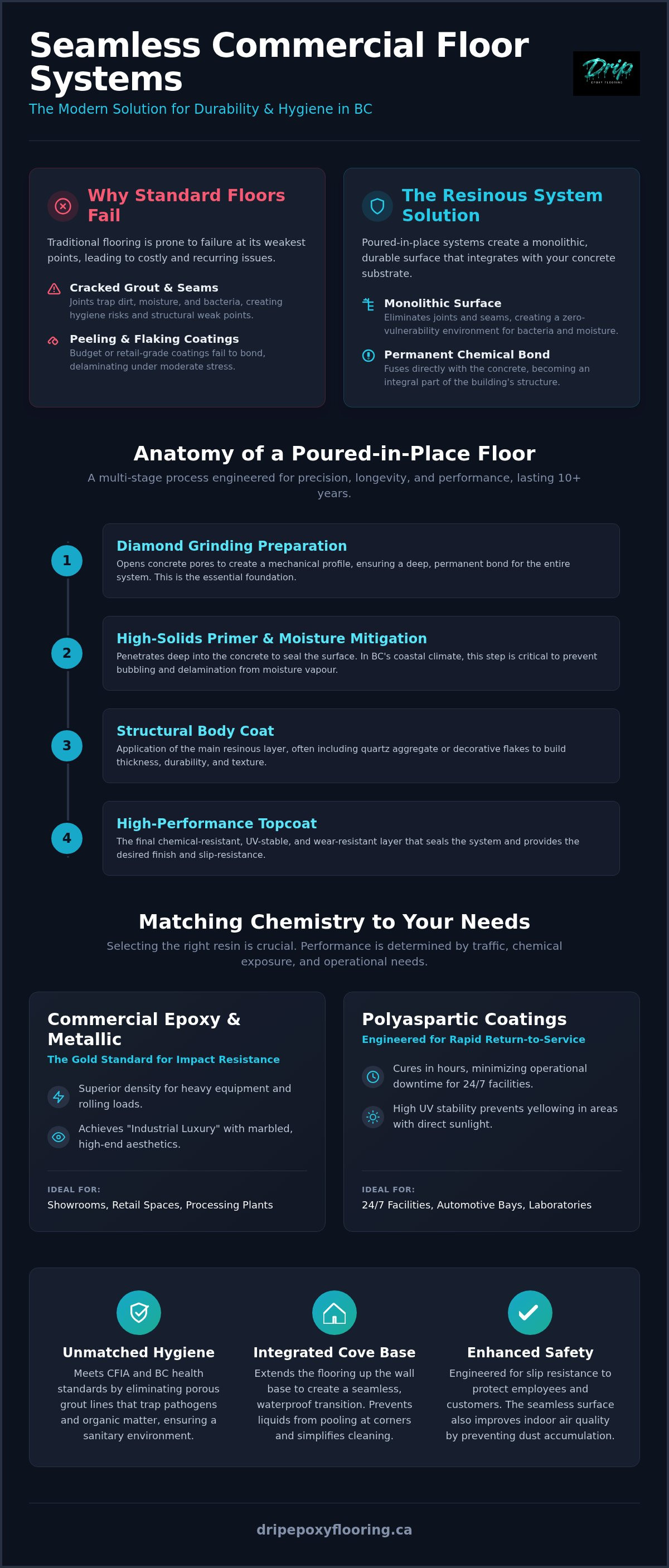
Poured-in-place resinous systems represent the pinnacle of industrial flooring technology. Unlike traditional tiles or vinyl planks that rely on mechanical fasteners or topical adhesives, seamless commercial floor systems are engineered to fuse directly with the concrete substrate. This chemical bond creates a monolithic surface that acts as an integral extension of the building's structure rather than a superficial covering. It's essential to distinguish these architectural-grade resins from standard retail coatings. While retail products often peel or flake under moderate stress, a professional resinous flooring system is designed for high-performance longevity and structural integration.
The Anatomy of a Poured-in-Place Floor
The installation of a seamless system is a methodical, multi-stage process that prioritizes precision. It begins with professional diamond grinding to open the concrete pores, followed by a high-solids primer that penetrates deep into the surface. Subsequent layers, such as quartz or decorative flakes, provide structural thickness and slip resistance before a final, high-performance topcoat seals the entire system. By eliminating joints and ridges, these floors remove the primary points of failure where water seepage and bacterial colonies typically thrive. The result is a continuous, fluid surface that offers a clean, sophisticated aesthetic while providing the durability of heavy-duty infrastructure.
Hygienic and Safety Standards in BC
In sectors like food processing and medical care, meeting Canadian Food Inspection Agency (CFIA) and local BC health board requirements is non-negotiable. Seamless surfaces are the gold standard for these environments because they lack the porous grout lines that trap organic matter and pathogens. Beyond sanitation, these systems contribute to better indoor air quality by preventing the accumulation of dust and allergens within floor cracks. To achieve maximum protection, we often recommend integrated cove pulsing for wall-to-floor protection. This technique extends the flooring material up the wall base, creating a waterproof, easy-to-sanitize transition that prevents liquids from pooling at the wall-to-floor interface. This ensures your facility remains compliant with the most rigorous safety protocols while maintaining a professional, high-end appearance.
The Chemistry of Durability: Common Seamless Materials
Resinous flooring isn't a single product; it's a category of advanced chemistries engineered for specific performance outcomes. In the 2026 market, these systems have evolved to offer sophisticated performance profiles that previous generations of coatings simply couldn't match. Selecting the right seamless commercial floor systems requires a meticulous assessment of your facility's traffic volume, chemical exposure, and thermal shock potential. A showroom requires a different chemical backbone than a heavy-duty processing plant. One size doesn't fit all. Precision in material selection is what separates a floor that lasts three years from one that serves your business for a decade.
Commercial Epoxy and Metallic Systems
High-build epoxy remains the gold standard for superior impact resistance and self-levelling properties. It creates a dense, non-porous surface that withstands the constant movement of heavy equipment and rolling loads. For retail environments and professional showrooms, metallic epoxy flooring provides a unique combination of "industrial luxury." It delivers the resilience of heavy-duty infrastructure while offering a high-end, marbled aesthetic that represents your brand's quality. We provide a detailed breakdown of these high-performance aesthetics in our guide to luxury finishes.
Polyaspartic Coatings for Rapid Return-to-Service
For 24/7 facilities in Abbotsford, operational downtime is often the most significant cost of a renovation. Polyaspartic coatings address this by offering a rapid return-to-service, with many systems ready for foot traffic in just a few hours. These materials are also prized for their UV stability, ensuring the floor doesn't yellow or degrade when exposed to direct sunlight through large commercial windows. Their chemical resistance profile is equally impressive, making them a reliable choice for automotive bays or laboratories. For more information on these fast-curing resins, you can reference our Abbotsford Polyaspartic Buyer's Guide.
Quartz and Decorative Flake Systems
When mechanical durability and safety are the primary objectives, quartz and decorative flake systems are the preferred solutions. The mechanical durability of quartz flooring in Langley industrial facilities is a result of the multi-layer broadcast method. This process involves embedding coloured quartz grains into the resin, creating a surface that is both incredibly hard and naturally slip-resistant. In wet environments like commercial kitchens or wash-down bays, this texture is vital for employee safety. Decorative flakes offer a similar benefit by hiding existing concrete imperfections and providing a varied, professional colour palette. Choosing the correct seamless commercial floor systems ensures your workspace remains safe and functional for years to come. If you're evaluating which material chemistry best suits your specific operational environment, contact our team for a technical consultation.
Why Standard Commercial Floors Fail
Most commercial flooring failures originate at the seams. Traditional materials like tile, vinyl planks, or linoleum rely on joints that act as inherent structural vulnerabilities. Under the constant pressure of heavy rolling loads, such as pallet jacks or delivery carts, these edges frequently chip, lift, or crack. Once the seal is compromised, moisture and contaminants penetrate the substrate, leading to a cycle of expensive repairs and hygiene risks. Choosing seamless commercial floor systems eliminates these weak points by providing a continuous surface that distributes weight evenly across the entire slab. This structural integrity is something that generic "floor paint" or low-grade DIY kits simply cannot provide, as they lack the high-solids chemistry required to bond permanently with industrial concrete.
Addressing the BC Climate and Moisture
The Fraser Valley's damp climate presents a specific challenge known as moisture vapour transmission. In areas like Chilliwack and Surrey, high water tables and frequent precipitation mean that concrete slabs often retain significant internal moisture. Without a professional-grade moisture vapour barrier, this hydrostatic pressure pushes upward through the concrete. Standard coatings aren't breathable or resilient enough to withstand this force, resulting in unsightly bubbling, osmotic blistering, and eventually, total delamination. Professional moisture testing is the first step in our installation process. It ensures the resinous system is calibrated to handle the specific environmental conditions of your facility, preventing the premature failure common in "cheap" or improperly prepared jobs.
Mechanical Stress and Impact Failure
Industrial environments subject floors to extreme mechanical stress that would destroy residential or light-commercial finishes. When a forklift or heavy piece of machinery moves across a floor, it exerts immense point-load pressure. Standard surfaces often fail because their bond strength is lower than the internal strength of the concrete itself. High-performance seamless commercial floor systems are engineered to achieve a "concrete-breaking" bond. This means the resin becomes so deeply integrated into the diamond-ground pores of the substrate that the two materials function as one. For businesses operating in high-output sectors, understanding these requirements is vital. You can find more details on managing these stresses in our resource on heavy duty industrial flooring in Langley. Investing in this level of adhesion prevents the cracking and peeling that forces many BC businesses to replace their floors every few years.
Tailoring Seamless Solutions to BC Industries
Effective commercial flooring isn't just about durability; it's about matching the material's specific performance profile to the operational demands of your industry. Each sector has unique needs. For BC property managers, the return on investment for seamless commercial floor systems is realized through significantly reduced lifecycle costs and the preservation of the building's concrete asset. By selecting a system tailored to your specific sector, you ensure that your facility remains compliant with safety regulations while projecting a professional image that aligns with your brand.
Retail, Showrooms, and Hospitality
In high-traffic retail centres across Burnaby and Coquitlam, the floor is a critical component of the customer experience. Creating a "wow" factor often involves using high-gloss epoxy floor samples to select a finish that complements your interior design. These systems offer the "industrial luxury" needed to withstand constant foot traffic without the wear patterns common in carpet or laminate. We carefully balance this aesthetic appeal with slip-resistance additives to ensure public safety, providing a surface that's as safe as it is visually striking.
Warehousing, Logistics, and Manufacturing
Large-scale logistics facilities require surfaces that prioritize efficiency and safety. Seamless resinous systems are essential for dust-proofing. This prevents concrete "chalking" from contaminating inventory and sensitive machinery. Additionally, high-gloss finishes improve light reflectivity. This can lead to lower energy costs by maximizing the effectiveness of overhead lighting in expansive warehouses. We also integrate safety markings, such as pedestrian walkways and forklift zones, directly into the resin layers. This ensures that safety protocols aren't just painted on the surface but are a permanent part of the floor's structure.
Healthcare and Food Processing
Facilities in the medical and food sectors must adhere to the most stringent sanitization protocols in the province. The non-porous nature of seamless commercial floor systems provides inherent antimicrobial properties by eliminating the cracks where pathogens hide. For commercial kitchens and walk-in freezers, we utilize systems with high thermal shock resistance. These materials can withstand the rapid temperature changes caused by hot water wash-downs or industrial cooking processes without cracking or losing their bond. If you're ready to upgrade your facility with a system designed for your specific industry, contact our technical team to discuss your project requirements.
The Drip Approach: Professional Installation in the Fraser Valley
The ultimate performance of seamless commercial floor systems is determined long before the first litre of resin is poured. While the chemical composition of the materials is vital, the execution of the installation determines whether a floor lasts three years or twenty. At Drip Epoxy Flooring, we approach every project with the precision of a craftsman combined with the technical rigour of an industrial engineer. Our process focuses on creating a permanent, unbreakable bond between the concrete and the resin, ensuring your investment remains a durable asset for your business.
Diamond Grinding: The Critical First Step
Mechanical preparation is the foundation of a successful installation. We never utilise acid etching for commercial projects. This outdated method is common in DIY kits but lacks the depth required to create a reliable bond for industrial-grade systems. Instead, we use professional planetary diamond grinders to remove laitance, old contaminants, and failed coatings. This process achieves the specific Concrete Surface Profile (CSP) required for the resin to penetrate the substrate's pores. By mechanically opening the concrete, we ensure that the primer layer fuses with the slab rather than just sitting on top of it. This meticulous attention to detail prevents the peeling and delamination often seen in lower-quality applications.
Once the surface is prepared, we apply high-performance topcoats that are calibrated to your specific environment. These final layers provide the necessary UV stability, chemical resistance, and slip-resistant texture. The result is a monolithic surface that handles the daily rigours of your operations while maintaining its "industrial luxury" finish. This methodical layering process is what allows our floors to withstand the heavy rolling loads and moisture challenges unique to the BC climate.
Partnering with a Local Chilliwack Specialist
Working with a locally owned and operated contractor provides a level of accountability and regional expertise that national franchises often lack. We understand the specific nuances of Fraser Valley concrete, from the high water tables in Chilliwack to the humidity challenges in Abbotsford and Langley. Our team services the entire Lower Mainland, from Hope to Burnaby, bringing specialised equipment and deep technical knowledge to every job site. We prioritise clear communication and a logically structured workflow to minimise your operational downtime. If you're ready to secure your facility with a high-performance foundation, the next step is to contact Drip Epoxy Flooring for a comprehensive site assessment and technical consultation.
Securing Your Facility's Future Foundation
Investing in seamless commercial floor systems is a strategic decision that prioritizes long-term operational efficiency over temporary fixes. By eliminating the structural vulnerabilities of joints and seams, you protect your concrete substrate from the moisture challenges inherent to the Fraser Valley climate. Whether you require the high-end aesthetic of metallic epoxy or the mechanical resilience of quartz, the success of your project rests on professional diamond grinding and technical material selection. Drip Epoxy Flooring specializes in delivering these industrial-grade solutions to businesses from Chilliwack to Burnaby, ensuring every installation meets the highest standards of safety and durability.
A floor should be an asset that supports your brand and simplifies your maintenance routine for years to come. It's about more than just aesthetics; it's about a surface that performs under pressure. Our team is ready to help you navigate the technical requirements of your specific industry to achieve a result that combines industrial luxury with uncompromising performance. Take the first step toward a zero-vulnerability environment today.
Request a Free Site Assessment and Quote to discuss your project with our local specialists.
Frequently Asked Questions
How long do seamless commercial floor systems typically last?
A professionally installed system typically lasts 10 to 15 years in a high-traffic commercial environment. This longevity is achieved through meticulous diamond grinding and the chemical fusion of the resin with the concrete substrate. Unlike topical coatings that peel, these systems are engineered to withstand heavy rolling loads. Regular maintenance with non-abrasive tools ensures the surface retains its structural integrity and professional aesthetic for over a decade.
Are seamless floors more expensive than polished concrete?
While the initial investment for seamless commercial floor systems may be higher than basic polished concrete, they offer superior protection in demanding environments. Resinous systems provide a non-porous barrier against chemical spills and moisture, which polished concrete cannot match. For facilities requiring high hygiene standards or chemical resistance, the long-term value is realized through significantly lower maintenance costs and the prevention of substrate degradation.
How much downtime should I expect during a seamless floor installation?
A standard commercial installation typically requires three to five days to complete the multi-layer application process. This timeline accounts for essential steps including diamond grinding, priming, base coats, and the application of high-performance topcoats. If your facility requires a faster return-to-service, we often recommend polyaspartic systems. These advanced resins cure much faster than traditional epoxy, allowing for foot traffic within hours in specific configurations.
Can seamless flooring be installed over existing tile or cracked concrete?
Professional installation requires a clean, porous concrete substrate for a permanent bond. While it's technically possible to coat over tile, we generally recommend removing existing flooring and grinding the concrete to achieve a proper surface profile. Cracked concrete must be repaired using specialized resinous fillers before the main system is applied. This ensures the finished floor is structurally sound and prevents existing cracks from telegraphing through the surface.
What is the best way to clean and maintain a seamless resinous floor?
Maintenance is remarkably simple because there are no grout lines or seams to trap debris. Daily cleaning typically involves sweeping or using a dust mop followed by a wet mop with a pH-neutral cleaner. For larger industrial spaces, automatic floor scrubbers with soft brushes are highly effective. Avoiding harsh abrasive chemicals and metallic scrapers will preserve the high-performance topcoat and maintain the floor's slip-resistant properties and professional lustre.
Are these floor systems slip-resistant when wet?
Yes, we customize the slip-resistance level of every installation to meet specific safety requirements. By broadcasting aggregates such as quartz or decorative flakes into the resin layers, we create a textured surface that provides excellent traction even in wet conditions. This is a critical safety feature for commercial kitchens and public entryways across the Fraser Valley, ensuring your facility remains compliant with local health and safety regulations.
What is the difference between epoxy and polyaspartic for a commercial space?
Epoxy is prized for its high-build thickness and exceptional impact resistance, making it ideal for heavy manufacturing and warehousing. Polyaspartic coatings offer superior UV stability and a much faster curing time, which is essential for 24/7 facilities. Often, we utilize a hybrid approach, using epoxy for its structural bond and a polyaspartic topcoat for its chemical resilience and rapid return-to-service, providing the benefits of both advanced chemistries.
Do you provide commercial flooring services in Abbotsford and Langley?
We provide comprehensive installation of seamless commercial floor systems throughout the entire Lower Mainland, including Abbotsford, Langley, and Chilliwack. As a locally owned specialist based in the Fraser Valley, we understand the specific environmental challenges of the BC climate. Our team is equipped to handle projects of all scales, from boutique retail showrooms to large-scale industrial warehouses, ensuring every client receives meticulous attention to detail.