veterinary clinic floor coatings bc · 14 min read ·
Veterinary Clinic Floor Coatings in BC: A Clinical Reference Guide
In a high-traffic animal hospital, the floor isn't just a surface; it's a critical clinical instrument that directly impacts patient outcomes and operational safety. You likely understand the frustration of porous grout
By Drip Epoxy Flooring · Chilliwack, BC
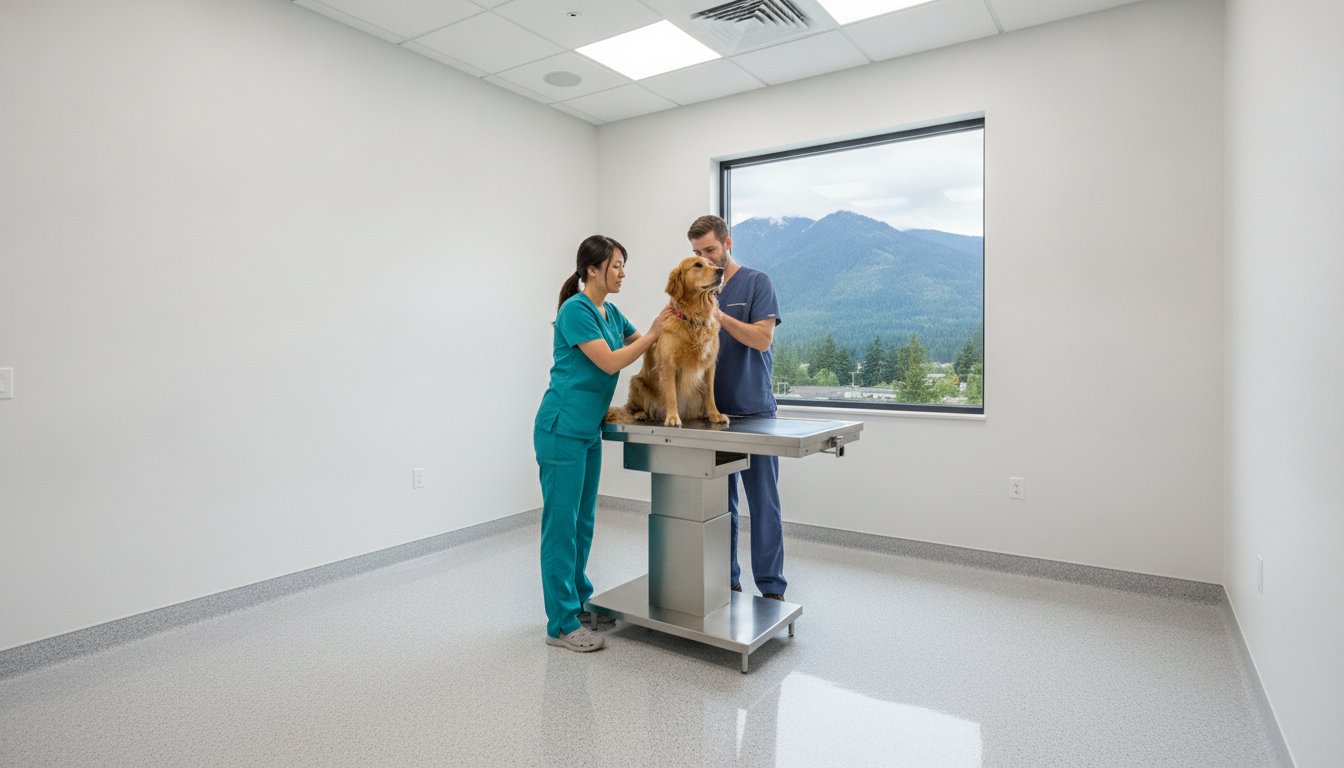
In a high-traffic animal hospital, the floor isn't just a surface; it's a critical clinical instrument that directly impacts patient outcomes and operational safety. You likely understand the frustration of porous grout lines that trap stubborn odours or watching a standard floor fail under the weight of harsh chemical disinfectants. It's a common struggle for clinic owners who need to balance rigorous hygiene with a professional aesthetic. Choosing the right veterinary clinic floor coatings bc is about more than just a clean look. It's about engineering a space that withstands the daily rigours of claws, chemicals, and constant foot traffic.
This clinical reference guide outlines the technical standards and performance requirements necessary to maintain a truly sterile environment. We'll examine how industrial-grade resinous systems provide the seamless durability required to reduce maintenance labour costs while protecting staff and recovering patients from slip-and-fall risks. By prioritizing precision in your flooring choice, you can transform your clinic into a high-performance facility that builds immediate trust with your clients. We'll cover everything from chemical resistance to the meticulous preparation steps that ensure long-term resilience.
Key Takeaways
- Understand why monolithic, non-porous resinous surfaces are essential for eliminating the biological load and odour retention common in traditional tile and grout.
- Master the "Paw-Safe" friction balance to ensure adequate traction for recovering animals without compromising the ability to perform rapid, sterile cleanups.
- Evaluate the performance differences between Quartz Flooring for high-impact treatment zones and Decorative Flake Systems for professional, client-facing areas.
- Learn how integrated cove bases and proper drainage detailing create a seamless environment that facilitates effortless washdowns and superior hygiene.
- Discover how to specify veterinary clinic floor coatings bc that combine industrial-grade durability with sophisticated colour palettes to enhance both clinic function and client trust.
Table of Contents
The Role of Performance Flooring in Modern Veterinary Medicine
In a modern medical environment, the floor serves as more than just a walking surface; it's a critical clinical barrier. Resinous veterinary clinic floor coatings bc are engineered as monolithic, non-porous surfaces that prevent the absorption of biological fluids into the building's foundation. Unlike traditional materials that merely sit on top of the concrete, these high-performance systems bond directly to the substrate to create an impervious shield. This transformation is central to the concept of Industrial Luxury. It's an approach where the clinic achieves a high-end, professional aesthetic that builds client trust while maintaining the uncompromising durability required for daily animal care and heavy equipment movement.
Why Porous Surfaces are a Liability
Traditional flooring options like Vinyl Composition Tile (VCT) or ceramic tile present significant risks in a clinical setting. The primary failure point lies in the grout lines and seams. These areas are inherently porous, leading to a "wicking" effect where urine, blood, and saline solutions are drawn deep into the substrate. Once these fluids penetrate the surface, they become unreachable. Over time, frequent exposure to acidic cleaning agents and medical-grade disinfectants causes grout to degrade, crack, and eventually crumble. These microscopic fissures become breeding grounds for sub-surface bacterial colonies that thrive in the dark, damp environment beneath the tile. It's the root cause of persistent, unpleasant odours that can compromise the professional atmosphere and air quality of your facility.
The Seamless Advantage for BC Clinics
The transition to a Seamless polymer flooring system eliminates the vulnerabilities of traditional modular materials. A monolithic structure means the coating is applied as a continuous liquid, curing into a single, gap-free unit that extends from the substrate to the topcoat. By removing seams where pathogens and animal hair typically congregate, staff can maintain a higher standard of sanitation with significantly less labour. This level of hygiene and longevity is only achievable through professional concrete surface preparation services. Meticulous diamond grinding opens the concrete pores to ensure a permanent mechanical bond, preventing the floor failure often seen in the damp climate of the Fraser Valley. Choosing specialized veterinary clinic floor coatings bc ensures that your facility remains sterile, durable, and visually impressive, providing a safe environment for both staff and animal patients.
Key Performance Metrics for BC Veterinary Facilities
The selection of veterinary clinic floor coatings bc requires a precise understanding of the mechanical and environmental stressors unique to animal healthcare. Beyond simple aesthetics, these systems must provide extreme impact resistance to protect against dropped surgical instruments or the movement of heavy diagnostic equipment. A high-performance resinous floor acts as a shock absorber for the building, preventing microscopic cracks in the substrate that could otherwise lead to structural failure or bacterial infiltration. In high-traffic BC practices, the floor must maintain its structural integrity while subjected to the constant vibration of autoclaves and the rolling loads of heavy kennel banks.
Ergonomics and Paw-Safe Traction
Achieving the correct coefficient of friction is a delicate science in a clinical setting. Animals, particularly those recovering from anesthesia or orthopedic surgery, require a "Paw-Safe" texture that provides enough grip to prevent limb splaying. However, if the texture is too aggressive, it becomes nearly impossible to mop effectively, as the peaks of the texture trap animal hair and contaminants. This balance also affects staff wellbeing; a floor with slight ergonomic "give" reduces joint fatigue for technicians standing during long surgical shifts. Referencing a materials guide for the veterinary facility helps clinic owners understand these critical trade-offs between animal safety and maintenance efficiency.
Chemical and Biological Resilience
Veterinary environments are chemically aggressive. Standard epoxy systems often fail when exposed to concentrated urea, blood, or iodine, which can cause softening or permanent staining of the surface. Modern BC clinics typically utilize polyaspartic topcoats because they offer superior resistance to medical-grade disinfectants like accelerated hydrogen peroxide. These specialized coatings won't amber or degrade under UV light or rigorous daily cleaning cycles.
In the damp climates of Chilliwack and Abbotsford, the moisture profile of the concrete substrate is a critical variable that many general contractors overlook. High water tables in the Fraser Valley can lead to hydrostatic pressure, which causes inferior coatings to delaminate or bubble from the bottom up. Integrating a moisture vapour barrier during the installation process is a technical requirement for long-term bond integrity. Ensuring your facility is equipped with these industrial safeguards is essential for protecting your clinical investment. If you are planning a renovation or new build, you can request a technical consultation to assess your specific site conditions.
Comparing Resin Systems: Quartz, Flake, and Solid-Colour
Selecting the appropriate resin system for veterinary clinic floor coatings bc requires a nuanced understanding of how different materials respond to specific clinical stressors. A high-traffic animal hospital is a multi-zonal environment where the reception area has vastly different performance needs than a sterile surgical suite or a wet grooming station. By matching the resin chemistry to the room's function, clinic owners can achieve a balance of "Industrial Luxury" and uncompromising utility. Adhering to established Veterinary hospital design guidelines ensures that each chosen system contributes to a comprehensive pathogen-control strategy while maintaining a professional atmosphere.
Quartz Flooring for High-Traffic Zones
For back-of-house areas, kennels, and treatment rooms, Quartz Flooring Systems represent the gold standard for mechanical durability. These systems utilize a double-broadcast method where coloured quartz granules are saturated into multiple layers of high-strength resin. This creates a thick, impact-resistant profile that easily withstands the weight of heavy kennel banks and rolling diagnostic carts. The integral texture of the quartz provides essential slip resistance in wet grooming areas, protecting both staff and animals from traction loss. Owners looking for a detailed technical analysis of these high-build systems can refer to our Quartz Flooring: BC Retail Buyer’s Guide (2026).
Decorative Flake and Metallic Systems
In client-facing areas like waiting rooms and corridors, Decorative Flake Systems offer an ideal blend of durability and camouflaging capabilities. The multi-coloured vinyl flakes create a dense pattern that effectively conceals pet hair, tracked-in debris, and minor scratches between scheduled cleanings. This ensures the clinic maintains a tidy appearance even during peak hours. For practices aiming to project a premium brand image, Metallic Epoxy Flooring in the reception area provides a high-gloss, marble-like finish. These custom metallic epoxy designs offer a sophisticated aesthetic that builds immediate client confidence without sacrificing the easy-to-clean nature of a resinous surface.
Surgical suites and sterile prep areas demand a different technical approach. In these zones, Solid Colour Epoxy Coatings finished with a high-performance polyaspartic topcoat are often the preferred choice. The smooth, monolithic finish allows for the immediate identification of dropped needles, sutures, or biological fluids. This high-visibility surface is essential for maintaining strict sterility protocols. These systems are specifically engineered to resist staining from common medical dyes and iodine, ensuring the floor remains pristine despite the rigours of daily surgical procedures.
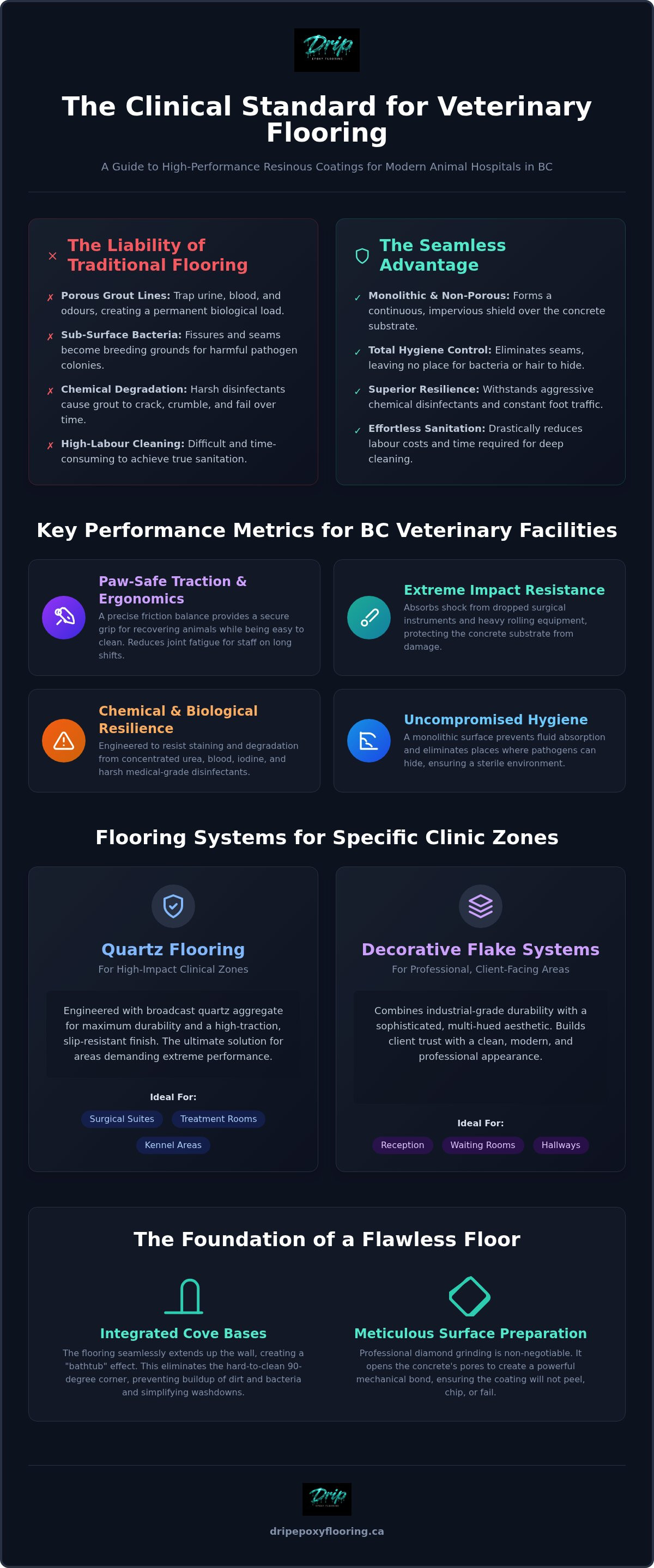
Hygiene Detailing: Integrated Cove Bases and Drainage
The efficacy of a clinical floor is often determined at its edges. In high-standard BC facilities, the goal is to create a "bathtub effect," where the floor and the lower portion of the wall form a single, liquid-tight container. This is achieved through hygiene detailing, a meticulous process that eliminates the gaps where moisture and pathogens hide. High-quality veterinary clinic floor coatings bc must be installed with these transitions in mind to ensure that daily washdowns are both effective and efficient. By removing the traditional 90-degree angle between the floor and the wall, you eliminate the primary site for bacterial colonization and fungal growth.
The Integral Cove Base
A standard cove base is not merely an aesthetic trim; it is a structural necessity for clinical sanitation. During installation, a vertical-grade resin is used to create a 4-inch or 6-inch radius cove that curves seamlessly from the floor up the wall. This radius cove ensures there are no sharp corners to trap dirt or animal hair. Unlike rubber or vinyl baseboards that rely on adhesives, an integral resinous cove is part of the monolithic floor system. It won't peel, crack, or allow liquids to seep behind the wallboard. This level of detailing defines a professional medical-grade installation, providing a sterile boundary that withstands aggressive scrubbing and high-pressure washing.
Drainage and Slope Management
Efficient moisture management is critical in kennel runs and grooming zones. Without proper sloping, even the most advanced veterinary clinic floor coatings bc will suffer from standing water, which creates slip hazards and promotes odour-causing bacteria. Professional installers must ensure a precise pitch-to-drain, where the floor is meticulously contoured to direct all fluids toward the drainage system. The resinous material is then feathered into stainless steel drain housings, creating a flush, gap-free transition. This prevents the "lip" often found in tile installations that can trap biological waste.
Maintaining these surfaces requires a structured protocol to preserve their "Industrial Luxury" finish. Because the surface is non-porous and seamless, you don't need harsh abrasive cleaners that could eventually dull the topcoat. Instead, a pH-neutral cleaner or a medical-grade disinfectant is typically sufficient to maintain a sterile environment. Regular maintenance is simplified because there is no grout to scrub and no seams to inspect for failure. If you are designing a new facility or upgrading an existing practice, you can book a site assessment to review your drainage and cove requirements.
Designing Your Clinic: Merging Luxury with Clinical Standards
Modern clinic design has shifted toward a boutique aesthetic that prioritizes the emotional wellbeing of both the patient and the owner. Colour psychology plays a vital role in this transformation; utilizing calming blues and soft neutrals helps reduce the physiological stress response in animals. By selecting veterinary clinic floor coatings bc that align with these design principles, you create a space that feels less like a sterile institution and more like a high-end wellness centre. This approach, often termed "Industrial Luxury," ensures that your facility remains a formidable clinical environment while projecting an image of premium care that builds immediate client trust.
Zone-Specific Flooring Selection
A successful design strategy requires matching the resin system to the specific mechanical and biological stressors of each room. While a uniform look might seem appealing, a one-size-fits-all approach often leads to premature floor failure. Consider the following zonal requirements:
- Reception and Lobbies: High-gloss metallic epoxy provides a striking first impression, offering the depth of natural stone with the durability of a commercial coating.
- Surgical Suites: Solid-colour polyaspartic systems are essential for high-visibility and maximum sterility, allowing staff to spot needles or biological contaminants instantly.
- Kennels and Grooming: Textured quartz systems provide the necessary slip resistance and protection against the corrosive nature of animal waste and constant moisture.
Investing in high-quality commercial epoxy flooring in Chilliwack offers long-term financial benefits that go beyond the surface. These systems significantly reduce maintenance labour costs and eliminate the need for the frequent, disruptive floor replacements common with VCT or tile. A well-planned installation ensures your facility remains operational and aesthetically superior for years.
The Drip Epoxy Professional Standard
Achieving a flawless finish in the damp Fraser Valley climate requires more than just high-quality resins. It demands a meticulous preparation process, specifically professional mechanical diamond grinding. This step is non-negotiable for creating the mechanical bond required to prevent delamination in our humid environment. As a locally owned Fraser Valley contractor, we understand the specific moisture profiles of Chilliwack, Abbotsford, and Langley. If you're ready to elevate your facility's standards, we invite you to visit our contact page for a specialized facility quote tailored to your clinic's unique layout.
Renovation Checklist for Clinic Owners:
- Verify current moisture vapour emission rates in the concrete substrate.
- Identify high-impact zones that require quartz reinforcement for added durability.
- Select a colour palette that balances calming aesthetics with hair-masking capabilities.
- Confirm the integration of 4-inch or 6-inch cove bases in all clinical areas.
- Schedule the installation during low-occupancy periods to allow for full chemical curing.
Future-Proofing Your Veterinary Practice Through Precision Flooring
Selecting the right veterinary clinic floor coatings bc is a foundational decision that impacts the safety, hygiene, and longevity of your practice. We've explored how monolithic systems eliminate the bacterial risks of porous grout while providing the "Paw-Safe" traction essential for animal recovery. By integrating hygiene detailing like radius cove bases and precision drainage, you transform your facility into a high-performance clinical instrument that withstands the daily rigours of medical use.
Drip Epoxy Flooring specializes in delivering these seamless, antimicrobial medical flooring solutions with industrial-grade precision. As a locally owned and operated business in Chilliwack, we understand the specific moisture challenges of the Fraser Valley and prioritize meticulous mechanical diamond grinding to ensure a permanent bond. You can Request a Specialized Medical Facility Quote today to begin your clinic's transformation. We're ready to help you build a sterile, professional environment that your staff and clients can rely on for years to come.
Frequently Asked Questions
Is epoxy flooring safe for animal paws and joints?
Yes, resinous flooring is safe for animal paws when specified with the correct slip-resistance profile. We engineer these systems to provide a "Paw-Safe" texture that offers traction for recovering patients without being abrasive. While the surface is hard, it provides better ergonomic support for staff than bare concrete. The seamless nature also prevents the growth of bacteria that can cause infections in paw pads or surgical sites.
How long does a veterinary clinic floor installation take to cure?
The installation timeline for veterinary clinic floor coatings bc typically spans three to five days depending on the system chosen. While epoxy systems often require 24 to 48 hours for light foot traffic, polyaspartic topcoats can cure significantly faster. Full chemical cure, which is necessary before returning heavy kennel banks or surgical equipment to the space, usually occurs within seven days to ensure maximum resilience and stain resistance.
Can resinous flooring withstand aggressive animal urine and biological waste?
Resinous flooring is specifically designed to withstand aggressive biological waste, including concentrated animal urine and blood. Unlike porous tile grout, these monolithic surfaces prevent urea and other fluids from penetrating the substrate. High-performance polyaspartic topcoats offer exceptional chemical resistance, ensuring that medical-grade disinfectants and biological fluids don't cause staining or structural degradation of the coating over time. This makes them ideal for high-load kennel and treatment areas.
What is the difference between a flake system and a quartz system for vet clinics?
The primary difference lies in the composition and intended use of the aggregate. Decorative Flake Systems utilize vinyl chips to create a varied aesthetic that camouflages pet hair and debris in reception areas. Quartz Flooring Systems use coloured sand granules to create a thicker, more impact-resistant profile. Quartz is the preferred choice for back-of-house zones and surgical suites where extreme durability and a more aggressive slip-resistant texture are required.
How do you clean and maintain a medical-grade epoxy floor?
Maintaining a medical-grade epoxy floor is remarkably straightforward because the surface is entirely non-porous. Daily cleaning typically involves a microfibre mop and a pH-neutral cleaner to remove surface dust and hair. For deep disinfection in clinical zones, you can use medical-grade solutions like accelerated hydrogen peroxide without damaging the topcoat. Because these systems don't require waxing or stripping, they significantly reduce long-term maintenance labour costs compared to traditional VCT flooring.
Do these floors meet BC health and safety regulations for animal hospitals?
These flooring systems are engineered to meet the stringent hygiene and safety standards expected in British Columbia animal hospitals. While the College of Veterinarians of British Columbia (CVBC) doesn't mandate specific brands, they do require surfaces that are easy to disinfect and maintain. A seamless, resinous floor provides the non-porous, monolithic environment necessary to comply with modern pathogen control protocols and workplace safety requirements for both staff and patients.
Can you install new coatings over existing tile in a clinic?
We do not recommend installing new resinous coatings directly over existing tile. For a successful installation, the tile and thin-set must be removed to expose the underlying concrete. We then perform professional mechanical diamond grinding to ensure a superior mechanical bond. Applying epoxy over tile risks delamination because the coating cannot bond effectively to glazed surfaces or shifting grout lines, which leads to premature system failure in clinical settings.
Are there low-VOC options for clinics that need to remain partially operational?
There are several low-VOC and zero-VOC options available for clinics that must remain partially operational during a renovation. Modern high-solids epoxies and polyaspartic systems are formulated to emit minimal odours, allowing for installation in one zone while the rest of the clinic continues to function. This is particularly beneficial for BC practices that cannot afford a total shutdown. We always coordinate ventilation protocols to ensure a safe environment for staff and animals.