slip resistant quartz flooring · 14 min read ·
Slip-Resistant Quartz Flooring Guide for BC Facilities
What if the texture that helps prevent slips also makes your floor harder to clean? In Fraser Valley facilities, moisture, spills and frequent cleaning make slip resistant quartz flooring a system-selection question, not
By Drip Epoxy Flooring · Chilliwack, BC
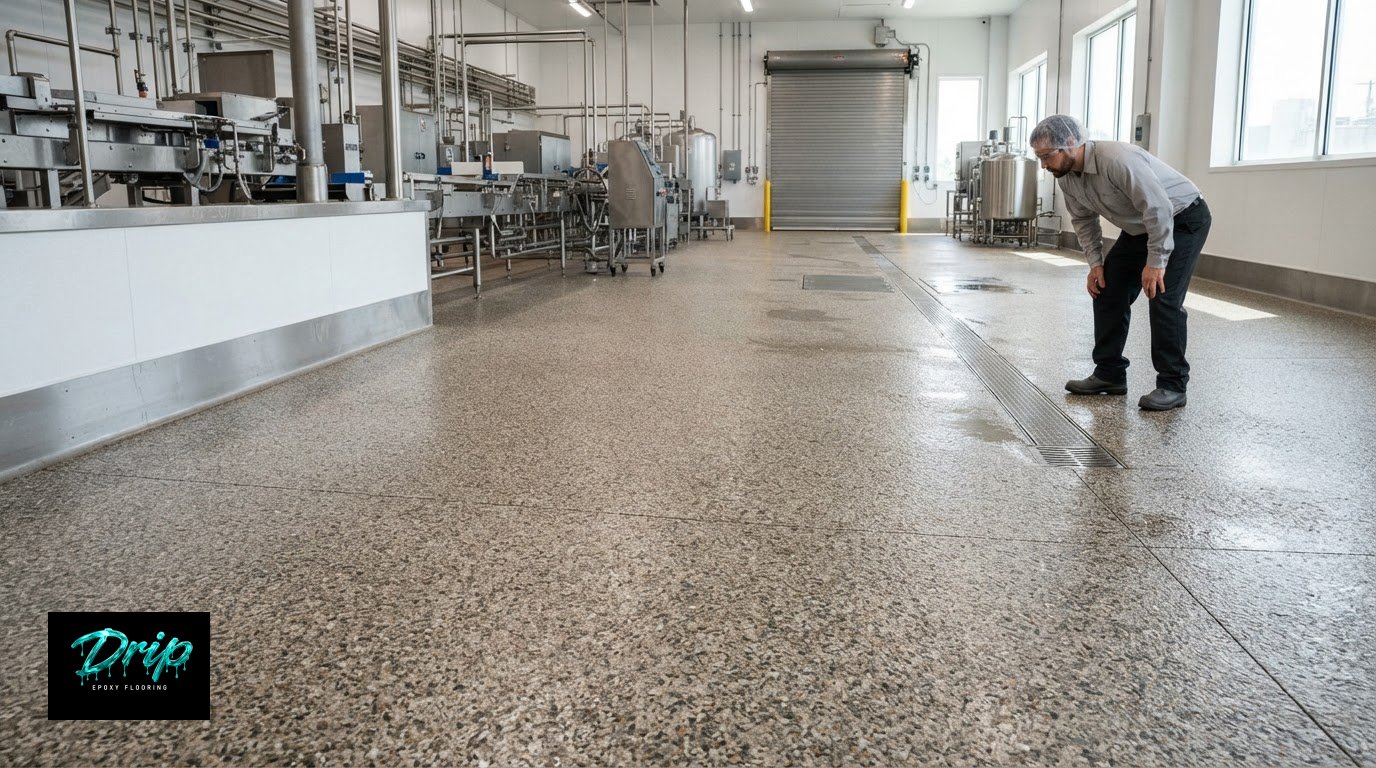
What if the texture that helps prevent slips also makes your floor harder to clean? In Fraser Valley facilities, moisture, spills and frequent cleaning make slip resistant quartz flooring a system-selection question, not simply a matter of choosing the roughest finish.
You need a surface that supports traction without trapping dirt, looks professional and stands up to daily traffic. This guide explains how quartz broadcast texture and resinous topcoats can be balanced for your facility, and what to consider when comparing a system with applicable WorkSafeBC requirements and OSHA guidance. No floor alone guarantees compliance or prevents every fall, so site conditions and safety practices still matter.
You’ll learn how quartz flooring performs in damp, high-traffic environments, how texture affects cleaning, and why mechanical diamond grinding is important for coating adhesion. We’ll also cover moisture vapour transmission, system selection and the role of a polyaspartic topcoat. For facilities in Chilliwack, Abbotsford, Mission, Langley, Surrey, Coquitlam, Burnaby, Hope, Harrison Hot Springs and Agassiz, these details can help you assess a durable floor that combines industrial function with a refined finish.
Key Takeaways
- Slip resistant quartz flooring embeds coloured quartz grains in resin to create a durable, textured finish for commercial spaces.
- Compare the primer, receiving coat and quartz broadcast sequence to understand how each layer contributes to adhesion and wear performance.
- Ask how mechanical diamond grinding will prepare your concrete and create a suitable profile for resin bonding.
- Choose a slip-resistant texture that supports traction while remaining practical for your facility’s cleaning methods.
- When planning a quartz flooring project, consider how a local Chilliwack contractor serving communities across the Fraser Valley and Lower Mainland can assess your site conditions.
Table of Contents
What is Slip Resistant Quartz Flooring?
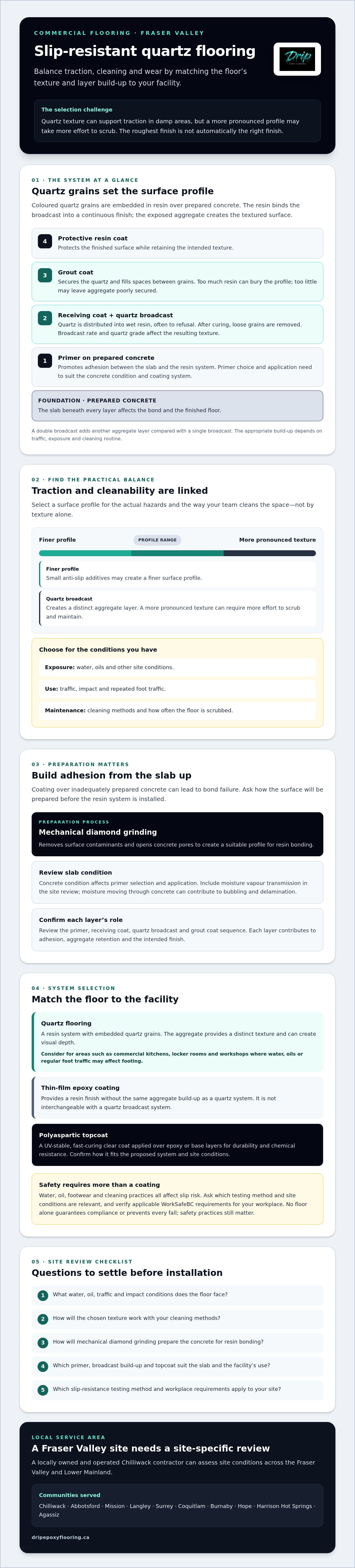
Slip resistant quartz flooring is a resinous system in which coloured quartz grains are embedded in a coating over prepared concrete. The grains are functional as well as decorative: their surface profile gives footwear a textured surface to engage with, while the resin binds the broadcast material into a continuous floor finish. This is not simply decorative epoxy with sand added on top. The way each layer is applied affects the final texture and the system’s performance.
In a broadcast installation, an installer applies a receiving coat and distributes quartz granules across it, often to refusal, so the wet resin is covered. After the layer cures, excess aggregate can be removed and additional resin coats and broadcasts applied according to the system design. A double broadcast adds another aggregate layer compared with a single broadcast. The right build-up depends on the facility’s traffic, exposure and cleaning routine. More texture is not automatically better.
This system can suit commercial kitchens, locker rooms and workshops where water, oils or regular foot traffic may affect footing. The appropriate texture depends on actual site conditions. A surface that provides grip must also be practical to scrub and maintain. Quartz flooring can provide a hard-wearing, professional-looking finish, with colour and aggregate options to complement the space.
The Mechanics of Slip-Resistant Texture
Quartz granules create small variations in the floor profile, giving footwear a textured surface to engage with, including in damp areas. Oil, water, footwear and cleaning practices all affect slip risk, so texture alone can’t guarantee a safe floor. The Science of Slip Resistance explains that slip resistance is assessed using different testing methods. Ask which method and site conditions are relevant to your facility. Small anti-slip additives may create a finer profile, while a quartz broadcast forms a distinct aggregate layer. The better option depends on traffic and maintenance needs.
Quartz Flooring vs. Standard Epoxy
Standard epoxy coatings and quartz systems are not interchangeable. A thin-film coating provides a resin finish, while a quartz system builds aggregate into the surface, creating a more substantial wear layer for areas exposed to impact and repeated traffic. Multi-coloured quartz can also give the floor visual depth that a solid-colour finish doesn’t provide. For wet areas, select texture based on the hazards and cleaning process, and verify applicable WorkSafeBC requirements for the specific workplace. No coating alone establishes compliance.
Both systems depend on the concrete beneath them. Mechanical diamond grinding removes surface contaminants and opens the concrete pores to support resin adhesion. Coating over an inadequately prepared slab can lead to bond failure. Explore quartz flooring systems to see how this flooring category can be configured for commercial use.
The Science of the Quartz Broadcast System
A quartz floor’s performance depends on how its layers work together, not just on the visible aggregate. In a slip resistant quartz flooring system, each coat has a distinct role: anchor to prepared concrete, hold the quartz broadcast, secure the granules without erasing their profile, and protect the finished surface. Resin selection, application and cure conditions all matter. A shortcut at any stage can compromise the layer above it.
Layer 1: Primer. Applied to properly prepared concrete, the primer promotes adhesion between the slab and the resin system. Mechanical diamond grinding opens the concrete surface and removes contaminants that can interfere with bonding. Primer selection and application need to suit the slab’s condition and the coating system.
Layer 2: Receiving coat and quartz broadcast. The receiving coat is applied, then quartz granules are broadcast into the wet resin, often to refusal, meaning the coat is covered with aggregate. After curing, loose grains are removed. The broadcast rate and quartz grade affect the resulting texture, so they should be selected for the area’s use.
Layer 3: Grout coat. A grout coat secures the quartz and fills spaces between granules. Its application needs to preserve the intended surface profile. Excessive resin can bury texture, while insufficient coverage may leave aggregate poorly secured.
Layer 4: Polyaspartic topcoat. A polyaspartic topcoat protects the broadcast layers and provides UV stability and chemical resistance. Its film build must be coordinated with the texture requirement, since the topcoat contributes to the final surface profile.
The Polyaspartic Advantage for BC Businesses
Compared with standard epoxy, polyaspartic topcoats offer higher abrasion resistance, UV stability and faster cure times. That can help facilities plan a return to operation sooner, but actual reopening depends on the specified system, site conditions and product cure schedule. In showrooms or areas near open bay doors, UV stability can help reduce yellowing. Your project plan should account for temperature, ventilation and the manufacturer’s requirements.
Selecting the Right Quartz Grade
Fine and coarse quartz create different surface profiles. Match the grade and broadcast rate to foot traffic, wet or oily exposure, wheeled equipment and the cleaning method. Review epoxy floor samples to assess colour and texture together. For food facilities, consider whether the finish supports the site’s sanitation procedures. The US FDA’s preventive controls guidance provides context for food safety in the United States, not BC requirements.
Before selecting a system, document traffic patterns, spills, cleaning routines and concrete conditions. Discuss your facility’s quartz flooring requirements with Drip Epoxy Flooring to help assess suitable system layers and texture.
Why Preparation is the Foundation of Slip Resistance
A textured finish can only perform as intended if the coating bonds securely to the concrete beneath it. For slip resistant quartz flooring, preparation begins with assessing the slab, removing contaminants and creating a suitable Concrete Surface Profile (CSP). If dust, oil, curing compounds or a weak surface layer remain, the resin may bond to that material instead of sound concrete. Bubbling or delamination can follow and compromise the floor system.
Preparation is separate from slip-resistance testing. Texture and a sound coating bond matter, but neither alone proves that a floor meets a particular safety requirement. OSHA’s guidance on slip resistance can help frame the discussion. Confirm which criteria and assessment methods apply to your facility rather than treating a coating choice as proof of compliance.
Mechanical Diamond Grinding Explained
Mechanical diamond grinding removes surface contaminants and opens concrete pores to create a profile for resin bonding. The preparation sequence should match the slab: inspect its condition, grind the surface, remove the resulting dust, then confirm it’s clean and suitable for coating. This provides a consistent foundation for the primer and quartz layers. Simple sanding may address minor surface irregularities, but it isn’t a substitute for mechanical diamond grinding where the specified profile requires it.
The target CSP depends on the coating system and concrete condition. Ask how the installer will verify the prepared surface before applying resin. Acid etching shouldn’t be assumed to provide the required profile. Preparation methods need to be selected for the system and slab, rather than treated as interchangeable.
Managing Moisture Vapour Transmission
In Chilliwack and Abbotsford, assess the concrete’s condition rather than assuming a slab is dry or wet based on location alone. Moisture vapour transmission is moisture moving through concrete. If it exceeds the coating system’s tolerance, it can contribute to bubbling or delamination. Moisture testing before coating helps determine whether the proposed resin system is suitable and whether a moisture vapour barrier is required.
Use the test method and acceptance criteria specified for the selected coating system, and review the results before installation. A barrier isn’t automatically necessary on every slab, and it shouldn’t be specified without considering test findings and product requirements. Preparation, moisture assessment and compatible system selection work together to support adhesion.
Before work begins, ask about the preparation approach, target profile and moisture assessment plan. Discuss your quartz flooring project with Drip Epoxy Flooring, which provides quartz flooring systems as part of its professional epoxy and polyaspartic coating services.
Maintaining Slip-Resistant Floors without Sacrificing Safety
A quartz floor needs enough surface profile to support traction and a finish your team can clean effectively. More texture isn’t automatically better: aggregate that’s too pronounced for your cleaning method may hold soil or make scrubbing less effective. Select the broadcast texture with the facility’s spills, foot traffic, equipment and sanitation routine in mind, then follow the coating manufacturer’s maintenance instructions.
For routine cleaning, remove loose debris first, then use a compatible cleaner and a non-shedding mop pad or scrub brush suited to the floor’s texture. Mops can leave fibres caught in a textured surface, so inspect the floor after cleaning and remove residue rather than allowing it to build up. Don’t apply wax or other topical treatments unless the coating manufacturer confirms they’re suitable. Such products can fill the profile and change the surface characteristics.
Seamless Benefits for Commercial Kitchens
Unlike tile, a seamless resin floor has no grout lines to collect soil, grease or cleaning residue. That can simplify cleaning, but it doesn’t replace an appropriate sanitation routine. Don’t assume a quartz system has an antimicrobial topcoat. Confirm any such claim in product documentation. For hot-water washdowns, ask whether the specified system has documented thermal shock resistance and suits the temperature changes and cleaning methods at your site.
The Long-Term Durability of Quartz
Quartz broadcast systems form an aggregate-reinforced wear surface, but service life depends on system design, concrete condition, traffic and maintenance. Equipment turns, cart routes and repeated scrubbing can wear floors differently from ordinary foot traffic. Don’t assume quartz automatically outlasts decorative flake in every high-friction area. Compare the systems against your actual use and required texture. Review quartz flooring systems as one option for commercial environments.
Plan project sequencing around the work area, installation steps and the coating manufacturer’s cure requirements. Before the floor returns to service, confirm when foot traffic, carts, cleaning and equipment can resume. This coordination helps protect the finished texture from premature wear.
For a maintenance plan that preserves both cleanability and the intended surface profile, discuss your facility’s quartz flooring requirements with Drip Epoxy Flooring.
Expert Quartz Flooring Installation in the Fraser Valley
Drip Epoxy Flooring is locally owned and operated in Chilliwack, BC, and provides professional epoxy and polyaspartic floor coating installations, including quartz flooring systems, for commercial and industrial spaces. Selecting a system should begin with operating conditions, not colour alone. Foot traffic, carts, equipment, spills, cleaning methods and the concrete’s moisture condition all help determine the appropriate preparation, broadcast texture and topcoat.
A coating system and its installation need to be considered alongside applicable safety requirements. These factors don’t, by themselves, certify that a particular floor meets every site-specific requirement. Your facility’s hazards, assessment criteria and safety procedures still need to be considered when selecting slip resistant quartz flooring.
Local Service Area
Drip Epoxy Flooring serves communities including Chilliwack, Abbotsford, Mission, Langley, Surrey, Coquitlam, Burnaby, Hope, Harrison Hot Springs and Agassiz. Local ownership provides a nearby point of contact, but it shouldn’t be treated as a substitute for clear project documentation. Ask how the proposed system addresses your concrete condition, moisture assessment, traffic patterns and cleaning routine. Confirm any applicable warranty terms and who handles support after installation rather than assuming these details.
A site review is a practical way to develop a system recommendation around the actual facility. Before requesting one, note where staff walk, where carts turn, what liquids reach the floor and how the area is cleaned. For Fraser Valley sites, include any known moisture concerns so the installer can assess whether testing or additional system considerations are needed. This information helps connect the finish you select to the conditions it must handle.
Plan Your Quartz Flooring Project
Start by identifying the performance priorities for each area. A wet washdown zone and a dry workshop may need different texture and cleaning considerations. Then review quartz flooring options to compare available colours and finishes. Samples can help you assess appearance, but the final texture should also be considered against site use and maintenance requirements.
Before work is scheduled, ask about the proposed preparation steps, coating layers, moisture assessment, cure requirements and project sequencing. These details clarify what needs to happen before the facility can return to service, without relying on assumptions about timing or performance.
To discuss your facility’s requirements and request a free quote, contact Drip Epoxy Flooring.
Plan a Safer, More Durable Floor
A successful quartz floor is a complete system, not just a textured finish. Your choice of aggregate and topcoat should reflect the facility’s traffic, spills and cleaning routine. Just as importantly, the concrete must be assessed and mechanically diamond ground, with moisture conditions considered before coating begins.
Slip resistant quartz flooring can pair practical traction with a professional appearance, but the right texture must balance grip and cleanability. Ask how the proposed system’s layers, surface profile and maintenance requirements fit your facility, and confirm which safety criteria apply to your site.
Drip Epoxy Flooring is locally owned and operated in Chilliwack and provides professional floor coating installations. Site conditions and applicable requirements should guide system selection. If you’re planning a project in the Fraser Valley or Lower Mainland, request a free quote and discuss your quartz flooring requirements. A careful review of your concrete and operating conditions can help you move forward with a clear, informed plan.
Frequently Asked Questions
Is quartz flooring truly slip-resistant when wet?
Quartz flooring can provide mechanical grip when wet, but no floor surface guarantees that slips won’t occur. Traction depends on the selected quartz grade, broadcast rate, topcoat application, contaminants, footwear and maintenance. Water, oil or cleaning residue can still create hazards. For your facility, assess the actual conditions and confirm which slip-resistance criteria and testing methods apply rather than relying on the flooring type alone.
How long does it take to install a slip-resistant quartz floor?
Installation time depends on the floor area, concrete condition, preparation required, system layers and product cure schedule. Mechanical diamond grinding, repairs or moisture assessment can affect project sequencing, as can the time needed between coating layers. Don’t schedule reopening based on a general estimate alone. Ask for a project plan that identifies preparation, application and cure stages, and confirms when foot traffic, equipment and cleaning can resume.
Can quartz flooring be installed over existing tile or coatings?
It depends on the existing surface and the coating system’s requirements. Loose, cracked or poorly bonded tile or coating can compromise the new floor’s adhesion, and grout lines may affect the finished surface. The existing material must be assessed before installation. Ask how the installer will check bond and condition, address contaminants and determine whether removal or other preparation is needed before applying a quartz system.
What is the difference between quartz flooring and a flake system?
Quartz flooring embeds coloured quartz grains into resin to create a textured, aggregate-reinforced surface. A decorative flake system uses coloured flakes in a resin coating for a different visual finish and surface profile. Neither finish is automatically right for every facility. Compare the expected traffic, wet or oily exposure, cleaning practices and desired appearance, then confirm the system’s texture and coating layers suit those conditions.
Does slip-resistant quartz flooring meet WorkSafeBC safety standards?
Not automatically. A quartz finish alone doesn’t establish that a floor meets WorkSafeBC requirements for your workplace. Suitability depends on the hazards, surface conditions and applicable assessment criteria. Your facility should confirm which requirements apply and how the finished surface will be assessed. Include cleaning practices and expected contaminants in that review.
How do you clean a floor with a slip-resistant texture?
Follow the coating manufacturer’s maintenance instructions and use cleaning products and equipment suited to the system. Remove loose debris first, then scrub with a compatible cleaner and a tool that reaches the textured profile. Inspect for residue or fibres after cleaning, since these can remain caught in the surface. Avoid wax or topical treatments unless the manufacturer approves them, as they may alter the texture.
Is quartz flooring suitable for outdoor use in the BC climate?
Outdoor suitability depends on the specific resin system and its exposure to moisture, sunlight, temperature changes and weather. Don’t assume a system designed for an interior facility is appropriate outdoors. Ask the flooring provider to confirm the product’s intended use and relevant performance documentation for your site. For Fraser Valley projects, including Chilliwack, Abbotsford, Mission and Langley, discuss local exposure conditions before selecting a system.
What is the lifespan of a professional quartz broadcast system?
There isn’t a single lifespan that applies to every quartz floor. Service life depends on concrete preparation, moisture conditions, system selection, traffic, impact, cleaning methods and timely maintenance. Carts turning repeatedly in one route can wear a floor differently from light foot traffic. Ask how the proposed system suits your facility’s use and what maintenance the coating manufacturer recommends. Drip Epoxy Flooring serves communities including Hope, Surrey, Burnaby, Coquitlam, Harrison Hot Springs and Agassiz.