quartz flooring fraser · 13 min read ·
Quartz Flooring in the Fraser Valley: How to Choose the Right System
Would a textured quartz floor handle your daily traffic and cleaning routine, or could its surface profile create the wrong fit? That’s the key question behind quartz flooring Fraser Valley property owners consider: the
By Drip Epoxy Flooring · Chilliwack, BC
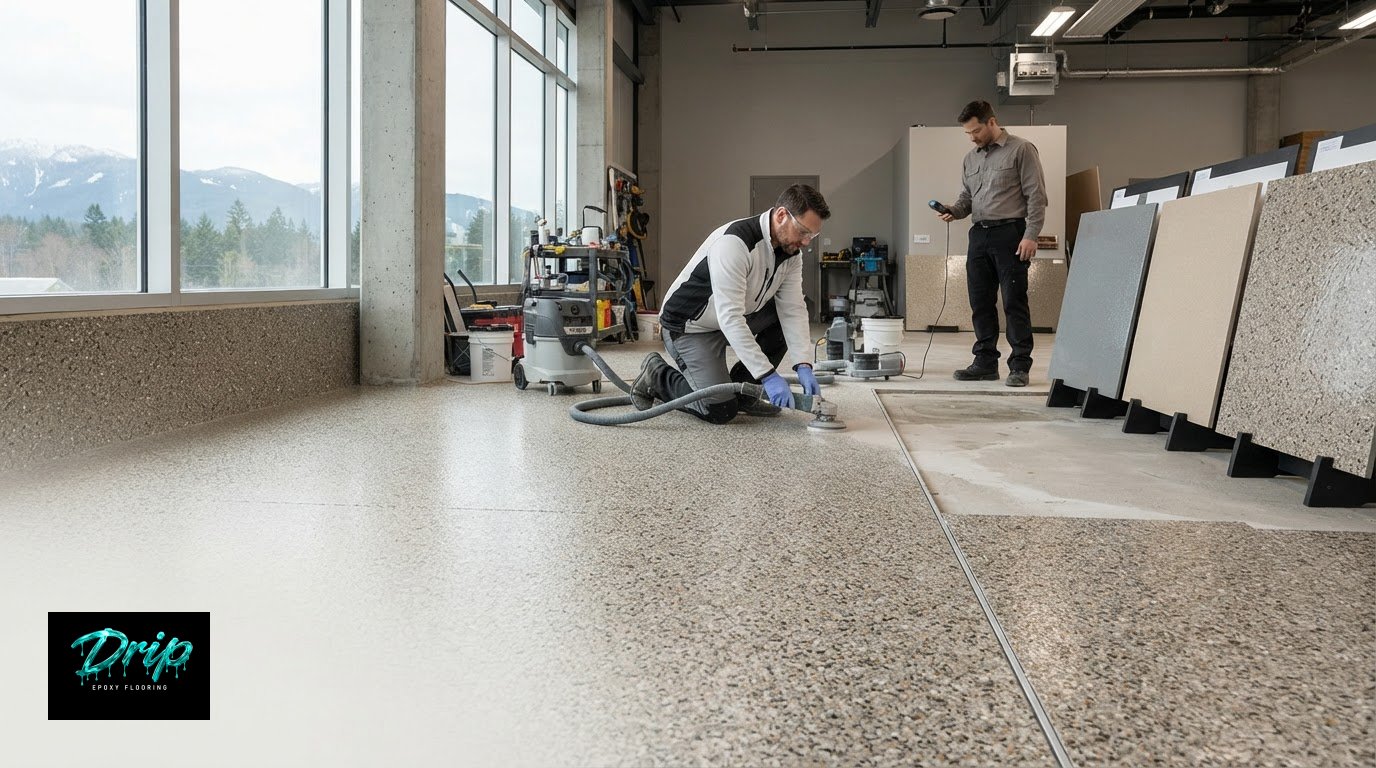
Would a textured quartz floor handle your daily traffic and cleaning routine, or could its surface profile create the wrong fit? That’s the key question behind quartz flooring Fraser Valley property owners consider: the right result depends on more than colour or appearance.
If you’re comparing quartz with other resinous finishes, it’s reasonable to want clarity on how the system is built, how its texture affects use, and what your concrete needs before installation. Quartz flooring embeds quartz grains into resin, creating a hard surface with adjustable slip-resistant texture. Its suitability depends on the space, the activity it sees, and the condition of the slab beneath it.
This guide explains how quartz flooring works, where it can suit residential, commercial, and industrial properties, and how traffic, spills, and cleaning routines influence system selection. You’ll also learn what professional concrete preparation involves, including mechanical diamond grinding and assessment of the slab before the coating is applied. Drip Epoxy Flooring is locally owned and operated in Chilliwack, serving properties across the Fraser Valley and Lower Mainland with quartz broadcast systems and concrete preparation.
Key Takeaways
- Quartz flooring embeds quartz grains in resin, creating a seamless finish whose appearance and texture depend on system design and application.
- For quartz flooring Fraser Valley projects, match the system’s texture and finish to the space’s traffic, spills, equipment and cleaning routine.
- Assess the concrete slab, existing coatings, contaminants and moisture concerns before selecting a system.
- Compare quartz, decorative flake and solid-colour epoxy by appearance, surface texture, intended use and maintenance needs.
- Expect installation to follow a considered sequence: site review, concrete preparation, system application and final review.
Table of Contents
- What Is Quartz Flooring, and Where Does It Fit in the Fraser Valley?
- How Concrete Preparation Shapes a Quartz Flooring Installation
- Quartz Flooring Compared with Flake and Solid-Colour Epoxy
- How to Assess a Fraser Valley Site for Quartz Flooring
- Quartz Flooring Installation Across the Fraser Valley with Drip
What Is Quartz Flooring, and Where Does It Fit in the Fraser Valley?
Quartz flooring is a resinous floor system in which quartz grains are embedded in resin to create a seamless, textured surface. Unlike loose tile, it isn’t made from separate pieces set in place with grout lines; the installed finish forms a continuous surface over prepared concrete. For property owners comparing quartz flooring Fraser Valley options, the central question is how the system’s texture and finish will serve the space’s daily use.
The resin binds the aggregate into the floor. Some systems use epoxy, a family of materials described in this overview of epoxy resins. The completed floor’s appearance and surface profile depend on the selected materials and how the system is applied. Quartz flooring is available as a quartz flooring system from Drip Epoxy Flooring, with the specific system shaped by the concrete condition and project requirements.
How a quartz broadcast floor is constructed
A quartz broadcast floor is formed by applying resin to prepared concrete and broadcasting quartz grains into it. The aggregate becomes part of the resinous surface rather than a loose layer. Grain selection and application influence the finished colour, appearance and texture. The appropriate design depends on the slab and intended use, not appearance alone; preparation and system selection are addressed in the next section.
Which Fraser Valley spaces may suit quartz flooring?
Quartz flooring may be considered for residential, commercial or industrial spaces, but suitability depends on the conditions at each site. In a residential area, foot traffic and routine cleaning may guide the desired texture. A commercial space may also involve recurring spills, while an industrial floor could see equipment movement and concentrated use. These demands should inform the system design and the surface profile.
For example, a property in Chilliwack, Abbotsford or Langley may have different concrete conditions and operational demands, even if each owner is considering a resinous finish. The city name alone doesn’t determine the right system. A site assessment should account for the slab, expected traffic, spill exposure, equipment and cleaning routine. A more pronounced texture may change how the floor feels underfoot and how it is cleaned, so the balance between traction and maintenance matters.
Drip Epoxy Flooring is locally owned and operated in Chilliwack, installing quartz broadcast systems and preparing concrete for residential, commercial and industrial spaces across the Fraser Valley and Lower Mainland. Matching the floor to your space starts with understanding both the surface beneath it and the work the finished floor must support.
How Concrete Preparation Shapes a Quartz Flooring Installation
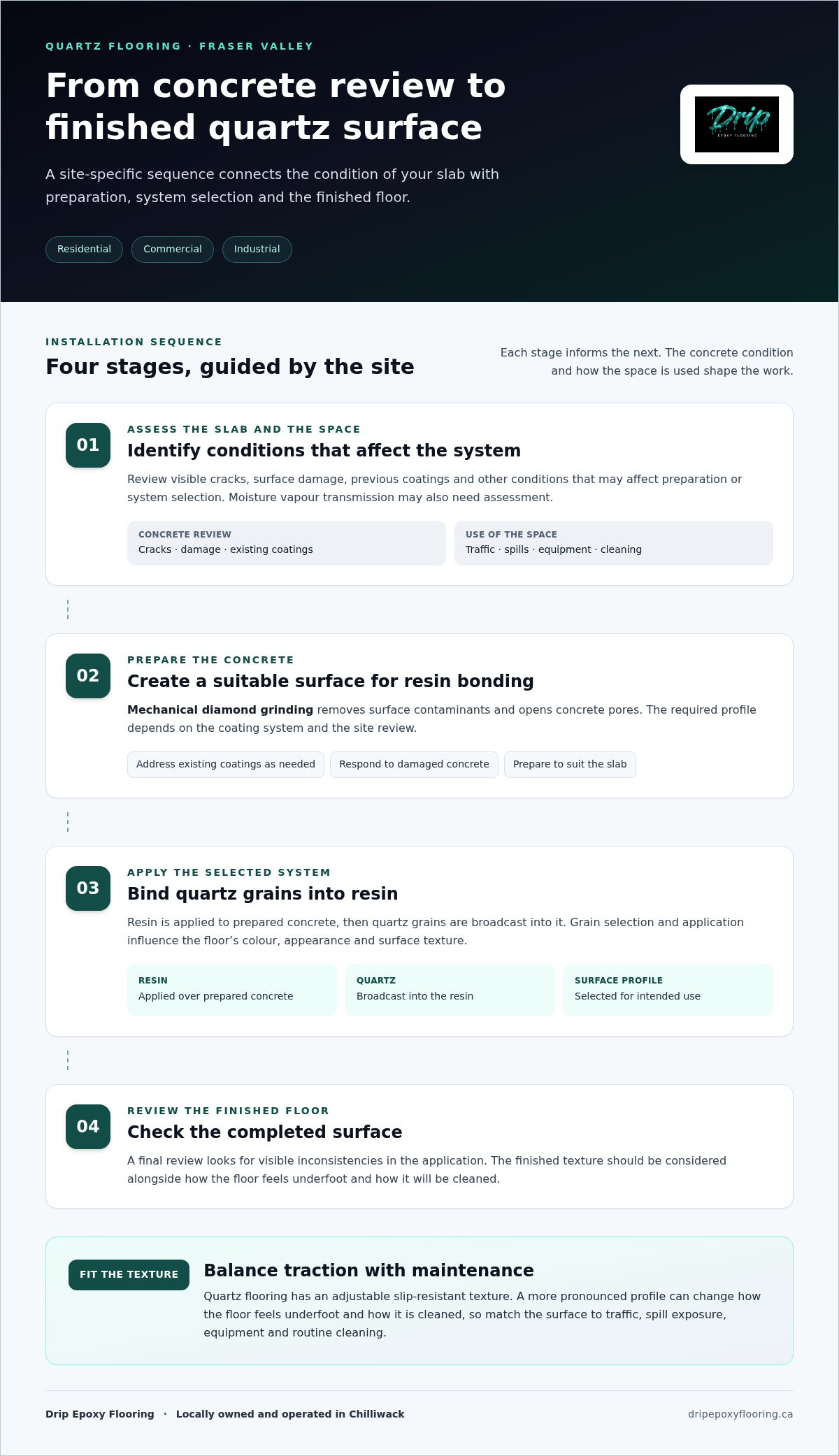
A quartz flooring installation follows a deliberate sequence: assess the slab, prepare the concrete, apply the selected system, then review the completed surface. Each step informs the next. A sound-looking floor still needs assessment, because visible condition alone may not reveal every issue that could affect the coating.
Preparation is part of resin-to-concrete bonding: the coating needs a clean, suitably profiled surface, while contaminants, weak material or incompatible existing coatings can interfere with adhesion and contribute to coating failure. The ACI Guide to Concrete Floor and Slab Construction provides broader guidance on concrete floor and slab construction, an important foundation for understanding the substrate beneath a resinous system.
Assessing concrete before quartz flooring
A site review looks for visible cracks, surface damage, previous coatings and other conditions that may affect preparation or system selection. Existing coatings need attention because they can be poorly bonded, incompatible with a new resin system, or conceal the condition of the concrete below. The assessment helps establish what work the slab may need before quartz is applied.
Moisture vapour transmission, the movement of moisture through concrete, is another consideration because it can contribute to bubbling or delamination in floor coatings. Moisture testing or further assessment may be appropriate, depending on the project. No particular reading or remedy should be assumed before the slab is assessed.
Mechanical diamond grinding and surface readiness
Mechanical diamond grinding removes surface contaminants and opens the concrete pores to create a suitable profile for resin bonding. Grinding also helps expose the actual substrate, so preparation can respond to the concrete rather than simply covering over its condition. The required profile depends on the coating system and the results of the site review.
Preparation may also need to address existing coatings or areas of damaged concrete before the application stage. Drip Epoxy Flooring provides professional concrete floor preparation as part of quartz flooring work; the scope is guided by the slab and project requirements.
Once the surface is ready, the selected resin and quartz are applied according to the system design, followed by a review of the finished floor. That final check helps identify visible inconsistencies in the application. For a quartz flooring Fraser project, a site-specific review helps connect concrete condition with preparation and system selection. If you’re planning a project, you can request a quartz flooring quote based on your space and concrete conditions.
Quartz Flooring Compared with Flake and Solid-Colour Epoxy
Quartz, decorative flake and solid-colour epoxy are resinous finishes, but they create different visual effects and surface profiles. A useful comparison looks beyond colour: consider the texture underfoot, the work carried out in the space, and how the floor will be cleaned. For quartz flooring Fraser Valley projects, the appropriate system depends on the concrete condition and the space’s operational demands.
| Finish | Appearance | Surface texture | Potential use and maintenance considerations |
|---|---|---|---|
| Quartz flooring | Visible quartz grains give the surface an aggregate appearance. | Broadcast grains create a textured finish; the profile depends on system design and application. | Consider it where a textured finish suits the activity. Include the surface profile in cleaning plans. |
| Decorative flake | Decorative chips create a varied, patterned look. | Texture depends on the full system and how it is applied. | Useful to consider when the visual effect of flakes is a priority; cleaning needs depend on the installed finish and site routine. |
| Solid-colour epoxy | A more uniform colour gives the floor a consistent visual field. | It doesn’t have the same visible aggregate appearance as quartz; the final profile depends on the system. | Consider it when a simpler, consistent appearance fits the space. Cleaning and wear depend on the system and conditions of use. |
Quartz flooring and decorative flake finishes
Quartz grains are embedded in resin, while decorative flakes create a patterned appearance through distributed chips. Neither finish is automatically the better choice. Think about the look you want, how much surface texture suits the work, and whether the cleaning routine can accommodate that profile. For a closer look at the alternative, explore decorative flake flooring.
Quartz flooring and solid-colour epoxy
Quartz makes aggregate visible in the finished surface; solid-colour epoxy presents a more uniform appearance. That distinction can help narrow the choice for a garage, work area or commercial floor, but appearance alone shouldn’t decide it. A solid-colour epoxy flooring system and a quartz system both depend on appropriate preparation and selection for the concrete and intended use.
For any of these finishes, expected traffic, spills, equipment movement and cleaning methods matter. The coating system and its preparation influence how the floor performs under those conditions, so compare the finishes against the actual demands of your space rather than choosing by appearance alone.
How to Assess a Fraser Valley Site for Quartz Flooring
A useful site assessment starts with how the floor will function, not just how you want it to look. For a quartz flooring Fraser Valley project, record the daily demands of the space alongside the condition of the concrete. That information helps guide texture, finish and preparation without assuming that properties in the same community have identical needs.
- Use and traffic: Note whether the space is residential, commercial or industrial, and describe foot traffic and repeated travel paths.
- Spills and moisture: Identify what may spill, how often the floor gets wet, and any moisture concerns related to the concrete.
- Equipment: List carts, vehicles or other equipment that move across the floor, including areas exposed to concentrated loads.
- Cleaning routine: Describe cleaning methods and frequency, and consider how the chosen surface texture may affect routine care.
- Concrete condition: Record visible cracks, damage, previous coatings and other apparent surface conditions for review.
What to consider in homes and garages
For a home or garage, consider vehicle and foot traffic, tracked-in debris, spills and the cleaning routine you expect to follow. Decide whether you prefer visible quartz aggregate and a textured finish, then weigh that preference against everyday use. Existing coatings, cracks or damaged concrete can influence preparation, so the appearance you select must be considered alongside the slab beneath it. Review the quartz flooring system details as you compare options.
What to consider in commercial and industrial spaces
Operational demands can be more varied in a workplace. Document equipment, carts, point loads, repeated travel, spills and cleaning routines, including where wet or oily conditions may occur. Quartz can provide a textured surface, but traction depends on the system and conditions; no texture should be treated as a guarantee of slip resistance. The surface profile also needs to work with how the facility cleans and operates day to day.
In either setting, the slab, prior coatings and moisture concerns belong in the assessment before a system is selected. A higher-texture finish may suit some tasks but require a different cleaning approach than a smoother surface. The right balance is site-specific, based on concrete condition, the activity in each area and routine maintenance.
Use your notes to support a focused site review and system recommendation. Request a quartz flooring quote for your property and discuss its concrete condition, traffic patterns and cleaning needs.
Quartz Flooring Installation Across the Fraser Valley with Drip
Drip Epoxy Flooring is a locally owned and operated contractor based in Chilliwack, serving residential, commercial and industrial properties across the Fraser Valley and Lower Mainland. A quartz flooring Fraser Valley project is planned around the actual site, not a one-size-fits-all specification: the concrete, intended use, finish goals and daily operations all inform the system and work sequence.
A project process built around the concrete and the space
Work begins with a site review to understand how the area is used and examine the concrete’s visible condition, including previous coatings or damage. Those findings, along with the desired finish and surface texture, guide system selection and preparation planning. The owner’s in-person flooring installation training and certification through XPS Canada relates to installation skills; it is not a certification of the flooring product or a regulatory approval.
Professional concrete preparation is a central stage, not a minor finishing detail. Mechanical diamond grinding removes surface contaminants and opens the concrete pores to create a suitable profile for resin bonding. The quartz system is then applied according to the project design, followed by a review of the finished surface. For more detail on the system, see quartz flooring systems. The scope of preparation is determined by the slab and project requirements.
For a commercial or industrial property, project sequencing also considers how work is ordered around facility operations. Site access, equipment and the activities taking place in the area help shape that plan. Each stage is considered in relation to the next, from assessing the concrete through surface preparation, quartz application and final review.
Serving Chilliwack, Abbotsford, and nearby communities
Based in Chilliwack, Drip Epoxy Flooring serves projects in Abbotsford, Mission, Langley, Surrey and Hope, as well as communities including Agassiz, Harrison Hot Springs, Coquitlam and Burnaby. Local coverage brings the site-specific assessment and preparation process to properties across the Fraser Valley and Lower Mainland, where each slab and operation still needs individual consideration.
If you’re planning a residential, commercial or industrial floor upgrade, share the space’s use, concrete condition and finish goals to start a project discussion. Request a quartz flooring quote.
Plan a Quartz Floor Around Your Space
The right quartz floor starts with the concrete and the work the space needs to support. Compare quartz, decorative flake and solid-colour epoxy by their appearance and surface texture, then consider foot traffic, spills, equipment and cleaning routines. A site review of the slab, existing coatings and possible moisture concerns helps inform preparation and system selection.
For quartz flooring Fraser Valley properties, local site conditions and daily operations matter more than choosing a finish by appearance alone. Drip Epoxy Flooring is locally owned and operated in Chilliwack, serving the Fraser Valley and Lower Mainland. The owner has completed in-person flooring installation training and certification through XPS Canada, which relates to installer training, not product or regulatory certification.
Share your project’s intended use, concrete condition and finish goals to begin planning a suitable system. Request a quartz flooring quote and take the next step towards a floor selected for your space.
Frequently Asked Questions
What is quartz flooring?
Quartz flooring is a resin system with quartz grains embedded in the surface, forming a continuous, textured finish over prepared concrete. Unlike loose tile, it isn’t assembled from separate pieces with grout joints. The resin binds the grains as part of the installed floor. System details and final texture depend on the project design, concrete condition and application, so quartz floors don’t all have the same appearance or performance.
Is quartz flooring slip-resistant when wet?
Quartz grains can create a slip-resistant texture, but the level of traction depends on the system and its finished surface profile. Consider the conditions in your space, including wet or oily areas, cleaning practices and daily operations. A texture suited to one setting may not fit another, and no finish can guarantee slip prevention. Texture selection should balance the site’s traction needs with routine cleaning and use.
Can quartz flooring be installed over existing concrete?
Yes, concrete is the substrate for quartz flooring, but its condition affects preparation and system selection. A site assessment considers visible damage, contaminants, existing coatings and possible moisture concerns. Mechanical diamond grinding removes surface contaminants and opens the concrete pores to create a suitable profile for resin bonding. The slab’s suitability and required preparation depend on its actual condition, so they shouldn’t be assumed before review.
How long does quartz flooring installation take?
Installation duration depends on the area, concrete condition, preparation requirements, selected system and site-specific sequencing. For example, existing coatings or visible concrete damage may affect the preparation plan. The schedule also needs to allow for system application and the selected system’s required curing before the space returns to service. There isn’t one standard timeline for every project; the work plan is based on the site and flooring system.
Is quartz flooring suitable for a commercial space in the Fraser Valley?
Quartz flooring may suit some commercial spaces, but the decision depends on traffic, spills, equipment movement, cleaning routines and concrete condition. A shop in Chilliwack, a workplace in Abbotsford or a commercial property in Langley may each have different operating demands. For quartz flooring Fraser Valley projects, the finish and system should be selected around the specific site rather than assumed suitable for every facility.
How do you maintain quartz flooring?
Follow the care guidance for the installed flooring system and match cleaning practices to the facility’s use. Maintenance needs depend on the finish, the contaminants on the floor and the amount of traffic. Consider how the surface texture may affect routine cleaning, particularly in work areas where spills or debris are part of daily operations. Quartz flooring still requires regular care; no coating removes the need for cleaning.