flake flooring systems Chilliwack · 13 min read ·
Flake Flooring Systems in Chilliwack: How to Choose the Right Floor
The flake colour is often the easiest part of choosing a floor. The concrete beneath it can determine whether the system is suitable. If you’re searching for “flake flooring systems Chilliwack,” start by asking whether y
By Drip Epoxy Flooring · Chilliwack, BC
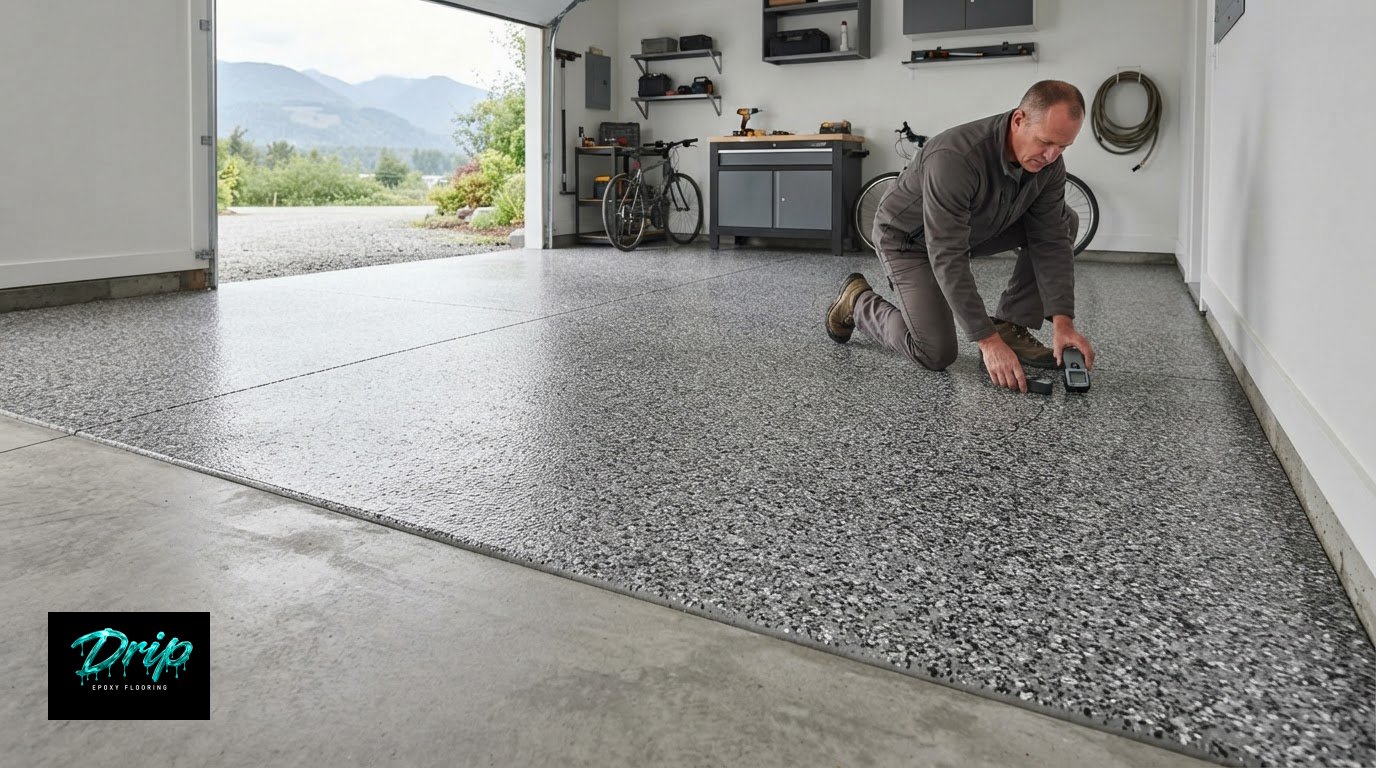
The flake colour is often the easiest part of choosing a floor. The concrete beneath it can determine whether the system is suitable. If you’re searching for “flake flooring systems Chilliwack,” start by asking whether your slab is ready for a coating and how the space will be used.
A decorative floor also needs to suit the traffic, equipment and cleaning routine it will face. Cracks, previous coatings and moisture conditions can affect preparation and system selection, so a site assessment matters as much as the sample you choose.
This guide explains how a flake floor is assembled, what to compare in the finish and coating layers, and why concrete preparation comes first. It also covers questions to discuss with a local installer serving Chilliwack and nearby Fraser Valley and Lower Mainland communities before requesting a project quote.
Key Takeaways
- Choose a flake flooring system by matching the proposed system to the slab’s condition and the space’s intended use.
- Ask how the installer will inspect the concrete, address existing coatings or damage, and prepare the surface before application.
- Compare flake, quartz and solid-colour finishes by appearance, intended use, texture and cleaning needs. Don’t assume one option suits every space.
- Before hiring, confirm the proposed coating layers, flake selection, topcoat, site access needs and project sequencing.
- For a site-specific quote, share the project location, intended use, known slab conditions, existing coatings and photos if available.
Table of Contents
- Chilliwack Flake Flooring: What It Is and Where It Fits
- Why Concrete Preparation Determines How a Chilliwack Flake Floor Bonds
- How to Compare Flake Flooring Systems, Finishes, and Alternatives
- What to Confirm Before Hiring a Flake Flooring Installer in Chilliwack
- Plan Your Chilliwack Flake Flooring Project with a Site-Specific Quote
Chilliwack Flake Flooring: What It Is and Where It Fits
A flake floor is a resinous coating system with decorative flakes incorporated into its surface. The flakes create the visible pattern, but appearance is only one part of the decision. The concrete condition, intended use, cleaning routine and selected coating layers all help determine whether a proposed system suits the space.
Think of the finish as one part of a complete floor assembly, not a decorative layer chosen independently. A garage, workshop and commercial area can have different requirements. Use this guide to compare options, then have the slab assessed before confirming which system fits.
How a decorative flake floor is built
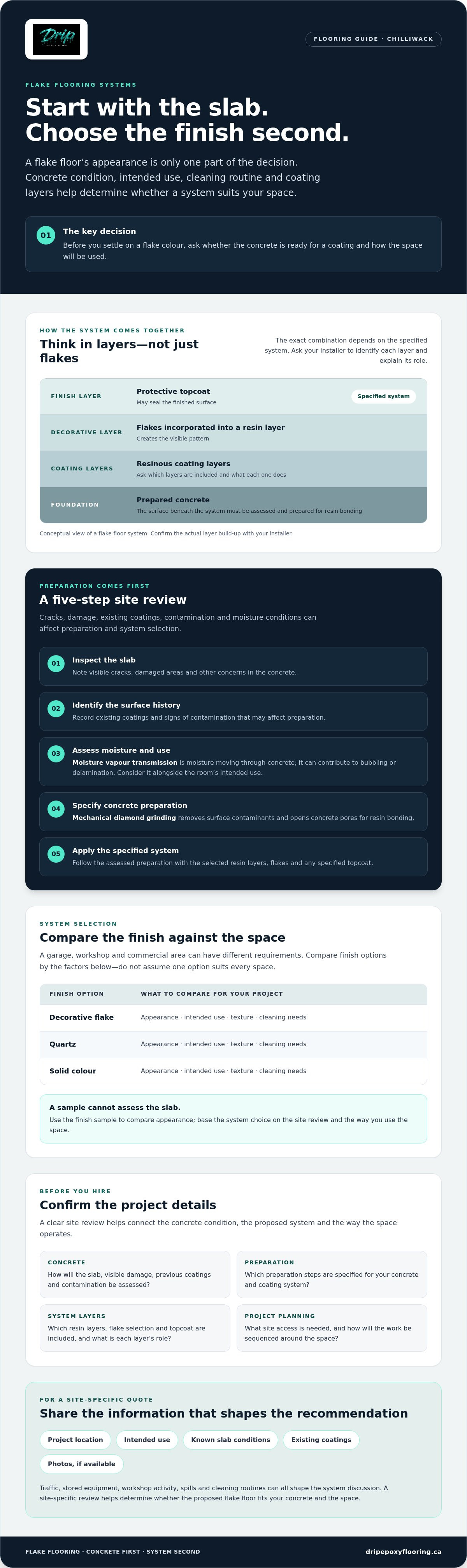
The process starts with concrete prepared for resin bonding. Coating layers form the system, decorative flakes are incorporated into a resin layer, and a protective topcoat may seal the finished surface. The exact combination depends on the specified system, so ask the installer to identify each layer and explain its role. The visible flakes are just the finish; the coating and prepared concrete beneath them are part of the assembly too.
For context, What is composite flooring? describes a flooring concept in which chips are suspended in a binder. Decorative flake flooring uses a related broad idea, though the materials and construction are specific to each system. Two floors with similar-looking flakes may have different layer build-ups and suit different conditions.
When Chilliwack property owners consider flake flooring
A residential garage is one setting to consider, but how you use it matters. Vehicle traffic, stored equipment, workshop activity and cleaning routines can all shape system selection. For a garage project in the area, review the details of Chilliwack garage floor coatings alongside the condition and use of your own slab.
Other residential spaces may also be candidates. Commercial and industrial floors need assessment based on their operating demands. Staff movement, carts, equipment, spills and cleaning methods can affect what the floor must accommodate. A residential example doesn’t prove that the same flake system will suit a busier facility.
When comparing flake flooring systems in Chilliwack, note how each option addresses your concrete and the room’s purpose. You can’t confirm the right choice from a colour sample alone; it should follow a site-specific review.
Why Concrete Preparation Determines How a Chilliwack Flake Floor Bonds
The flakes are visible, but the resinous system depends on the concrete beneath them. Before choosing a finish or confirming coating layers, assess the slab. Cracks, contamination, existing coatings and moisture vapour transmission can affect the preparation required and whether the proposed system suits the site.
A practical sequence keeps the decision grounded in site conditions:
- Inspect the slab: Review its general condition and note cracks, damaged areas or other visible concerns.
- Identify what is on the surface: Record existing coatings and signs of contamination that may affect preparation.
- Assess relevant conditions: Consider moisture vapour transmission and the space’s intended use as part of system selection.
- Prepare the concrete: Specify the preparation needed for both the slab and the coating system.
- Apply the specified system: Follow the assessed preparation with the selected resin layers, flakes and topcoat.
What to assess before specifying a flake system
Tell the installer about the floor’s history, visible damage, previous coatings and intended use. A garage with vehicle traffic has different day-to-day demands from a room used mainly for storage. Commercial and industrial use also needs its own review. Moisture vapour transmission, the movement of moisture through concrete that can contribute to bubbling or delamination, may warrant assessment. Ask how the site conditions will inform the system recommendation.
For more on preparation, review the details of the provider’s flooring services and ask which concrete preparation steps apply to your slab.
Why mechanical diamond grinding matters
Mechanical diamond grinding is a preparation process that removes surface contaminants and opens concrete pores for resin bonding. It creates a surface profile intended to support adhesion, but it doesn’t guarantee a particular result. The slab and specified system still need to be assessed together.
Shortcuts beneath a decorative finish can leave the coating system bonding to an unsuitable or inconsistent surface. Ask what preparation is proposed, how existing coatings or damaged areas will be addressed, and how the installer will determine that the surface is ready. The types of polymer flooring reference provides broader context on resin-based flooring materials, but it doesn’t replace project-specific advice.
If you’re planning a project in Chilliwack, you can request a site-specific quote and share what you know about the slab, previous coatings and intended use.
How to Compare Flake Flooring Systems, Finishes, and Alternatives
Compare a finish as part of a specified floor system, not as a sample in isolation. Consider appearance, intended use, surface texture and cleaning requirements together. The table below can help you frame questions for an installer, but it doesn’t replace a review of your concrete and site conditions.
| System | Appearance | Texture and cleaning | Selection question |
|---|---|---|---|
| Decorative flake | Decorative flakes are incorporated into the resin surface to create a patterned finish. View decorative flake flooring as an example of this finish category. | Ask how the specified flakes and topcoat affect the finished texture and cleaning routine. | Does the proposed system suit your slab, traffic and room use? |
| Quartz flooring | A system that embeds quartz grains into resin to create a hard, slip-resistant surface. | Discuss the specified slip-resistant texture and how it relates to expected contaminants and cleaning. | Is a texture-led finish appropriate for the conditions in your space? |
| Solid-colour coating | A more uniform colour appearance than a decorative flake finish. | Confirm the proposed surface profile and cleaning approach for the selected system. | Does a consistent appearance better suit the room and its use? |
Flake, quartz, or solid-colour flooring?
Each finish makes a different visual and practical consideration central. Flake flooring emphasizes a decorative, patterned surface. Quartz flooring places more emphasis on a grain-based texture, while a solid-colour coating offers a uniform appearance. Don’t infer a system’s suitability or performance from its finish category alone. Ask the installer to explain the proposed layers and how they fit the concrete and intended use.
Epoxy floor samples can help you consider colour and style, but a sample can’t show how the finished floor will perform in your space. Use it as a visual reference, then confirm the system details separately.
Match finish and texture to the space
List the conditions the floor will face before settling on a finish: foot traffic, equipment movement, cleaning routines and substances that may reach the surface. A garage used for storage has different demands from a work area with regular equipment movement. A commercial or industrial space needs an assessment based on its own operating conditions.
Slip resistance depends on the specified system and site conditions. Discuss the desired texture alongside how the floor will be cleaned. The finish should balance traction considerations with practical cleaning needs. No finish is automatically non-slip, maintenance-free or suitable for every environment.
What to Confirm Before Hiring a Flake Flooring Installer in Chilliwack
A useful proposal explains how the recommended system relates to your slab and how the work will proceed. Look for clear answers, not just a finish selection. You should understand what will be assessed, which layers are specified and what the site needs before installation can begin.
Questions that clarify the proposed flooring system
Ask the installer to explain the recommendation in order, from slab review to final topcoat. The answers should reflect your floor’s condition and use rather than assume every project needs the same build-up. If a condition could change the specification, ask how it might affect the recommendation and when it will be confirmed.
- What will you assess on the slab, including visible damage, previous coatings and conditions that may affect the coating?
- Which preparation steps are proposed, and how will existing coatings or damaged areas be addressed?
- What are the specified coating layers, and what role does each layer perform?
- How will the flake finish and topcoat suit the room’s traffic, equipment, cleaning routine and expected contaminants?
- Which site conditions could change the system recommendation, and how will those conditions be reviewed?
Ask for the system details in writing so you can compare proposals on the same basis. A clear explanation should connect the visible flake finish to the preparation and coating layers beneath it.
Reviewing local experience and project planning
Confirm that the contractor serves your project location and can assess the site. Ask who will carry out the installation, what relevant qualifications they hold and how you can verify any stated certification. You can also ask which safety practices apply and how site access will be managed. A general safety statement isn’t a substitute for details relevant to your project.
Before agreeing to the work, ask the installer to explain the sequence: the planned order of preparation and coating steps, access restrictions during the work, and what must happen before the space is handed back for use. For a commercial or industrial site, discuss how the sequence relates to facility operations. Confirm expectations directly rather than relying on an assumed schedule.
Use these questions to prepare for a site-specific discussion. To request a flake flooring quote, share your location, how the space is used, and what you know about the slab and existing coatings.
Plan Your Chilliwack Flake Flooring Project with a Site-Specific Quote
A useful quote request starts with a clear picture of the space and concrete, not just a preferred flake finish. The proposed system should follow an assessment of the slab and the room’s functional requirements. Sharing practical details early helps the installer understand what needs review before recommending coating layers and a finish.
Prepare useful details for your quote request
Describe whether the project is residential, commercial or industrial, then explain how the floor is used. A garage that stores vehicles and equipment has different demands from a commercial work area with regular foot traffic and cleaning. Include the project location and finish you’re considering, but treat that finish as a starting point rather than a fixed specification.
Include any information you have about the slab. Note visible cracks or damaged areas, existing coatings, moisture concerns and previous preparation work. If you have clear project photos, share them as context. They can help communicate what you’ve observed, but they don’t replace an on-site assessment.
- Location: Identify the property’s municipality and the area where the floor is located.
- Use: Describe traffic, equipment, cleaning routines and the room’s purpose.
- Concrete: Report visible damage, previous coatings, moisture concerns and known preparation history.
- Finish: State that you’re considering decorative flakes and mention any preferences you want to discuss.
- Photos: Attach images if available, especially of visible damage or existing surface coatings.
Move from finish ideas to a site-specific recommendation
Physical or visual epoxy floor samples can help you compare colour and style before discussing the full system. Use them to communicate your preferences, then ask how the proposed layers, flake finish and topcoat relate to the slab and intended use. Appearance alone can’t confirm suitability; site conditions may affect the recommendation.
Drip Epoxy Flooring is based in Chilliwack and serves residential, commercial and industrial customers across the Fraser Valley and Lower Mainland, including Abbotsford, Mission, Langley, Surrey, Coquitlam, Burnaby, Hope, Harrison Hot Springs and Agassiz. If your project is a residential garage, you can also review the provider’s Chilliwack garage floor coating information as you prepare your questions.
Once you’ve gathered the location, use details and concrete history, request a quote for your Chilliwack flake flooring project. Confirm the proposed system against the site assessment rather than assuming it from a finish sample.
Choose a Flake Floor That Fits Your Space
A well-considered floor starts with the concrete, then matches the coating system and finish to the room’s use. Compare flake, quartz and solid-colour options by appearance, texture and cleaning needs, and ask how the proposed layers suit your slab. The right recommendation depends on site conditions, including existing coatings, visible damage and moisture concerns.
For flake flooring systems Chilliwack property owners are considering, a site-specific review is more useful than choosing by appearance alone. Drip Epoxy Flooring is locally owned and operated in Chilliwack, with decorative flake flooring and professional concrete preparation among its services. The company serves communities across the Fraser Valley and Lower Mainland.
Prepare your project location, intended use and any details you have about the slab, then request a site-specific flake flooring quote. Considering the concrete and practical demands together helps you understand the proposed system and whether it fits your space.
Frequently Asked Questions
What is a flake flooring system?
A flake flooring system is a resinous coating with decorative flakes incorporated into its surface. The flakes create the visible finish, while the complete system includes prepared concrete and specified coating layers, which may include a protective topcoat. Layer combinations vary by system. Ask the installer to explain what each layer does and how the proposed build-up relates to your slab and the space’s intended use.
Are flake flooring systems suitable for a garage in Chilliwack?
They may suit a garage, but site conditions and how you use the space should guide the decision. Consider vehicle and foot traffic, equipment, cleaning routines, visible concrete damage and existing coatings. A garage used as a workshop may have different requirements from one used mainly for parking. A site assessment helps determine whether the proposed flake system and finish fit your concrete and daily needs.
How is concrete prepared before a flake floor is installed?
Preparation generally starts with inspecting the slab and identifying damage, contamination and previous coatings. The installer then specifies the preparation needed before applying the flooring system. Mechanical diamond grinding removes surface contaminants and opens concrete pores to support resin bonding. Moisture vapour transmission may also need assessment. Ask what steps are proposed for your slab and how the installer will determine that it is ready for coating.
Can flake flooring be installed over an existing coating?
Not without first assessing the existing coating and the concrete beneath it. Its condition, bond to the slab and compatibility with the proposed system can affect preparation and the installation recommendation. Tell the installer what the existing coating is, if known, and point out peeling, damage or other concerns. Ask whether it can remain, needs further preparation or must be addressed before the new system is applied.
Is flake flooring slip-resistant when wet?
Don’t assume a flake finish is slip-resistant in every wet condition. The finished surface’s texture, specified coating layers and substances on the floor can all matter. Discuss the intended use, likely moisture or contaminants, and cleaning routine with the installer. Ask how the proposed texture addresses those conditions and what trade-offs it may create for cleaning. Suitability should be assessed for the specific site, not promised from appearance alone.
What is the difference between flake and quartz flooring?
Decorative flake flooring uses flakes incorporated into a resinous surface to create a patterned finish. Quartz flooring embeds quartz grains into resin to create a hard, slip-resistant surface. These descriptions distinguish the finish and material, not a universal performance ranking. Ask how the texture, coating layers and cleaning needs of each proposed system relate to your concrete and the way you use the space.
How do I choose a flake flooring installer in Chilliwack?
Ask for a clear explanation of the slab assessment, preparation steps, coating layers, flake finish and topcoat. Confirm who will perform the installation, ask about relevant qualifications and verify any stated certification details. Discuss safety practices, site access, work sequencing and handover expectations. Drip Epoxy Flooring is based in Chilliwack and serves communities including Abbotsford, Mission, Langley, Surrey, Coquitlam, Burnaby, Hope, Harrison Hot Springs and Agassiz.