commercial epoxy contractors Langley · 13 min read ·
Commercial Epoxy Contractors in Langley: How to Choose the Right Team
What if a commercial floor’s weak point isn’t the coating, but the concrete beneath it? A polished finish can’t make up for poor surface preparation or a system that doesn’t suit your facility. When comparing commercial
By Drip Epoxy Flooring · Chilliwack, BC
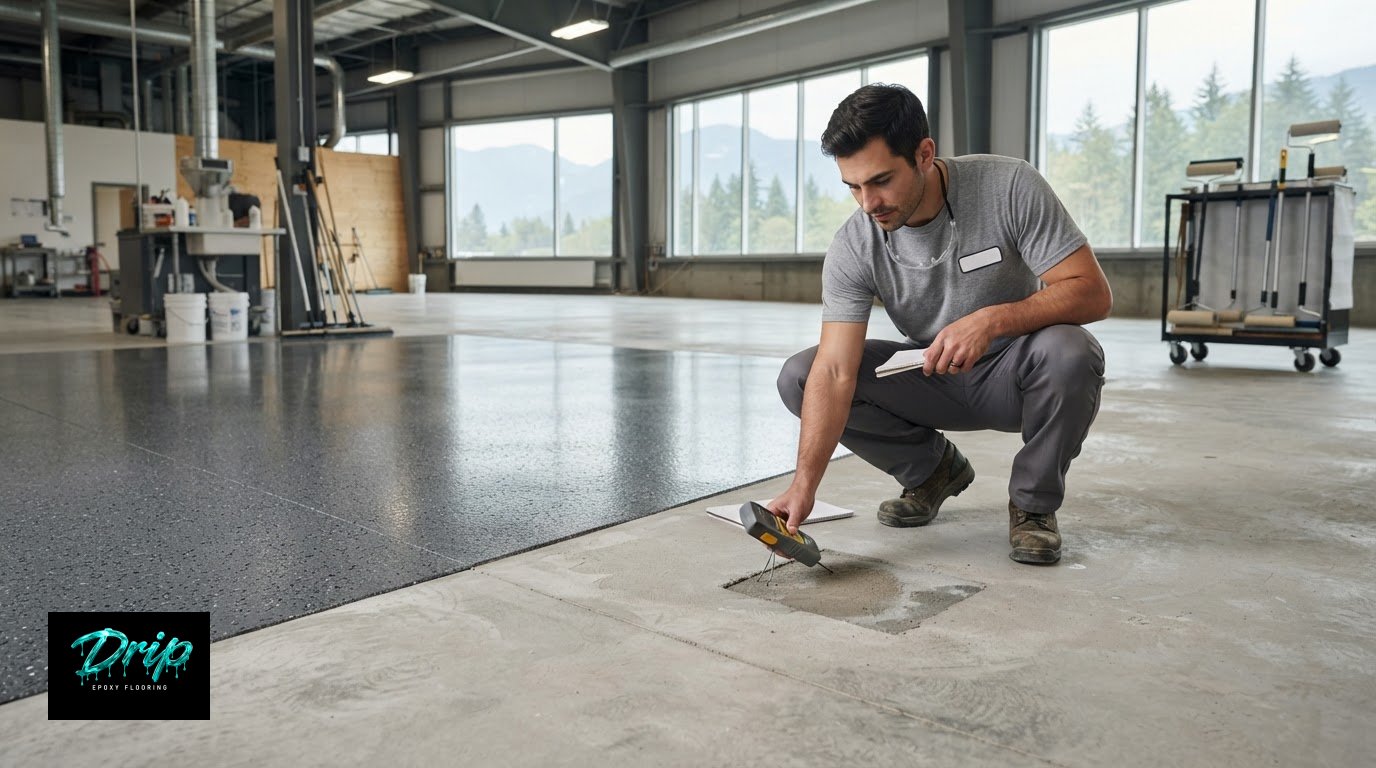
What if a commercial floor’s weak point isn’t the coating, but the concrete beneath it? A polished finish can’t make up for poor surface preparation or a system that doesn’t suit your facility. When comparing commercial epoxy contractors Langley businesses can hire, look beyond finish samples and timelines. Ask how each team assesses the slab and your operating conditions.
Durability, appearance and disruption all matter, but the right coating depends on how the space is used. Equipment, carts, point loads, spills, cleaning routines and wet areas can affect system selection. Before work begins, a contractor should explain the concrete assessment, preparation method, proposed materials and project sequence. That information helps you compare scopes and plan for operations.
This guide offers a practical way to assess Langley commercial flooring contractors, compare epoxy, quartz, flake and other coating systems, and understand what a professional project should include. You’ll also find questions to ask about installer credentials, concrete preparation and site requirements. Drip Epoxy Flooring is locally owned and operated in Chilliwack and serves Langley, making local project coordination part of the conversation.
Key Takeaways
- Assess traffic, equipment, spills and cleaning routines before choosing a coating system for your facility.
- Compare commercial epoxy contractors Langley businesses can hire by their written scopes, preparation details and system rationale, not finish names alone.
- Understand how epoxy, polyaspartic, quartz, solid-colour, flake and metallic options differ, and which site conditions should guide selection.
- Review the project sequence, from concrete assessment and mechanical diamond grinding through coating application and handover.
- Confirm service coverage, arrange a site review and clarify the proposed scope and next steps.
Table of Contents
- How to assess a commercial epoxy flooring project in Langley
- How to compare commercial epoxy contractors serving Langley
- Which commercial floor coating system fits your Langley facility?
- What should a commercial epoxy flooring scope include before work begins?
- How to shortlist commercial epoxy contractors in Langley and request a quote
How to assess a commercial epoxy flooring project in Langley
Choosing a contractor also means choosing a preparation and installation process. Before comparing finishes, define how the floor needs to perform. A warehouse, service area or commercial kitchen can face different demands from foot traffic, carts, equipment, spills and cleaning. Discuss these conditions during the site review, before colour or decorative effects enter the conversation.
For general background, epoxy resins are used in a range of applications, including protective coatings. This overview can help explain the material, but it can’t determine which flooring assembly suits your slab and operating conditions. That calls for a project-specific assessment.
What should a Langley contractor learn about your facility?
Describe how the space operates: your schedule, busy travel paths, equipment movement, spill types and cleaning methods. Identify fixed equipment, access routes and shutdown windows, along with areas that must remain operational during the work. These details help the contractor plan the sequence and identify site requirements to settle before installation.
Also describe the existing floor. Point out old coatings, visible damage and any known moisture concerns. A contractor serving Langley should consider these details during the site review rather than relying on a finish sample or a brief description. Drip Epoxy Flooring is based in Chilliwack and serves Langley, so its regional coverage can be part of your project-planning discussion.
Why does the concrete condition matter before choosing epoxy?
The slab’s condition affects preparation decisions and whether the proposed coating system is suitable. Existing coatings, surface contamination and visible deterioration may change how the concrete needs to be prepared. Ask what the contractor observed, what preparation they recommend and whether further assessment is needed before specifying the system.
Assess the slab before choosing a finish: the coating can only be specified responsibly once the concrete and its conditions are understood.
Moisture vapour transmission is the movement of moisture through concrete, which can cause bubbling and delamination in floor coatings. If you know of moisture concerns, raise them during the site review and ask how they will be assessed. The recommendation should account for the substrate as well as traffic, equipment, spills and cleaning. This gives you a more useful basis for comparing commercial epoxy contractors Langley facilities may consider, before appearance becomes the deciding factor.
How to compare commercial epoxy contractors serving Langley
Once you’ve outlined your facility’s needs, compare each contractor’s proposed process, not just the finish name or appearance. A written scope should explain how the team will assess the slab, prepare it, select a coating system and coordinate the work. The Association for Materials Protection and Performance explains the role of protective coatings for concrete. For your project, the contractor should connect that purpose to your site conditions and intended use.
Apply the same criteria to each proposal. If a detail is missing, ask for clarification rather than assuming it is included.
| Scope item | What to look for |
|---|---|
| Site assessment | Notes on slab condition, existing coatings, visible damage and site concerns that may affect preparation. |
| Preparation detail | The proposed method and how it addresses the observed concrete surface. |
| System rationale | An explanation linking the recommended coating to your traffic, equipment, spills and cleaning routines. |
| Project sequencing | Work stages, access restrictions and how the planned sequence relates to your operating requirements. |
| Communication | A clear contact point, stated assumptions and a process for discussing site changes or questions. |
Which questions reveal the quality of a contractor’s process?
Ask how the team assesses the concrete and decides what preparation it needs. Then ask why the proposed system fits your facility, considering equipment, traffic, spills and cleaning methods. Request a step-by-step outline of the work, including restricted areas and how the schedule will be coordinated with your operations. Specific answers make proposals easier to compare.
Compare written scopes rather than relying on broad labels such as “industrial” or a named finish. Two proposals may use similar finish terms while describing different preparation and installation processes. For commercial epoxy contractors Langley facility managers are evaluating, a clear scope shows whether the recommendation reflects the actual site.
How should you review qualifications and safety practices?
Ask who will perform the installation and request details of relevant installer certifications, including the issuing organization and scope. Verify credentials where applicable, and don’t treat a general claim of certification as proof of a particular qualification. Ask what site-specific safety planning is proposed and what any standards claim means for your project. A broad safety statement alone doesn’t establish project-specific compliance.
Look for documented, project-specific explanations rather than promises that a floor will last indefinitely or meet every requirement. You can discuss your project scope with Drip Epoxy Flooring, a locally owned and operated contractor based in Chilliwack and serving Langley.
Which commercial floor coating system fits your Langley facility?
No coating system is right for every commercial slab. Selection depends on concrete condition, traffic, equipment, spills, cleaning routines and the appearance you want. A system that suits a dry showroom may not suit a work area exposed to moisture or oily residue. Ask the contractor to explain how each option addresses your facility’s actual conditions rather than recommending a finish by name alone.
When should you consider epoxy, polyaspartic, or a combined system?
Epoxy is one resinous flooring option, not an automatic fit for every facility. Commercial polyaspartic flooring may be considered when cure timing, UV exposure or abrasion resistance factor into the decision. A polyaspartic topcoat is a UV-stable, fast-curing clear coat applied over epoxy or base layers for durability and chemical resistance. Its advantages can include higher abrasion resistance, UV stability and faster cure times than standard epoxy. The proposed system still needs to suit the slab and the work planned for the space.
Compare system options against your operating requirements, not a generic performance claim. Ask what each layer does, how the concrete will be prepared and what access restrictions apply during installation and curing.
When might quartz flooring or another finish suit the site?
Quartz flooring embeds quartz grains into resin to create a hard, slip-resistant surface. Consider its texture alongside the facility’s exposure and cleaning routines: the texture needed for wet or oily conditions may affect how the floor is cleaned. Discuss where spills occur, how staff move through the area and what maintenance the surface will require. The CCOHS guidance on slips and falls can inform your workplace safety review, but it doesn’t replace a site-specific assessment or determine which system is suitable.
- Solid-colour coatings provide a uniform appearance when a consistent finish is the priority.
- Decorative flake systems add a broadcast decorative finish. Review the proposed system and care requirements with the contractor.
- Metallic epoxy creates a distinctive visual effect. Confirm that the finish suits the facility’s use and maintenance expectations.
Finish choices don’t replace the need to match the coating assembly to the substrate and operating conditions. Ask commercial epoxy contractors Langley businesses are considering to explain the trade-offs in writing, including how traffic, spills, appearance goals and routine cleaning informed the recommendation. Buyer guides can support your comparison, but the final system choice should be based on a review of your site.
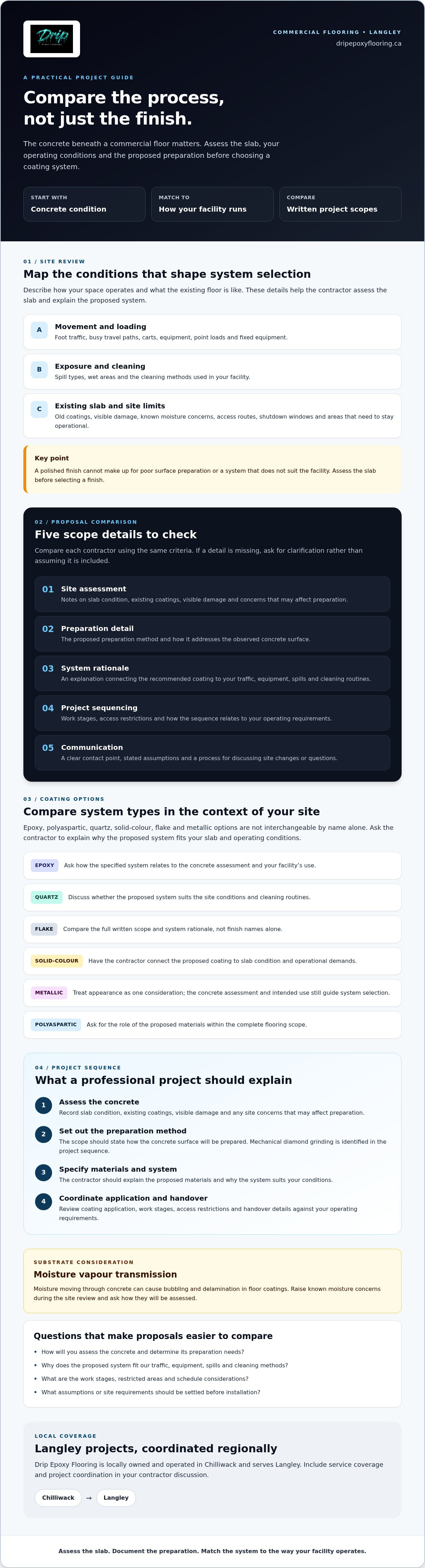
What should a commercial epoxy flooring scope include before work begins?
A clear scope should document the project from the initial slab review through handover. Use this sequence to check that preparation, installation steps and operational requirements are defined before work starts.
- Site assessment: Record the concrete condition, existing coatings, visible contamination or damage, known moisture concerns and areas included in the work.
- Preparation plan: Ask what preparation the slab needs and how the contractor will address existing coatings or surface contaminants. Discuss concrete preparation and coating application as connected parts of the proposed scope.
- Moisture review: Ask whether moisture vapour transmission needs further assessment before coating. Moisture moving through concrete can contribute to bubbling or delamination, so the scope should state how known concerns will be addressed or investigated.
- Application details: Confirm the proposed coating system, application stages and areas covered. The written scope should identify the included work rather than relying on a finish name alone.
- Handover: Clarify what information you’ll receive at completion, including care guidance and any access or use instructions relevant to the installed system.
What preparation steps should the contractor explain?
Ask how the contractor will inspect the slab for coatings, contamination or other conditions that could affect preparation. Mechanical diamond grinding removes surface contaminants and opens concrete pores for better coating adhesion. The proposed method should respond to what the site review finds, not appear as a generic step without explanation.
Raise any known moisture concerns and ask whether further assessment is needed. The scope should distinguish observed conditions from assumptions that still need confirmation.
How can project sequencing reduce operational disruption?
Project sequencing means planning the order of work to minimize disruption to facility operations. Review the proposed sequence with the contractor in practical terms: site access, work zones, equipment movement and operating constraints. For example, identify routes that must remain clear, fixed equipment that limits access and areas that can’t be taken out of service at the same time.
Agree on how the contractor will communicate progress, changes and access requirements to your facility contact. Clear updates help staff plan around affected areas, but they don’t replace a written sequence that reflects actual site needs.
Once your scope checklist is ready, request a commercial flooring quote and share the site details contractors need to define the proposed work.
How to shortlist commercial epoxy contractors in Langley and request a quote
Build your shortlist around project fit, not a finish sample. Confirm that the contractor serves your Langley location, then ask how they’ll review the concrete and your facility’s operating requirements. Compare written scopes for preparation, coating system, project sequence and site responsibilities before deciding which proposal addresses your needs most clearly.
Drip Epoxy Flooring is locally owned and operated in Chilliwack and serves Langley. Review its commercial epoxy flooring services as part of your research, then consider whether the proposed system and project plan match your site.
What information should you prepare for a contractor enquiry?
Share enough detail for the contractor to understand how the floor is used and what may affect the work. Include:
- Your facility type and approximate work area.
- Foot-traffic patterns, carts, equipment, point loads and areas of repeated travel.
- Spills, cleaning methods and any wet or oily areas.
- Existing coatings, visible concrete damage and known moisture concerns.
- Access limits, fixed equipment, operational constraints and scheduling needs.
- Your preferred finish, such as solid-colour, decorative flake, quartz or metallic.
Finish preferences can guide the discussion, but they don’t determine the system on their own. Concrete condition and site demands should inform the recommendation. Note which areas need to remain accessible and what constraints could affect project sequencing.
What should you expect after requesting a commercial flooring quote?
The contractor can review the details you provide and determine whether a site assessment is needed to understand the slab and confirm the proposed scope. Ask for written information that identifies the preparation approach, coating system, work sequence, access requirements and site responsibilities. If assumptions remain, ask for them to be stated clearly before comparing proposals.
Use the discussion to confirm next steps, including what additional site information is needed and how the recommendation will relate to your facility’s conditions. A clear scope gives you a sound basis for evaluating commercial epoxy contractors Langley businesses may consider, without treating a finish name as proof of system fit.
Choose the team whose assessment and written plan address your concrete, operations and finish goals. Request a Langley commercial flooring quote to start a project discussion.
Choose a team with a clear plan for your floor
Start your commercial floor decision with the concrete and the conditions it needs to handle. Compare contractors’ written scopes for preparation, system rationale, application sequence and site requirements, then confirm how the work will fit your operations. These details matter more than a finish name alone.
When assessing commercial epoxy contractors Langley facilities can work with, ask how each recommendation accounts for traffic, equipment, spills and cleaning. Drip Epoxy Flooring is locally owned and operated in Chilliwack and serves Langley. Its commercial and industrial coating options include epoxy, polyaspartic, quartz, solid-colour, flake and metallic systems.
A site-specific review and transparent scope give you a stronger basis for choosing a system suited to your facility. Share your concrete conditions, operating needs and finish preferences to begin the discussion. Request a commercial flooring quote and take the next step with a clear understanding of the proposed work.
Frequently Asked Questions
How do I choose a commercial epoxy contractor in Langley?
Compare commercial epoxy contractors Langley businesses can hire by reviewing their site assessment, preparation plan, system rationale and written scope. Ask how the recommendation accounts for your concrete, foot traffic, equipment, spills and cleaning routines. Confirm who will perform the installation and request details of relevant installer certifications, verifying credentials where applicable. A clear explanation of work stages, access requirements and communication is more useful than a finish name or broad durability promise.
What should a commercial epoxy flooring contractor inspect before recommending a system?
A contractor should review the concrete and the facility’s operating demands before recommending a coating system. Discuss existing coatings, visible damage, surface contaminants and any known moisture concerns. Explain how staff, carts and equipment move through the space, along with spills and cleaning methods. The review should also account for fixed equipment, access routes and areas that need to remain operational. These details connect preparation and system selection to your site.
Is epoxy flooring suitable for every commercial facility?
No single coating system suits every commercial facility. Epoxy may be one option, but suitability depends on the concrete, traffic, equipment, exposure, appearance goals and maintenance routines. A dry customer area and a space with regular spills or wet cleaning may call for different considerations. Ask the contractor to explain why the proposed system fits your conditions and whether other options, such as quartz or polyaspartic systems, should be considered.
What is mechanical diamond grinding, and why is it part of floor preparation?
Mechanical diamond grinding is a preparation process that removes surface contaminants and opens concrete pores for better coating adhesion. The contractor should explain how the proposed preparation relates to the slab’s condition and any existing coating. Ask what they expect to find during preparation and how they’ll address conditions that may affect the coating application.
How can commercial floor coating work be planned around business operations?
Share your operating schedule, access limits, equipment locations and areas that must remain in use. Ask the contractor to describe project sequencing, including work zones, equipment movement, access restrictions and how progress or changes will be communicated to your facility contact. This discussion helps you plan around affected areas and coordinate with staff. Confirm the proposed sequence in the written scope, along with site responsibilities and requirements, before work begins.
Does Drip Epoxy Flooring serve commercial flooring projects in Langley?
Yes. Its local service area also includes Abbotsford, Mission, Surrey, Coquitlam, Burnaby, Hope, Harrison Hot Springs and Agassiz. Commercial and industrial coating options include epoxy, polyaspartic, quartz, solid-colour, decorative flake and metallic systems. Share your facility details and ask whether a site assessment is needed to clarify the proposed preparation and system before requesting a quote.