matte finish epoxy flooring · 13 min read ·
Matte Finish Epoxy Flooring: Appearance, Performance, and Selection
The finish that looks quieter may not be safer or easier to clean. Matte finish epoxy flooring reflects less light than a glossy surface, but sheen alone doesn’t determine traction, wear, or maintenance. The concrete, co
By Drip Epoxy Flooring · Chilliwack, BC
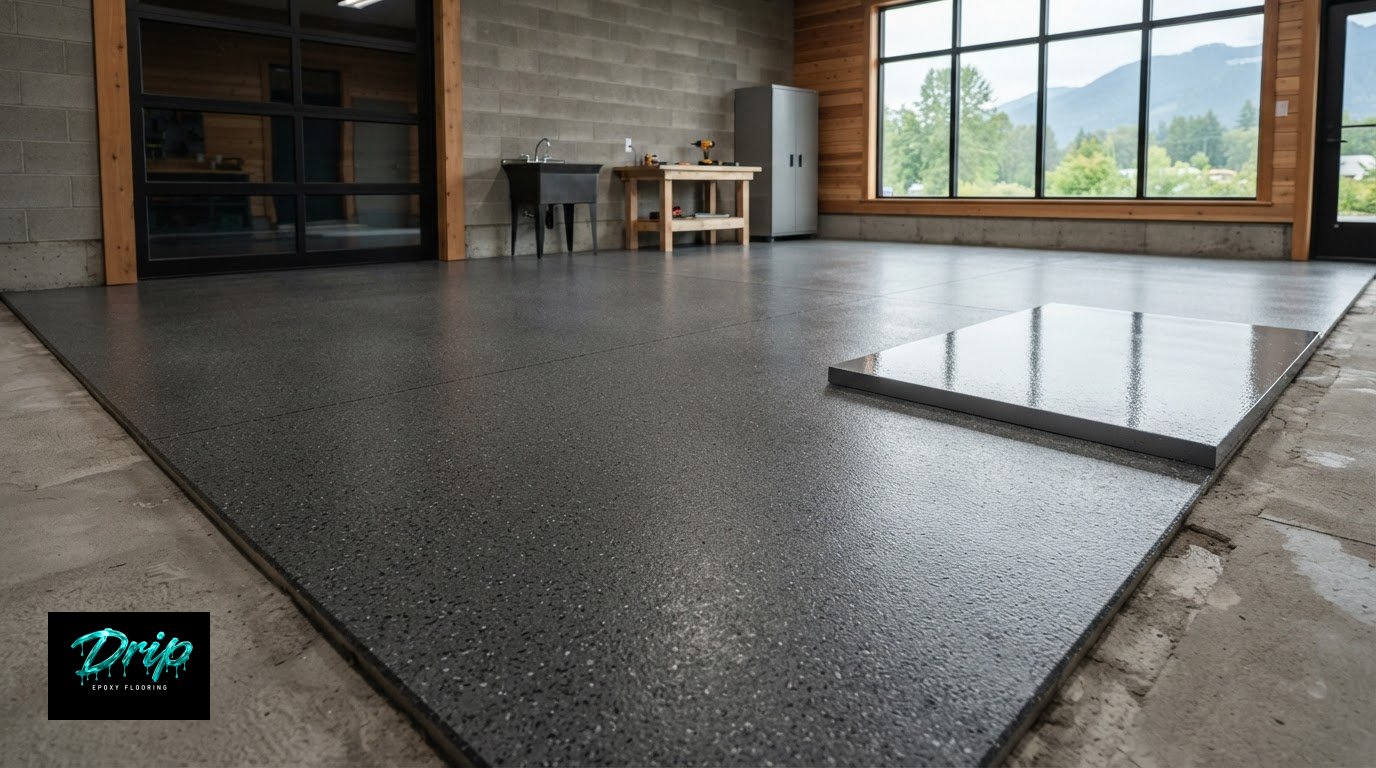
The finish that looks quieter may not be safer or easier to clean. Matte finish epoxy flooring reflects less light than a glossy surface, but sheen alone doesn’t determine traction, wear, or maintenance. The concrete, coating system, surface texture, and conditions in the room all matter.
If you’re comparing matte and gloss, it’s reasonable to wonder whether the visual difference will affect day-to-day use. This guide explains what “matte” describes, how it differs from gloss, and what to assess before choosing an epoxy floor.
You’ll learn how lighting and room use influence the floor’s appearance, why matte shouldn’t be treated as a substitute for assessing slip resistance, and how to compare samples under realistic conditions. You’ll also find practical questions to discuss with an installer about concrete preparation, coating layers, and the texture suited to your space.
Key Takeaways
- Matte describes a lower-sheen appearance, not a separate resin or complete flooring system. The final look also depends on colour, texture, application, and the selected coating layers.
- Assess the concrete condition before choosing a decorative finish, since preparation affects the finished floor’s appearance.
- Compare matte and glossy epoxy samples under your space’s lighting. Neither sheen alone determines durability, safety, or ease of cleaning.
- Before selecting matte finish epoxy flooring, record how the room is used, including traffic, equipment, cleaning routines, and exposure conditions.
- Discuss how your finish preference relates to the concrete and intended use, whether your project is in Chilliwack or another Fraser Valley service area.
Table of Contents
What Does Matte Finish Epoxy Flooring Look Like?
Matte finish epoxy flooring has a low-sheen appearance that reflects less light than a glossy floor. It isn’t a separate resin or complete flooring system. The final appearance depends on the coating layers, colour, surface texture, and application over prepared concrete. Two floors described as matte can still look different if their coating systems or decorative finishes differ.
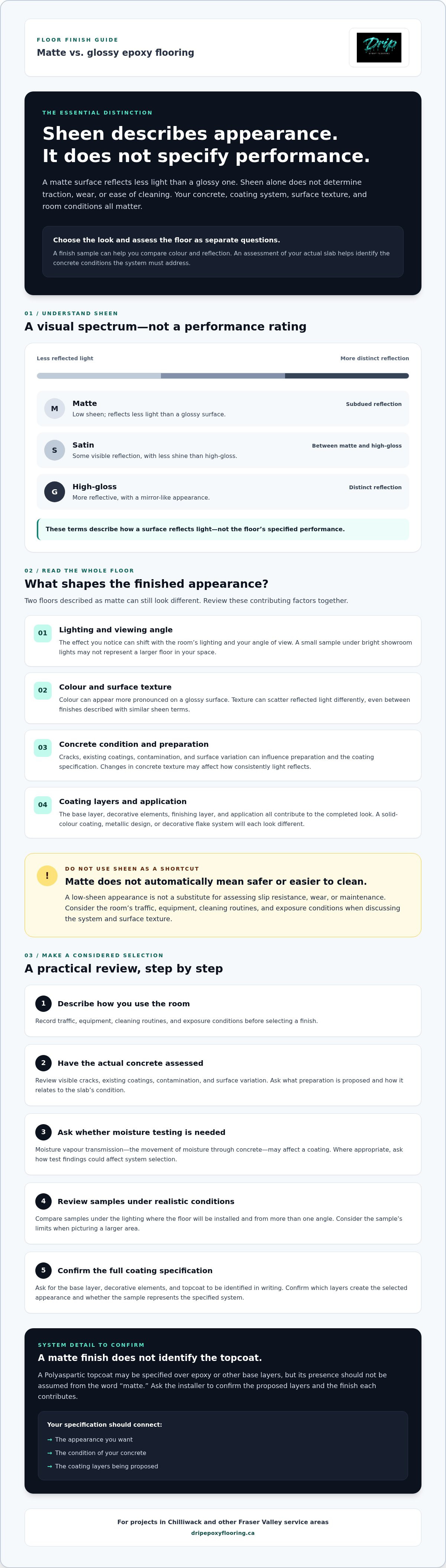
Sheen describes how a surface reflects light: matte has a subdued reflection, satin sits between matte and high-gloss, and high-gloss creates a more distinct, mirror-like reflection. These are visual descriptions, not measures of floor performance. Sheen describes appearance; the coating system determines the floor’s specified performance.
How Is a Matte Floor Different from a Glossy Epoxy Floor?
A matte surface gives a space a softer, less reflective character, while a glossy surface reflects more light and can make colours appear more pronounced. Satin offers a middle ground, with some visible reflection but less shine than high-gloss. The difference you notice can shift with the room’s lighting, your viewing angle, the colour, and the texture. A textured finish may scatter reflected light differently from a smooth one, even when both are described with similar sheen terms.
Review samples under the lighting where the floor will be installed, and look at them from more than one angle. A small sample viewed under bright showroom lights may not represent the effect across a larger floor or in a room with different lighting.
Does Matte Describe the Coating or the Topcoat?
Matte identifies the intended visible sheen, not the chemistry or performance of the complete floor. Epoxy describes a family of materials used in coatings; you can read an overview of epoxy resins for background on their properties and applications. The proposed system may include decorative or base layers and a finishing layer. Ask for a specification that identifies the layers and explains what creates the selected appearance.
A Polyaspartic topcoat may be specified over epoxy or other base layers, but its presence shouldn’t be assumed from the word “matte.” Ask the installer to confirm the proposed layers, the finish each layer contributes, and whether the sample represents that full specification. For a solid-colour option, review the details of solid-colour epoxy coatings alongside the intended sheen.
Confirm the appearance and system together before making a selection. A clear specification connects the finish you want with the coating layers being proposed.
How the Coating System and Concrete Shape a Matte Epoxy Floor
The appearance of matte finish epoxy flooring depends on more than the sheen selected. The specified coating layers, decorative elements, application, and condition of the concrete all contribute to the finished surface. A sample can help you assess colour and reflection, but it can’t show how your particular slab will look once coated.
A finish sample can guide your choice, but an assessment of the actual floor is needed to understand the concrete conditions the system must address.
Why Concrete Assessment Comes Before Finish Selection
Before settling on a decorative finish, have the concrete assessed for visible cracks, existing coatings, contamination, and surface variation. These conditions can influence preparation and the coating specification, which in turn affect how consistently the finish appears. For example, changes in concrete texture across a slab may affect how light reflects from the completed surface.
Moisture vapour transmission, the movement of moisture through concrete, may also affect a coating. Where appropriate, ask whether moisture testing is needed and how the findings could affect system selection. Preparation should be based on the actual slab, not just the appearance you want. Ask what concrete preparation steps are proposed for your project and how they relate to the floor’s condition.
How Finish Layers Affect the Final Appearance
Ask the installer to describe the proposed system by layer: the base layer, any decorative elements, and the topcoat. A solid-colour coating, metallic design, or decorative flake system will each contribute differently to the floor’s visual character. The application and prepared surface also matter. Request a written specification for the system being considered, including the finish layers.
A Polyaspartic topcoat may form part of some systems, but it isn’t automatically included in every epoxy floor or required to produce a matte appearance. Confirm which layer creates the selected sheen and whether the sample represents the proposed combination. For broader context on industry standards for coating performance, consult the Association for Materials Protection and Performance; check performance claims against the documentation for the specific system.
Keep appearance separate from performance decisions. Matte sheen alone doesn’t establish abrasion resistance or slip resistance, and it can’t tell you whether the coating suits your traffic, equipment, or cleaning routine. Those factors need to be addressed in the system specification. If you’re considering a project, you can discuss your floor’s concrete condition and coating requirements with Drip Epoxy Flooring.
Matte vs. Glossy Epoxy Flooring: How to Compare the Look
Matte and glossy finishes change how light interacts with the floor, but neither sheen tells you on its own how durable, safe, or easy to clean a coating will be. Your choice is primarily visual. Assess samples in the room where the floor will be installed, alongside the proposed coating system and the space’s intended use.
| Comparison point | Matte | Glossy | What to check |
|---|---|---|---|
| Light reflection | Lower, more subdued reflection | Stronger, more defined reflection | View samples under the room’s natural and installed lighting. |
| Visual character | A restrained appearance, with less visible shine | A brighter, more reflective appearance | Consider the floor alongside wall colours, furnishings, and other finishes. |
| Sample review | Perceived sheen can shift with colour, texture, and viewing angle. | Reflections can look different as your position and lighting change. | Check the sample from multiple angles and ask if it represents the proposed system. |
Satin sits between matte and high-gloss in apparent reflection. For another overview of finish characteristics, see this epoxy flooring finish comparison. Treat descriptions such as matte, satin, and glossy as visual guidance, not evidence of a particular performance level.
When Might a Matte Appearance Suit Your Space?
If you prefer a restrained look, matte may be worth considering, but the result depends on the full room. At home, compare the sample with cabinetry or furnishings; in retail, consider display colours and lighting; in a work area, look at fixed equipment and surrounding surfaces. Consider both daylight and installed lights, since the floor’s appearance can change across the room. For a more decorative direction, compare matte with the visual movement offered by metallic epoxy flooring.
What Should You Check in Epoxy Floor Samples?
Review physical or visual examples for colour, texture, and apparent sheen. Place a sample beside representative materials and examine it under the lighting you expect in the space. Look from several viewing angles, not only directly overhead. Ask whether the sample uses the proposed base layer, decorative elements, and topcoat; otherwise, it may not represent the completed floor. Drip Epoxy Flooring offers a range of decorative systems, including metallic, quartz, and flake finishes, which you can discuss when comparing visual options.
Use samples to narrow your preference, then confirm the finish against the actual room and specified coating system. That’s a more reliable basis for choosing matte finish epoxy flooring.
How to Choose a Matte Epoxy Finish for Your Concrete Floor
Choose the finish as part of the floor specification, not as a stand-alone colour or sheen decision. These steps help you move from a visual preference to a system that can be assessed against the concrete and the way you use the space.
- Define the use. Note whether the area is residential, retail, or a work space, and describe the activity the floor needs to accommodate.
- Record operating conditions. List foot traffic, equipment, spills or other exposure, and routine cleaning methods. For commercial floors, include access limits and project sequencing so the work plan can account for facility operations.
- Review the concrete. Record visible cracks, surface variation, contamination, existing coatings, and areas where a coating appears to be failing. Ask whether moisture vapour transmission should be assessed as part of the site review.
- Compare samples. View them under the room’s lighting, beside representative colours and materials, and from different angles. Confirm whether each sample reflects the proposed coating layers and texture.
- Confirm the specification. Ask the installer to identify the system layers that will create the requested matte appearance and explain how the proposed system relates to your site conditions.
What Should You Tell an Installer About the Space?
Be specific about how the floor is used. A home area may see regular foot traffic and household cleaning, while a commercial space could include carts, equipment, spills, and fixed work stations. Share your cleaning routine and exposure conditions, too. Point out existing coatings, visible failures, cracks, or changes in the concrete surface so they can be considered during assessment.
In an operating facility, explain when areas can be made available and what routes or equipment must remain accessible. Those details can help inform project sequencing. Drip Epoxy Flooring provides concrete surface preparation as part of its coating installation services, so ask how preparation would address the conditions found in your space.
What Questions Help Confirm the Finish Specification?
Ask which base layer, decorative elements, and topcoat are proposed, and which layer creates the matte sheen. Confirm that the sample represents those layers, not just a similar colour or texture. Ask how site lighting and the assessed concrete may affect the finished appearance. Request written maintenance guidance and clarification of claims about abrasion resistance or slip resistance, including what system details support them.
Check a matte preference against the complete proposed system before approving the specification. To discuss your concrete floor and finish requirements, request a project assessment.
Planning Matte Finish Epoxy Flooring in the Fraser Valley
For matte finish epoxy flooring, project planning should connect the appearance you want with the concrete beneath it and the way you use the space. A sample can guide your preference, but it can’t show the full condition of your slab or confirm which coating system suits the project. Decisions should account for both finish expectations and site requirements.
Drip Epoxy Flooring is locally owned and based in Chilliwack, with service coverage across the Fraser Valley and Lower Mainland. Project locations include Chilliwack, Abbotsford, Mission, Langley, Surrey, Coquitlam, Burnaby, Hope, Harrison Hot Springs, and Agassiz. The company provides epoxy and polyaspartic coating installations for residential, commercial, and industrial spaces.
What Happens During a Local Flooring Assessment?
A project discussion can cover the concrete’s visible condition, existing coatings, and any areas that may need further evaluation, alongside your intended use and preferred finish. Clarify how lighting, colour, and texture relate to the matte appearance you’re seeking. A system recommendation depends on the concrete and project requirements, so confirm the proposed layers and preparation rather than relying on sheen descriptions alone.
How to Prepare for a Matte Epoxy Flooring Quote
Useful project details help frame the conversation. Before requesting a quote, gather:
- Photos of the floor and any visible cracks, surface variation, or coating failures.
- The project location and approximate floor area.
- Notes on foot traffic, equipment, spills or other exposure, and regular cleaning routines.
- Your preferred appearance, including colour, texture, and the matte samples or references you’ve reviewed.
For a commercial or industrial area, also note access constraints and operational requirements that may affect project sequencing. Share concerns about the existing concrete and ask which details need an on-site review. This gives the installer a clearer starting point, while recognising that photos or measurements don’t replace reviewing the floor itself.
Once you’ve gathered these details, request a free flooring quote and include your location, floor information, intended use, and finish preference. Clarify how the proposed coating system and preparation relate to your site before approving a specification.
Choose Your Finish With the Full Floor in Mind
Matte finish epoxy flooring is a visual choice, not a stand-alone indicator of how a floor will perform. The final appearance depends on the specified coating layers, colour, texture, application, and prepared concrete. Compare samples in your space’s lighting, then assess the concrete and intended use before confirming a system.
Keep sheen separate from performance claims. Matte or glossy alone doesn’t establish abrasion resistance, slip resistance, or maintenance needs. Ask the installer to explain the proposed system, preparation steps, and care guidance in relation to your floor’s traffic, equipment, and cleaning routine.
Drip Epoxy Flooring is locally owned and operated in Chilliwack, and provides epoxy and polyaspartic floor coating installations across the Fraser Valley and Lower Mainland. Its coating options include metallic, solid-colour, quartz, and decorative flake systems.
Ready to connect your finish preference with your concrete conditions? Request a free flooring quote and share your location, intended use, and the details you’ve gathered. Start by discussing the concrete, preparation, and proposed system for your project.
Frequently Asked Questions
What is matte finish epoxy flooring?
Matte finish epoxy flooring is a concrete floor coating system with a low-sheen appearance that reflects less light than a glossy finish. Matte describes the visible sheen, not a separate resin or complete flooring system. The finished look depends on the coating layers, colour, texture, concrete preparation, and application. Ask which parts of the proposed system create the matte appearance and whether your sample represents those layers.
Is matte epoxy flooring less slippery than glossy epoxy flooring?
Not necessarily. Sheen alone doesn’t establish a floor’s slip resistance. Traction depends on factors such as the surface profile, contaminants, moisture, footwear, and how the floor is maintained. Tell the installer whether the area may be wet or exposed to oils, and ask how slip resistance will be assessed for its use. A matte appearance shouldn’t be treated as a substitute for selecting an appropriate surface texture.
Can epoxy flooring have a matte finish?
Yes. An epoxy floor can be specified with a matte appearance, but the finish depends on the complete coating specification. Ask the installer to identify the base layer, any decorative elements, and the topcoat, then confirm which layer creates the requested sheen. Some systems may include a Polyaspartic topcoat, but don’t assume it’s part of every epoxy floor. Check that samples represent the proposed layers.
Does matte epoxy flooring hide scratches or imperfections?
A matte surface may make minor marks or surface variation less noticeable in some lighting, but it doesn’t hide damage or correct defects in the concrete. The appearance depends on colour, texture, light, and viewing angle. Ask the installer to assess cracks, existing coating failures, and surface variation before choosing a finish. Discuss specific concerns using the actual floor and a sample of the proposed system.
How do you clean matte epoxy flooring?
Follow the maintenance instructions provided for the specific coating system, since cleaning guidance can vary by product and surface texture. Ask which cleaning products and methods are suitable, and whether the routine should account for spills or tracked-in dirt in your space. Regular cleaning helps remove contaminants that can affect the floor’s appearance and traction. Don’t infer cleaning requirements from matte sheen alone.
What should I check before choosing a matte epoxy floor?
Start with how you use the room, including foot traffic, equipment, spills, exposure conditions, and cleaning routines. Then have the concrete assessed for cracks, old coatings, contamination, surface variation, and possible moisture vapour transmission. Compare samples in the room’s lighting and confirm they match the proposed system. For projects in Chilliwack, Abbotsford, Mission, Langley, Surrey, Coquitlam, Burnaby, Hope, Harrison Hot Springs, or Agassiz, include the location in your planning discussion.
Can matte epoxy flooring be installed over an existing coating?
It may be possible, but the existing coating must be assessed before a system is selected. Its condition, adhesion, contamination, and compatibility with the proposed layers can affect preparation requirements. Point out peeling, flaking, or other visible failures during the site review. The installer should explain whether the coating can remain or needs further preparation or removal, rather than assuming the new system can be applied over it.