cost of polished concrete vs epoxy · 12 min read ·
Cost of Polished Concrete vs. Epoxy: What BC Property Owners Should Compare
If you’re researching the cost of polished concrete vs epoxy, start by comparing the work each finish requires, not just how it looks. Polished concrete is mechanically refined from the existing slab, while epoxy is a re
By Drip Epoxy Flooring · Chilliwack, BC
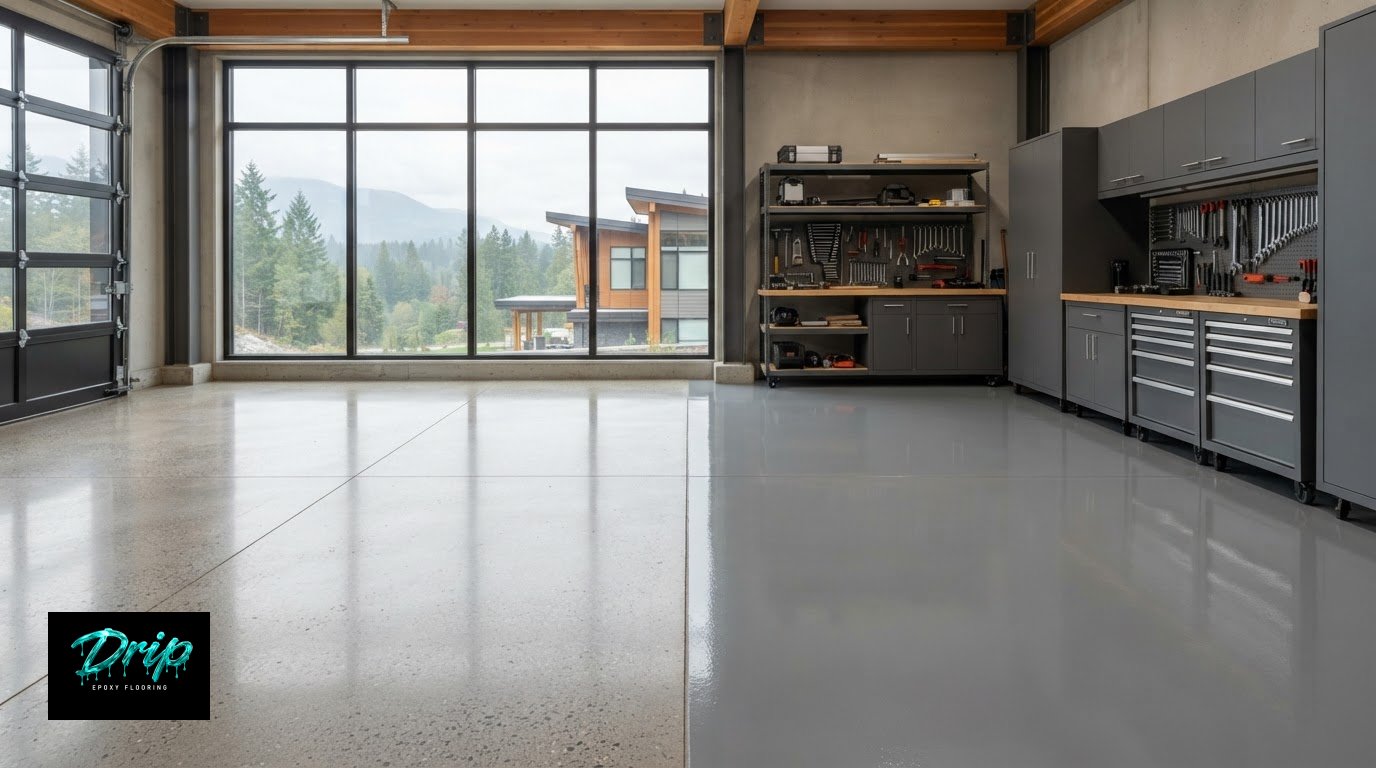
If you’re researching the cost of polished concrete vs epoxy, start by comparing the work each finish requires, not just how it looks. Polished concrete is mechanically refined from the existing slab, while epoxy is a resinous coating system applied over prepared concrete.
For a garage, commercial space or industrial facility in British Columbia, the right fit depends on the slab’s condition and how the room is used. Cracks, previous coatings, moisture concerns and the finish you want can all affect preparation and project scope.
This guide compares the two approaches by preparation, appearance and upkeep. Before planning a project, note the floor’s current condition, the space’s traffic and exposure, and your preferred finish. Those details help you assess whether a mechanically finished slab or a resinous coating better suits the site.
Key Takeaways
- Polished concrete and epoxy use different processes, and each depends on the condition of your existing slab.
- Review the room’s use, traffic, spills and cleaning routine to identify which flooring characteristics matter most.
- Look for visible damage, moisture concerns and previous coatings, since slab conditions can affect preparation and project scope.
- Consider appearance and upkeep, from mechanically refined concrete to epoxy colour and decorative options.
- For project planning in Chilliwack or elsewhere in the Fraser Valley and Lower Mainland, gather details about your slab, intended use and finish preferences.
Table of Contents
- Polished Concrete vs. Epoxy: Why the Difference Starts With Your Existing Slab
- How Polished Concrete and Epoxy Are Prepared and Installed
- Polished Concrete vs. Epoxy: Compare Appearance, Use, and Upkeep
- How to Choose Between Polished Concrete and Epoxy for Your Project
- Planning an Epoxy Floor Project With Drip in the Fraser Valley
Polished Concrete vs. Epoxy: Why the Difference Starts With Your Existing Slab
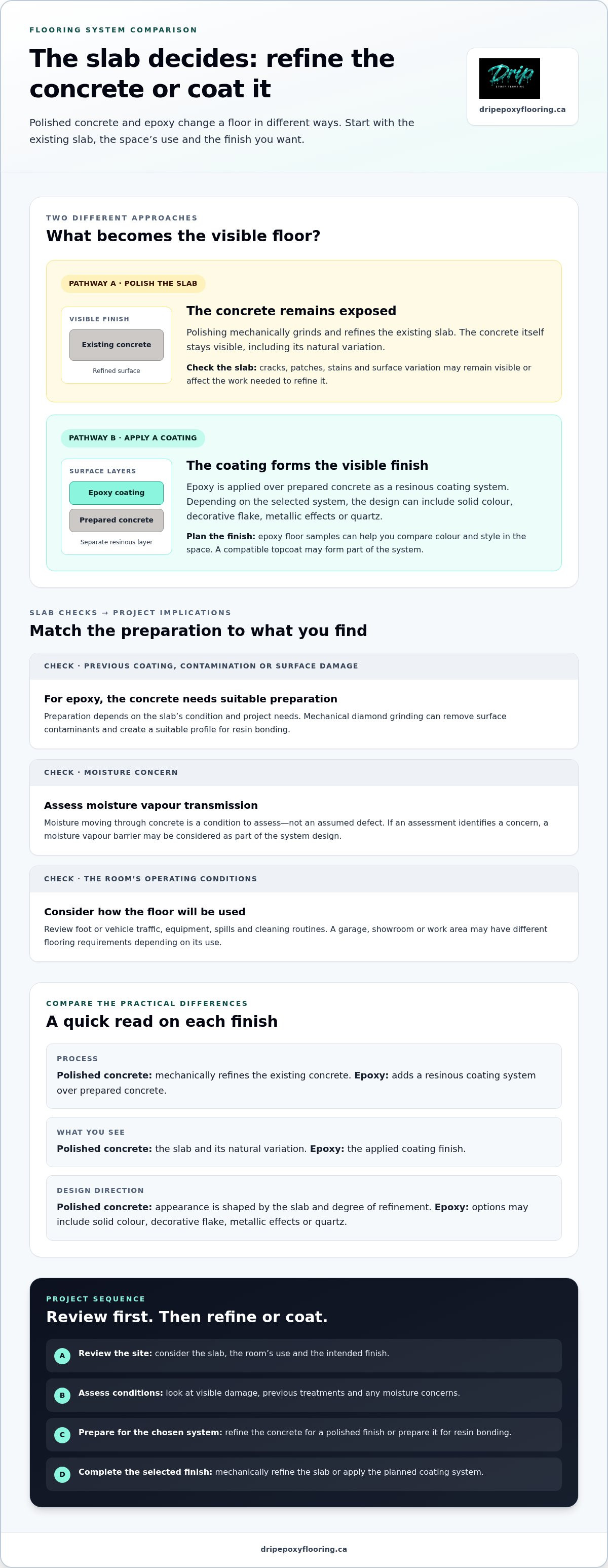
Polished concrete and epoxy can both change a floor’s appearance and function, but they do so in different ways. Polished concrete is mechanically refined from the existing slab, while epoxy is a resinous coating system applied over prepared concrete. With polished concrete, the concrete itself remains visible. With epoxy, the coating forms a separate surface layer.
That distinction matters when planning a floor for a garage, commercial space or industrial facility. The slab’s condition, how the room is used and the finish you want all shape the decision. A floor exposed to vehicle traffic, spills or frequent cleaning has different requirements from one selected mainly for the natural character of its concrete. Cracks, surface damage, contamination, moisture concerns and old coatings can also affect preparation and the finished result.
This guide compares project scope and practical fit without quoting prices or cost figures. First consider what each system changes, then assess whether your concrete and operating conditions suit the finish you want.
What polished concrete changes about the slab
Polished concrete is created by mechanically grinding and refining the existing surface through progressively finer stages. The slab remains the visible flooring material, and the process brings out its natural variation rather than covering it with a separate coating. Polished concrete relies on mechanical grinding to produce this type of finish.
Because the slab stays on display, its condition influences the appearance you can achieve. Patches, cracks, stains and variations in the concrete may remain visible or affect the work needed to refine the surface. An assessment helps identify these conditions and plan for them.
What an epoxy floor adds to concrete
Epoxy is applied over prepared concrete, creating a resinous surface layer rather than exposing the slab as the finish. Depending on the selected system, colour, decorative flake or metallic effects can shape the appearance, and a compatible topcoat may form part of the system. Epoxy floor samples can help you compare colour and style in the space.
Preparation is essential to plan a coating system around the slab. Professional concrete preparation can include mechanical diamond grinding to remove surface contaminants and create a suitable profile for resin bonding. The work required depends on existing coatings, surface condition and project needs.
How Polished Concrete and Epoxy Are Prepared and Installed
Installation planning starts with the existing floor, not the finish sample. The slab’s condition, the room’s use and the selected system determine the preparation and work sequence. Preparation must match the flooring system: polishing refines the concrete itself, while epoxy preparation creates a suitable surface for a resinous coating to bond to.
A practical project sequence includes a site review, assessment of visible damage and previous treatments, preparation, then either mechanical refinement or coating application. The American Concrete Institute provides technical information on concrete materials and construction, including factors relevant to evaluating a slab.
The polished concrete process from assessment to finish
Polishing starts with an inspection of the concrete, followed by mechanical grinding to refine the surface. The work progresses toward the selected finish, with the existing slab remaining exposed. Cracks, patches, stains and surface variation can influence both the work required and the finished appearance. Polishing is not a resinous coating application: it refines the concrete instead of adding a separate floor layer.
The epoxy flooring process and preparation requirements
Epoxy planning starts with a review of the slab, how the space operates and the intended finish. The concrete is prepared before resin layers are applied. Depending on the selected system, the design may include a solid colour, decorative flake or metallic elements, followed by a compatible topcoat. Each stage needs to suit the slab and project requirements.
Moisture vapour transmission, the movement of moisture through concrete, is a condition to assess, not an assumed defect in Abbotsford slabs. If an assessment identifies a moisture concern, a moisture vapour barrier may be considered as part of the system design. The preparation sequence can also change if the floor has existing coatings, contaminants or surface damage. See professional concrete preparation services for more detail on preparing concrete for resin bonding.
Before work begins, align the site review, system choice and project sequencing. After preparation and application or refinement, review the floor against the intended finish and project handover requirements. To plan around your slab and space, share your flooring project details.
Polished Concrete vs. Epoxy: Compare Appearance, Use, and Upkeep
Appearance is only one part of choosing a floor. In a garage, showroom or work area, compare foot traffic, equipment, spills and cleaning routines too. A useful comparison looks at the work involved and the practical fit, rather than treating either finish as the right choice for every space.
| Factor | Polished concrete | Epoxy |
|---|---|---|
| Process | Mechanically refines the existing concrete. | Adds a resinous coating system over prepared concrete. |
| Visible surface | The concrete itself remains exposed, including its natural variation. | The applied coating forms the visible finish. |
| Design choices | Appearance is shaped by the slab and degree of refinement. | Options can include solid colour, metallic effects, decorative flake or quartz. |
| Routine care | Care is directed at the exposed concrete surface. | Care is directed at the selected coating system and its finish. |
Which finish and visual character suit the space?
Polished concrete keeps the floor’s natural character in view, so the finished look depends partly on the slab’s colour, aggregate and existing variation. Epoxy offers more control over colour and decorative appearance. Solid-colour coatings create a consistent look, while metallic effects, flake and quartz add distinct visual textures. Before settling on a style, compare epoxy floor samples in the space and under its lighting.
For broader information about coatings, the American Coatings Association provides industry resources. Performance depends on the system selected, its documentation and the conditions of your project.
How traffic, cleaning, and concrete conditions affect the choice
Map how the floor is used through a typical workday. Consider pedestrian movement, carts, equipment, point loads, spills and cleaning routines. A decorative finish may suit a customer-facing area, while a working space may need a system planned around repeated traffic or exposure. These are factors to assess, not automatic reasons to choose one finish over the other.
Concrete condition is also part of the decision. Damage, previous coatings and moisture concerns may affect preparation and the systems that fit the slab. Where water or spills are part of routine use, a slip-resistant texture may be a relevant design consideration for an epoxy system. The appropriate texture and system depend on the space and product documentation. Match upkeep expectations to the selected finish and its care guidance rather than assuming a universal maintenance schedule.
How to Choose Between Polished Concrete and Epoxy for Your Project
Start with how the room operates, then check whether the existing slab and preferred finish suit those demands. This step-by-step review helps you compare the project scope and practical fit of polished concrete and epoxy without treating either system as the automatic choice.
Start with the space, slab, and daily operating conditions
- 1. Define the room’s function. Note whether it’s a garage, showroom, warehouse or another space, and describe what the floor needs to accommodate.
- 2. Map daily activity. Record pedestrian traffic, carts, equipment, point loads, spills and fixed equipment. Include the cleaning products and methods used in the regular routine.
- 3. Document the slab honestly. Note visible cracks, patches, worn areas, stains, moisture concerns and previous coatings. Existing layers or damage may affect preparation and the flooring options that fit.
- 4. Use assessment findings to guide system selection. Polishing refines exposed concrete; epoxy requires a prepared surface for resin bonding. A site review helps establish the slab’s condition and the preparation needed before either approach is planned.
Don’t assume moisture is present or absent based on the building’s location. If moisture vapour transmission is a concern, assessment findings can inform whether moisture management should be part of an epoxy system design.
Set finish priorities and plan the project conversation
Separate appearance from function before narrowing the options. Decide whether you want the natural character of exposed concrete or more control over colour and decorative detail. Then consider how the finish will suit the space’s traffic, spill exposure and cleaning routine. If epoxy is under consideration, review epoxy floor samples in the room’s lighting to compare colour and style.
For a project-specific quote, prepare the room’s purpose, approximate dimensions, activity and cleaning details, slab observations, previous coating history, moisture concerns and preferred finish. Photos of visible damage or existing layers can help describe site conditions during planning. These details give Drip a clearer starting point to plan an epoxy system and preparation approach for your property.
Once you’ve gathered the information, discuss your flooring project and its site conditions with Drip.
Planning an Epoxy Floor Project With Drip in the Fraser Valley
Comparing polished concrete and epoxy helps clarify which flooring approach fits your priorities. Planning an epoxy project calls for a close look at the site: the slab, room use, finish preference and preparation needs all inform system selection. Drip Epoxy Flooring is a locally owned and operated contractor based in Chilliwack, serving properties across the Fraser Valley and Lower Mainland.
What a project-specific review should account for
Bring together the details that can shape preparation and project sequencing before selecting a system. A site review considers the existing concrete, visible cracks or wear, previous coatings, access to the work area and how the room operates. Share whether the floor sees foot traffic, carts, equipment, spills or regular cleaning, and note any moisture concerns.
These conditions help determine the preparation plan and whether an epoxy or polyaspartic system suits the project. Consider finish choices, such as solid colour or decorative elements, alongside the floor’s day-to-day demands. The work is planned around the concrete and operating requirements, not appearance alone. Explore Drip’s flooring services to learn about the coating systems and preparation work available for project planning.
For a useful starting point, gather the site address, approximate floor area, photos of the existing surface, details of previous coatings, intended use and preferred finish. For commercial or industrial spaces, include equipment movement, fixed machinery and cleaning methods. These details help describe the project scope and support a focused quote discussion.
Taking the next step with a local flooring contractor
Drip serves Chilliwack, Abbotsford, Mission, Langley, Surrey, Coquitlam, Burnaby, Hope, Harrison Hot Springs and Agassiz. The owner completed in-person flooring installation training and certification through XPS Canada. This is installer training, not a certification of flooring products or regulatory compliance.
If your property is in Abbotsford or another Fraser Valley community, bring your slab observations, operating needs and finish priorities into the project conversation. A clear account of access, previous coatings and site conditions helps frame preparation and system selection. Request a project quote to discuss your epoxy flooring requirements.
Choose a Floor That Fits Your Slab and Your Plans
Comparing polished concrete and epoxy means looking at more than appearance. Polished concrete refines the existing slab, while epoxy adds a resinous coating, so the preparation and project scope differ. Your room’s purpose, traffic, spills, cleaning routine and preferred finish should guide the decision.
Before planning a project, note visible damage, previous coatings and any moisture concerns. These details help shape preparation and determine which flooring approach fits the site. For an epoxy system, colour and decorative choices should also suit the space’s daily demands.
Drip Epoxy Flooring is locally owned and operated in Chilliwack, serving communities across the Fraser Valley and Lower Mainland. The owner completed in-person flooring installation training and certification through XPS Canada. To discuss your slab, intended use and finish priorities, request a project quote.
Frequently Asked Questions
Is polished concrete the same as an epoxy floor?
No. Polished concrete is the existing slab, mechanically ground and refined to create the finished surface. Epoxy is a resinous coating applied over prepared concrete, with the coating forming the visible floor. This difference affects preparation, appearance and system selection. Polishing exposes the concrete’s natural variation, while epoxy can add colour or decorative elements. The slab’s condition and the room’s use help determine which approach fits your project.
Can epoxy be installed over polished concrete?
It may be possible, but the polished surface needs assessment and preparation before epoxy application. Polishing can leave a dense, smooth surface that may not provide the profile needed for resin bonding. Mechanical diamond grinding may be part of preparing it, and existing treatments or contaminants also need consideration. The appropriate preparation and coating system depend on the concrete condition and product requirements, so assess the polished slab before planning installation.
Which is better for a garage, polished concrete or epoxy?
Neither is automatically better for every garage. Consider vehicle and foot traffic, spills, cleaning habits, desired appearance and the slab’s condition. Polished concrete leaves the concrete visible, while epoxy adds a coating that can be selected with colour or decorative features. Compare the preparation and finish scope each system requires for your garage instead of choosing by appearance alone.
Does epoxy flooring require concrete preparation?
Yes. Concrete preparation is central to an epoxy flooring project because the coating needs a suitable surface for bonding. The work is planned around the slab’s condition and can include mechanical diamond grinding to remove surface contaminants and create a profile for resin bonding. Cracks, previous coatings, stains and other surface conditions can affect the preparation plan. A site review helps define the work before coating layers are applied.
What happens if the concrete slab has moisture concerns?
Assess moisture concerns before selecting an epoxy system. Moisture vapour transmission is the movement of moisture through concrete, and it can affect coating performance. Assessment findings help determine whether moisture management, such as a moisture vapour barrier, is appropriate for the system and slab. Don’t assume moisture is present based on location alone. The project plan should account for observed conditions and applicable system requirements before installation proceeds.
Is polished concrete easier to maintain than epoxy?
Maintenance depends on the floor’s finish, use and care requirements, so neither option is always easier. Polished concrete has an exposed concrete surface, while epoxy care depends on the selected coating system and its topcoat. Consider the cleaning methods, spills, traffic and equipment the floor will encounter. Follow care guidance for the installed system, and account for the possibility that wear or damage may need attention over time.
How do I choose between polished concrete and epoxy for a commercial space?
Start with the space’s operating conditions: pedestrian traffic, carts, equipment, spills, cleaning routines and fixed machinery. Then document slab damage, previous coatings and any moisture concerns. Compare those findings with the desired finish and preparation scope. Drip Epoxy Flooring plans coating systems around project conditions and serves commercial properties in Chilliwack, Abbotsford, Mission, Langley, Surrey, Coquitlam, Burnaby, Hope, Harrison Hot Springs and Agassiz.