problems with DIY epoxy floor kits · 12 min read ·
Epoxy Floor Coating Problems: Warning Signs, Causes, and How to Prevent Them
Peeling, bubbles or discolouration may point to a concrete or adhesion problem, not just a flaw in the coating. If you’re seeing these signs, problems with DIY epoxy floor kits can leave you wondering whether the floor n
By Drip Epoxy Flooring · Chilliwack, BC
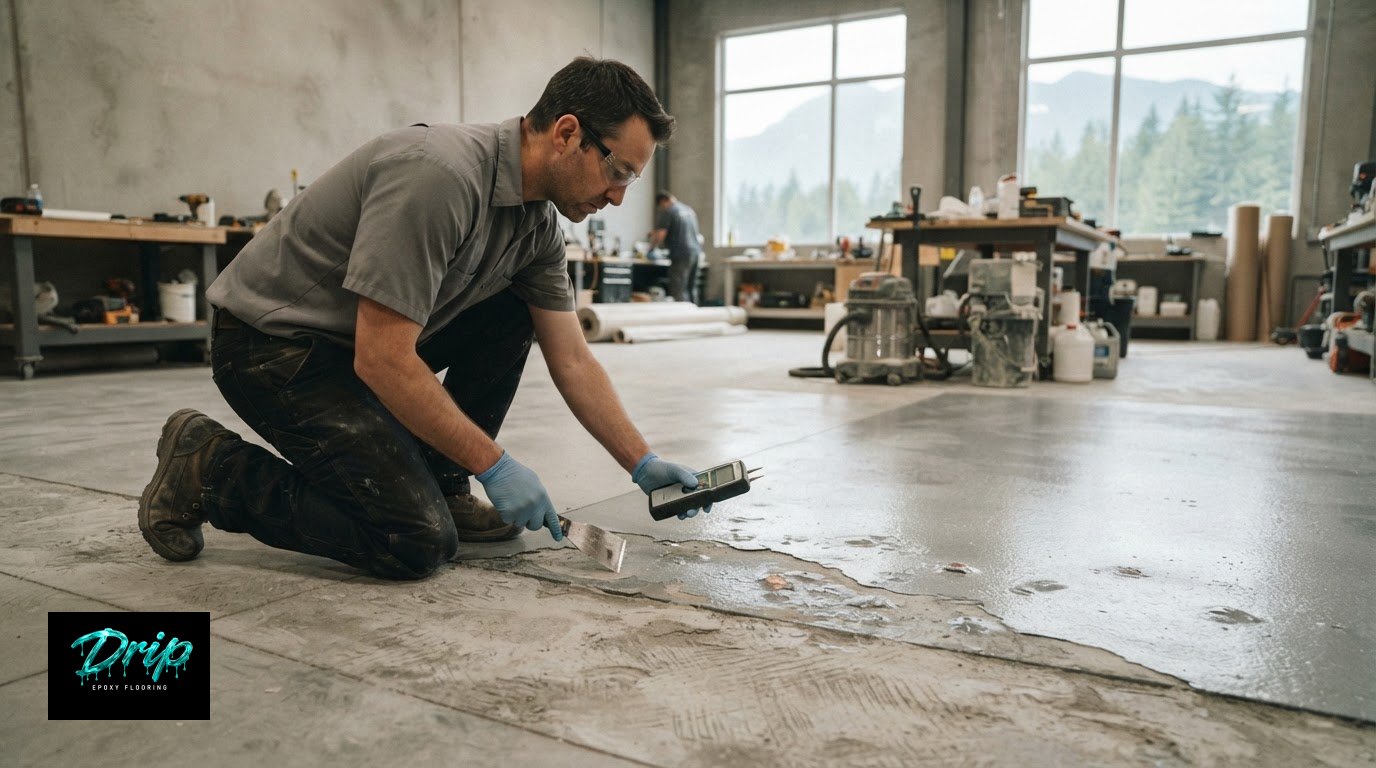
Peeling, bubbles or discolouration may point to a concrete or adhesion problem, not just a flaw in the coating. If you’re seeing these signs, problems with DIY epoxy floor kits can leave you wondering whether the floor needs a repair, removal or a different coating system.
Coating failures can have several causes, including inadequate surface preparation, moisture vapour transmission through the slab or a coating that doesn’t suit the space. Treating the visible defect without identifying its cause can leave the underlying issue in place and lead to another failure.
This article explains how to recognize common coating problems, what may be causing them and what to assess before deciding on a next step. You’ll learn why concrete condition and mechanical diamond grinding matter for adhesion, how moisture-related issues can affect a floor, and when a failed coating may need professional assessment or removal. Whether your floor is in a garage, basement or work area, diagnosing the concrete first helps guide a suitable system for your space.
Key Takeaways
- Peeling, bubbles, soft spots, discolouration and uneven gloss can have different causes. Assess the coating and concrete before choosing a fix.
- Coating failures may stem from inadequate preparation, moisture or application conditions. A visible symptom alone doesn’t identify the cause.
- Mechanical diamond grinding removes surface contaminants and opens concrete pores to create a suitable profile for resin bonding.
- Before repairing or recoating, consider whether the defect is isolated, recurring or widespread, and assess the condition of the existing layers.
- Define how the floor will be used, inspect the concrete and account for traffic, equipment, spills, cleaning routines and slip-resistance needs before selecting a coating system.
Problems with DIY Epoxy Floor Kits: Table of Contents
- Epoxy Floor Coating Problems: What Peeling, Bubbling, and Uneven Areas Can Mean
- Why Epoxy Floor Coatings Fail: Concrete Preparation, Moisture, and Application Conditions
- Repair, Remove, or Recoat? Assess the Scale of the Epoxy Floor Problem First
- Prevent Epoxy Floor Coating Problems with a Concrete and Site Review
- A Professional Coating Assessment Can Turn Floor Problems into a Clear Plan
Epoxy Floor Coating Problems: What Peeling, Bubbling, and Uneven Areas Can Mean
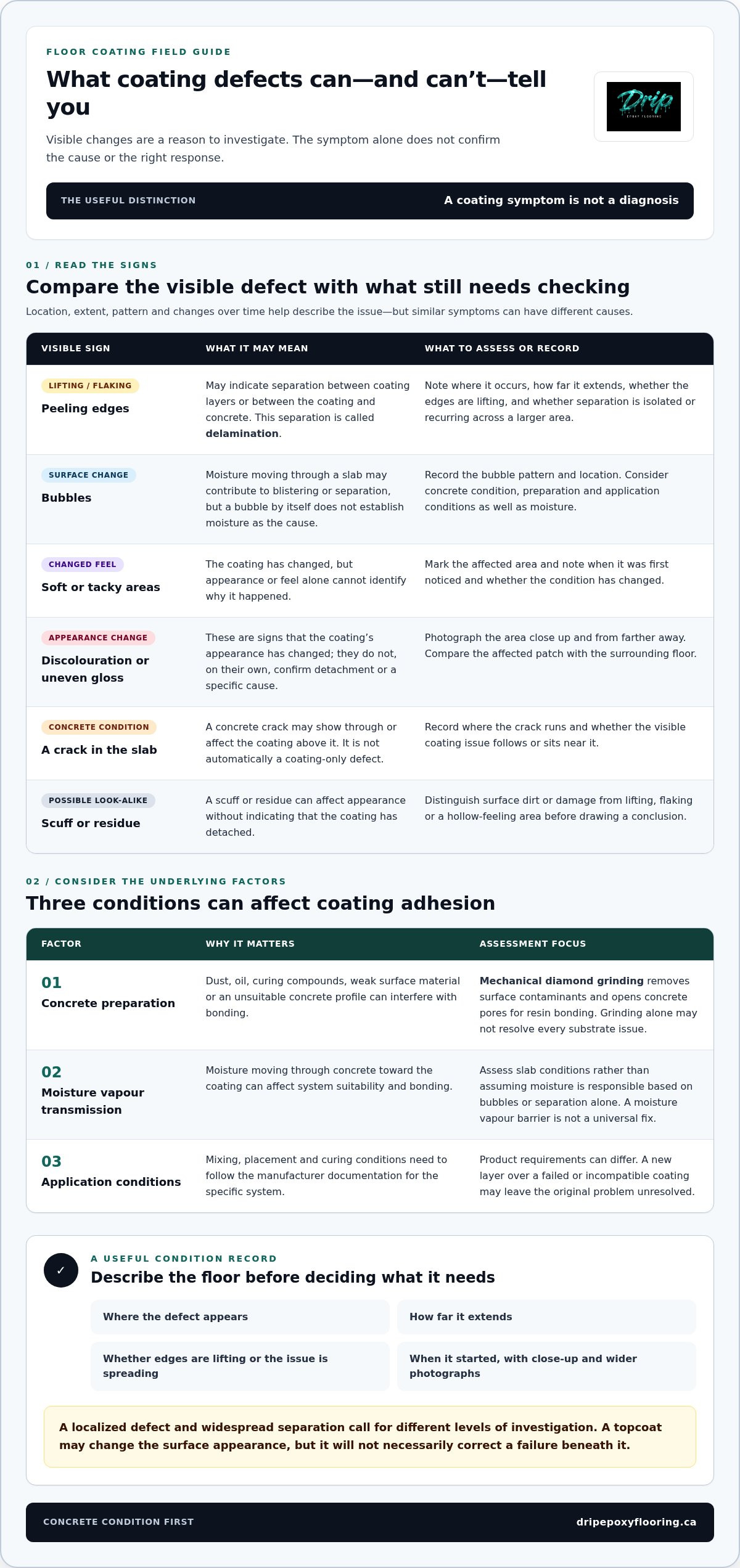
Peeling edges, bubbles, soft spots, discolouration and patches of uneven gloss all indicate that an epoxy floor has changed. Appearance alone can’t confirm why the coating is affected or how much of the floor is involved. Similar symptoms can have different causes, so treat what you see as a reason to investigate, not as a diagnosis.
Delamination is separation between coating layers or between the coating and the concrete substrate. It may appear as lifting, flaking or a hollow-feeling area. The size, location and pattern matter: a small defect near a damaged edge is different from separation recurring across a large part of the floor.
How to describe the coating failure you can see
Start with observations rather than conclusions. Note where the issue appears, how far it extends and whether the coating edges are lifting. Record whether you see bubbles, cracks, soft or tacky areas, colour changes or a change in gloss. Take clear photographs from close up and farther away. Write down when you first noticed the symptoms and whether they have changed. This record helps show whether the issue is isolated or spreading.
Why the symptom alone does not identify the cause
A coating’s condition can reflect the concrete beneath it, the preparation and surface profile, moisture vapour transmission, or application conditions. These factors can overlap. Moisture moving through a slab, for example, may contribute to blistering or separation, but a bubble by itself doesn’t establish moisture as the cause. Background on epoxy moisture control systems describes their role in managing moisture-related flooring issues.
Also distinguish coating failure from ordinary surface wear, dirt or damage in the concrete. A scuff or residue may affect appearance without indicating that the coating has detached. A crack in the slab, by contrast, is a concrete condition that may show through or affect the coating above it. It shouldn’t automatically be treated as a coating-only defect.
One symptom alone can’t determine the cause or the right response. A localized defect and widespread separation call for different levels of investigation. Before considering a new topcoat, establish whether the existing coating is sound and whether the concrete and underlying layers are suitable. A topcoat may change the surface appearance, but it won’t necessarily correct a failure beneath it.
Why Epoxy Floor Coatings Fail: Concrete Preparation, Moisture, and Application Conditions
A resin coating depends on the condition of the concrete beneath it. Dust, oil, curing compounds, weak surface material or an unsuitable concrete profile can interfere with bonding. If the coating adheres to a weak or contaminated layer instead of sound concrete, separation may occur at that interface. Problems with DIY epoxy floor kits often come down to these underlying variables, not simply the appearance of the finished surface.
How preparation affects coating adhesion
Mechanical diamond grinding removes surface contaminants and opens concrete pores to create a suitable profile for resin bonding. It’s a mechanical preparation process, not a decorative finish. An assessment considers contamination, weak or loose material, and whether the concrete profile suits the intended coating system. Grinding alone doesn’t resolve every substrate issue. Depending on what the floor reveals, repairs or further preparation may also be needed. See these professional concrete preparation services for more on preparing concrete before coating.
When moisture vapour transmission needs attention
Moisture vapour transmission is the movement of moisture through concrete toward the coating. Slab conditions can affect whether a coating system is suitable and how it bonds. Bubbling or delamination may be associated with moisture, but those symptoms can have other causes. A site-specific assessment is more useful than assuming moisture is responsible based on appearance alone.
Where assessment and system specifications call for one, a Moisture vapour barrier is a layer intended to prevent moisture from the concrete slab reaching the coating. It’s a system component, not a universal fix. Bartell Global outlines eight common reasons for epoxy floor failure, including inadequate preparation, contaminated concrete and uncontrolled moisture.
Application conditions matter too
Even suitable concrete preparation can’t compensate for application outside the product’s requirements. Mixing, placement and curing conditions must follow the manufacturer documentation for the specific system. Requirements can differ between products, so don’t assume one coating’s instructions apply to another. Applying a new layer over a failed or incompatible coating may leave the original problem unresolved.
Drip assesses concrete condition and prepares floors for project-specific coating systems across the Fraser Valley and Lower Mainland. If you’re weighing the next step for a failed coating, the contact page is the place to discuss a floor coating assessment.
Repair, Remove, or Recoat? Assess the Scale of the Epoxy Floor Problem First
The next step depends on more than how a defect looks. Consider its size and location, whether it’s changing, and whether the coating around it remains firmly attached. The questions below help organize an assessment; they aren’t a diagnosis or repair instruction.
| Condition | Questions to assess | Possible next step |
|---|---|---|
| Isolated defect | How large is it? Is it near an edge, crack or impact point? Does the surrounding coating appear sound? | Assess the defect, adjacent coating and substrate before deciding whether localized repair is suitable. |
| Recurring defect | Has the same symptom returned after earlier work? Is it appearing in similar locations or spreading? | Investigate the underlying cause and existing layers before considering another coating application. |
| Widespread separation | How much of the floor is affected? Are multiple areas lifting, peeling or separating? | Assess the full floor system. Removal and re-preparation may be considered if existing layers are unsound. |
When a localized coating defect needs assessment
A small visible area doesn’t prove the problem is confined to that spot. Note the defect’s location and whether it’s active or changing, then document its edges and the nearby coating. Assess the substrate and surrounding layers before selecting a repair method. This helps distinguish a contained surface defect from a symptom of a wider adhesion issue.
When widespread failure changes the project scope
Widespread peeling or delamination is a reason to assess the full floor system rather than simply cover the visible areas. If existing layers aren’t sound, removal and concrete re-preparation may be considered before a new system is installed. For a residential garage in the area, explore garage floor coating services in Chilliwack.
Recoating over a failing layer can leave the original adhesion problem unresolved. The problems with DIY epoxy floor kits may prompt a quick cover-up, but a new topcoat won’t establish whether the coating below is sound. CustomCrete describes common epoxy floor issues, including peeling, bubbling and fisheyes, and links several to preparation problems. Keep photographs and notes on when symptoms appeared to support a focused floor assessment. For details about arranging an assessment, use the contact page.
Prevent Epoxy Floor Coating Problems with a Concrete and Site Review
A coating plan should start with the floor’s condition and the work it needs to handle, not colour or finish alone. A practical review follows a clear sequence: define the space’s use, inspect the concrete, assess exposure, plan preparation, then select a suitable system. This addresses the conditions behind problems with DIY epoxy floor kits before another coating is applied.
Review the concrete and intended use before selecting a coating
Begin by recording cracks, existing coatings, visible contamination and any changes in the concrete. Then consider how the floor functions day to day. A garage may face vehicle traffic and exposure to vehicle fluids. A commercial space may involve carts, frequent cleaning and spills. An industrial floor may need to account for equipment, point loads and repeated travel. These conditions affect system selection and preparation.
Include slip-resistance needs in the review, especially where water or other substances may reach the floor. The required texture should suit the space and its cleaning routine. A finish selected for appearance alone may not address the practical demands of the site.
Plan preparation and application around the project
Once the concrete and its intended use are understood, preparation can be planned. Where the assessment calls for it, mechanical diamond grinding removes surface contaminants and opens concrete pores to create a suitable profile for resin bonding. The condition of existing layers, cracks and other substrate concerns also informs the preparation plan. Select a coating system after assessing these factors, not as a substitute for addressing them.
For commercial or industrial spaces, project sequencing means planning the order of work around access and facility operations. Equipment, fixed work areas, cleaning routines and the need to keep parts of a site accessible can shape the sequence. Application and curing must follow the chosen product’s manufacturer documentation; exact conditions vary by system.
Drip Epoxy Flooring provides concrete preparation and coating installation in Chilliwack, Abbotsford, Surrey and other Fraser Valley and Lower Mainland communities. A site review connects the substrate, exposure and intended use to a project-specific plan. Drip serves Chilliwack, Abbotsford, Mission, Langley, Surrey, Coquitlam, Burnaby, Hope, Harrison Hot Springs and Agassiz.
A Professional Coating Assessment Can Turn Floor Problems into a Clear Plan
Visible coating damage is a reason to investigate, not an automatic instruction to cover or replace the floor. A useful assessment establishes the concrete substrate’s condition, identifies existing coating layers and considers how you use the space. These findings help distinguish a surface concern from a problem that may involve the bond, previous layers or concrete itself.
What a site-specific coating plan should address
The plan connects observed conditions to preparation requirements and a coating system suited to the project. Consider operational use, traffic, equipment, spills, cleaning routines, chemical exposure and the desired finish. Where relevant, the assessment should also account for slip-resistance needs and the level of texture appropriate to the space. No single coating system suits every concrete floor.
A residential garage, a customer-facing commercial area and an industrial workspace have different patterns of use and exposure. Drip’s coating options include epoxy, polyaspartic, decorative flake, quartz, metallic and solid-colour systems. Selection follows the floor’s condition and intended use, not appearance alone. The aim is a project-specific scope that identifies preparation and system considerations without promising that a particular coating will correct every underlying condition.
Plan a coating project with Drip Epoxy Flooring
Based in Chilliwack, Drip Epoxy Flooring is a locally owned flooring contractor serving communities across the Fraser Valley and Lower Mainland, including Abbotsford, Mission, Langley and Surrey. For commercial spaces, commercial epoxy flooring in Chilliwack is planned around site conditions and operational needs, including access, traffic and cleaning routines.
If you’re concerned about problems with DIY epoxy floor kits or a coating that’s already showing signs of failure, a clear record of the symptoms can help focus the assessment. Establish what’s happening beneath and within the existing coating, then determine what preparation and system may suit the floor. Drip provides coating services in Chilliwack, Abbotsford, Mission, Langley, Surrey, Coquitlam, Burnaby, Hope, Harrison Hot Springs and Agassiz.
Choose the Next Step for Your Concrete Floor
Peeling, bubbling and uneven areas can point to different issues, so the visible symptom is only a starting point. Problems with DIY epoxy floor kits are best addressed by assessing the concrete, existing coating layers and conditions in the space before deciding whether repair, removal or a new system makes sense.
Preparation and coating selection go together. The right approach depends on the floor’s condition, intended use, traffic and exposure, not appearance alone. Drip Epoxy Flooring is a locally owned and operated contractor based in Chilliwack, serving residential, commercial and industrial customers across the Fraser Valley and Lower Mainland. The owner completed in-person flooring installation training and certification through XPS Canada.
If your floor is showing signs of failure, a project-specific assessment can clarify the practical next step. Request a free project quote to discuss your concrete floor and coating requirements.
Frequently Asked Questions
Why is my epoxy floor coating peeling?
Peeling often means the coating has lost adhesion, but appearance alone can’t confirm the cause. Contaminants, weak concrete near the surface, an unsuitable profile, moisture or application conditions may all be factors. Note where peeling occurs, whether the edges are lifting and whether it’s spreading. Problems with DIY epoxy floor kits can involve several of these issues, so assess the concrete and surrounding coating before choosing a repair.
What causes bubbles in an epoxy floor coating?
Bubbles can form for different reasons, including moisture vapour transmission, air or gas escaping from concrete, or application conditions. A bubble doesn’t prove which factor is responsible. Record its location and size, and note whether other symptoms, such as soft areas or peeling, are present. If bubbles recur or spread across the floor, have the coating and substrate assessed before applying another layer.
Can moisture vapour transmission cause a floor coating to fail?
Yes. Moisture vapour transmission is moisture moving through concrete toward the coating, and slab conditions can affect coating adhesion. Moisture may contribute to bubbling or delamination, but those symptoms can have other causes too. An assessment should establish whether moisture is relevant to the specific floor and coating system. A moisture vapour barrier may be specified as part of a system when the assessment and product requirements call for one.
Can a new epoxy coating go over an existing coating?
Sometimes, but only if the existing coating is sound and the new system is compatible with it. Peeling, soft spots, contamination or separation between layers can prevent a reliable bond. The existing surface may need preparation or removal, depending on its condition and the selected system’s requirements. A new coat over a failing layer may leave the original adhesion problem unresolved, so assess the full layer build-up first.
How can you tell whether a floor coating needs repair or removal?
The extent and pattern of the damage help guide the assessment. A small, isolated defect with firmly attached surrounding coating may be considered for localized repair, but its size alone doesn’t prove the problem is contained. Recurring defects or widespread peeling call for assessment of the full floor system. Document affected areas and changes over time. Removal and re-preparation may be considered if existing layers are unsound.
What does mechanical diamond grinding do before a floor coating is installed?
Mechanical diamond grinding removes surface contaminants and opens concrete pores to create a suitable profile for resin bonding. It’s a preparation process, not a decorative finish. The assessment determines whether grinding is appropriate and whether other substrate concerns also need attention. Preparation should account for the concrete’s condition and the coating system being installed, since grinding alone doesn’t correct every issue in the slab or existing layers.
How do you prevent coating problems on a concrete garage floor?
Start with a review of the concrete and how the garage is used. Record cracks, previous coatings and visible contamination, then consider vehicle traffic, spills, cleaning and slip-resistance needs. Preparation and system selection should follow those conditions, with application and curing guided by the manufacturer’s documentation. Drip Epoxy Flooring serves Chilliwack, Abbotsford, Mission, Langley, Surrey and other Fraser Valley and Lower Mainland communities with concrete preparation and floor coating installation.