home gym floor coating Surrey · 14 min read ·
Home Gym Floor Coating in Surrey: Compare Your Options
A coated floor isn’t automatically the right surface for every home gym. If your routine includes dropped weights or equipment that needs impact protection, rubber flooring may be a better fit in that zone. If easy clean
By Drip Epoxy Flooring · Chilliwack, BC
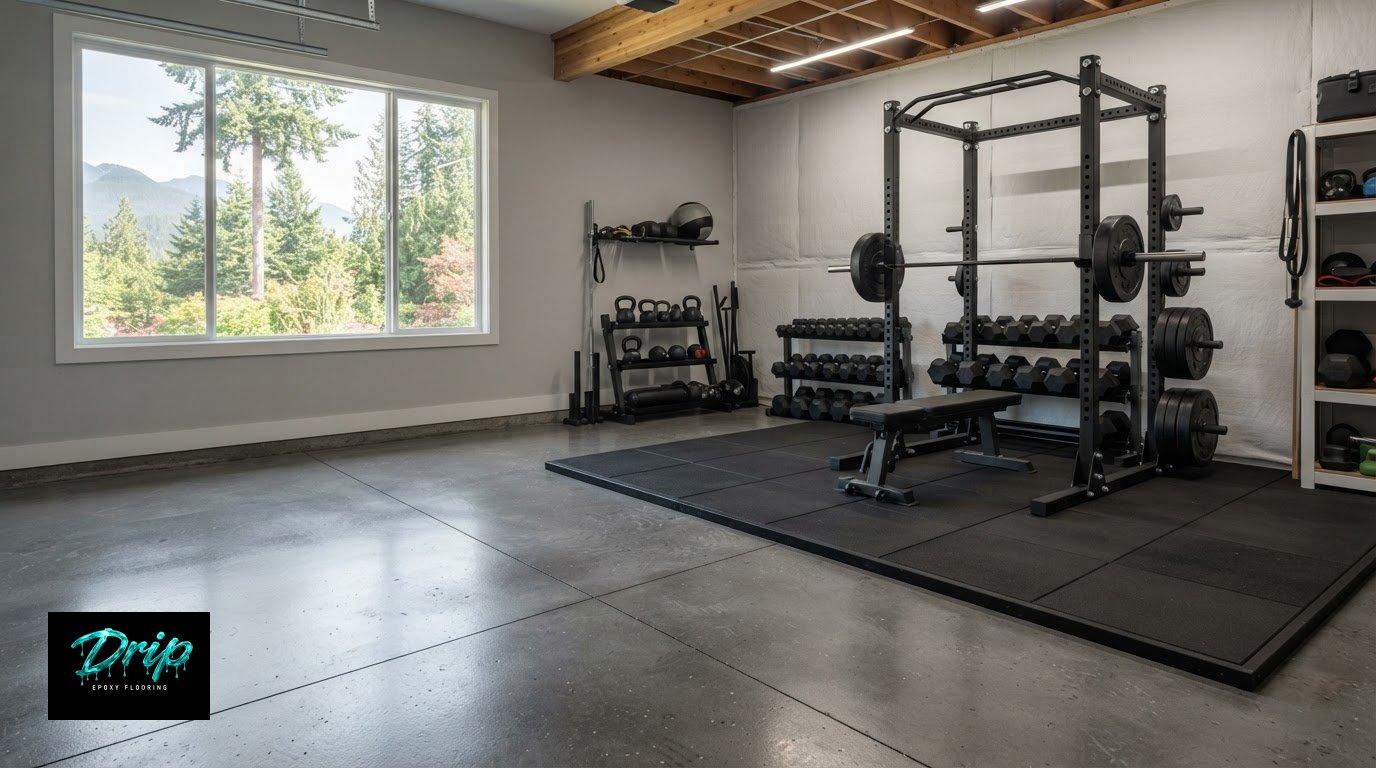
A coated floor isn’t automatically the right surface for every home gym. If your routine includes dropped weights or equipment that needs impact protection, rubber flooring may be a better fit in that zone. If easy cleaning and a finished concrete surface matter most, a coating may suit your Surrey space. Choosing a home gym floor coating Surrey homeowners can rely on starts with your training, the equipment you use and the condition of the slab.
When comparing coating with rubber mats or modular tiles, consider how sweat, water and regular cleaning will affect the floor. The right choice depends on the trade-offs, not just the finish. This guide compares common options by training style, maintenance and concrete condition, including moisture concerns and the preparation a coating needs for adhesion. You’ll also see what professional installation involves, from assessing and mechanically preparing the concrete to selecting an epoxy or polyaspartic system and finish. Drip Epoxy Flooring is locally owned and operated in Chilliwack, serving Surrey and the Lower Mainland with professional concrete preparation and residential coating installations.
Key Takeaways
- Match the floor to your workouts, equipment, cleaning routine and concrete slab rather than assuming one option suits every home gym.
- Compare epoxy and polyaspartic coatings with rubber mats and modular tiles for surface feel, maintenance, finish and use across different workout zones.
- A resin coating creates a hard surface, not cushioning. Texture and traction depend on the selected system and finish.
- Concrete inspection and mechanical diamond grinding help prepare the slab for coating adhesion before the specified system is applied.
- Use the home gym floor coating Surrey comparison to clarify your room use, equipment, slab condition and finish preferences before planning the project.
Table of Contents
What Should a Home Gym Floor Coating in Surrey Handle?
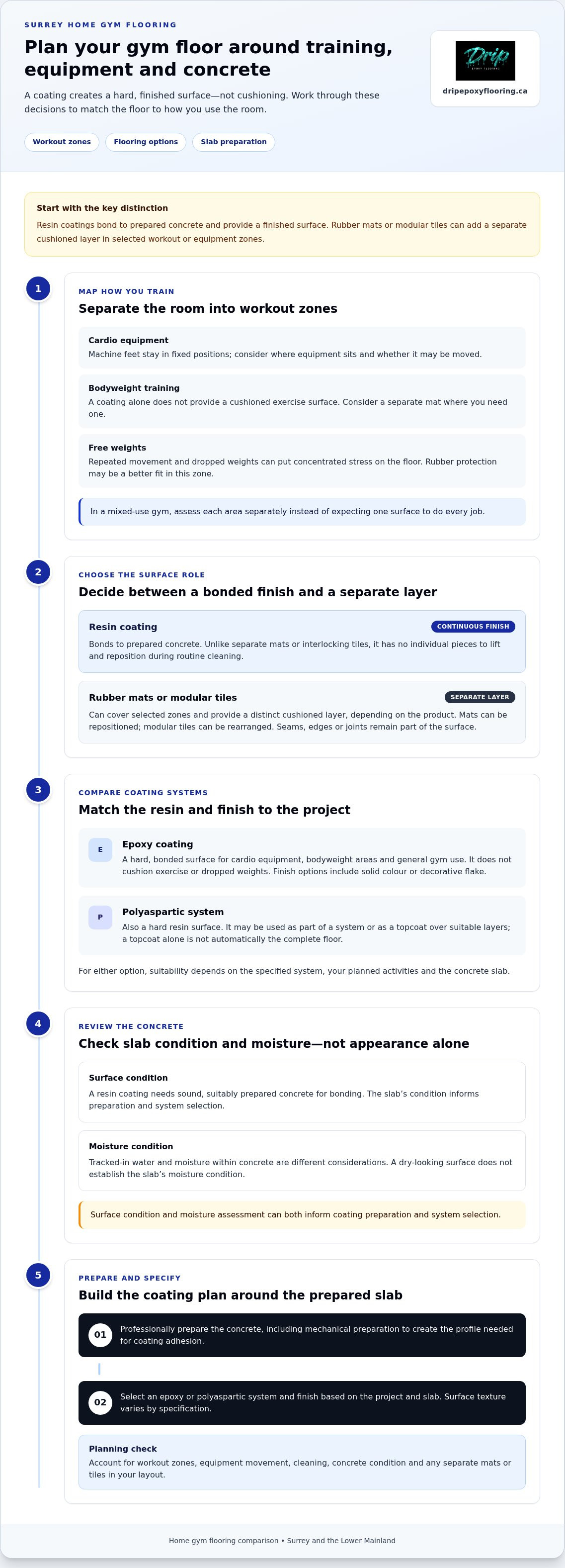
Start with the room’s demands: match the floor to your workouts, equipment, cleaning routine and the condition of the existing concrete. A home gym floor coating Surrey homeowners choose is a finish for the slab, not a substitute for a cushioned workout surface. Rubber mats and modular tiles may better suit areas where you need cushioning or impact protection, while a resin coating creates a bonded finish over prepared concrete. Neither option is right for every training space.
A home gym floor coating is a professionally prepared resin finish applied to a concrete floor. Epoxy is one resin option used in coatings; Epoxy coatings offer a foundational overview of the material and its applications. The finished surface and its care depend on the system selected and how you use the gym.
Which home gym activities affect flooring selection?
Cardio machines place equipment feet in fixed positions, while bodyweight training calls for a comfortable exercise surface that a coating alone doesn’t provide. Free weights introduce a different concern: repeated movement and dropped weights can put concentrated stress on the floor. In a mixed-use gym, assess each zone separately. Protective mats may suit the area beneath weights or equipment, leaving the resin finish exposed in areas used for cardio or general movement.
Map the routes you use to move between equipment and workout zones. Repeated foot traffic, equipment movement and cleaning all shape how the floor is used day to day. If you plan to reposition machines, consider how removable protection can move with them. Don’t expect the coating itself to cushion heavy equipment or weights.
What does a coating do that a mat does not?
A coating bonds to prepared concrete to create a continuous finished surface. Unlike separate mats or interlocking tiles, it has no individual pieces to lift and reposition during routine cleaning. Mats and tiles, in turn, can provide a distinct cushioned layer and let you cover selected workout zones. The trade-off is that removable or interlocking surfaces have joints and edges, while a coating follows the concrete beneath it.
In Surrey, don’t judge the slab by appearance alone. Tracked-in water and moisture within the concrete are different considerations, and a dry-looking surface doesn’t establish the slab’s moisture condition. Surface condition and moisture assessment can both inform system selection and preparation. Professional concrete preparation helps create the profile needed for coating adhesion. Drip installs urethane topcoats over appropriate epoxy or polyaspartic systems.
Epoxy, Polyaspartic or Rubber: Compare Home Gym Flooring Options
The right gym floor depends on your training demands and the substrate. Epoxy and polyaspartic coatings create a finished surface over prepared concrete; rubber mats and modular tiles provide a separate layer that can be placed in selected zones. Compare how each option fits your activities, cleaning routine and concrete condition instead of relying on a universal ranking.
| Option | Surface feel and workout zones | Cleaning and finish | Concrete considerations |
|---|---|---|---|
| Epoxy coating | Hard, bonded surface for cardio equipment, bodyweight areas and general gym use. It does not cushion exercise or dropped weights. | Continuous resin finish with options such as solid colour or decorative flake. Cleaning depends on the selected system and care routine. | Requires sound, suitably prepared concrete for resin bonding. Slab condition and moisture need assessment. |
| Polyaspartic system | Also a hard resin surface; suitability depends on the specified system and the activities planned. | May be used as part of a system or as a topcoat over suitable layers. Finish and maintenance depend on the complete specification. | Concrete preparation and compatibility with the underlying layers matter. A topcoat alone isn’t the same as a complete system. |
| Rubber mats | A separate cushioned layer for exercise zones or equipment areas, depending on the mat selected. | Removable coverings can be lifted for cleaning or repositioned; seams and edges remain part of the surface. | They don’t bond to concrete like a resin coating. The underlying slab still affects how the floor feels and how mats sit. |
| Modular tiles | Interlocking sections can define workout areas and be rearranged as a layout changes. | Individual tiles can be removed, though joints are part of the finished surface. | They cover rather than finish the concrete, so the slab’s condition remains relevant beneath them. |
When might an epoxy or polyaspartic coating suit a gym?
A resin coating may suit a gym where you want a finished, continuous surface over concrete and plan to add separate mats where cushioning or localized protection is needed. Drip installs epoxy and polyaspartic systems, with selection based on the project and slab. A polyaspartic flooring system can include a Polyaspartic topcoat over suitable layers; the topcoat is one part of a system, not automatically the whole floor. Surface texture also varies by specification. The U.S. Access Board describes slip resistant surfaces in its ADA guidance. This is a U.S. reference, not a statement of Canadian requirements.
When should rubber mats or tiles remain part of the plan?
Keep removable coverings in the plan if you need a separate cushioned layer under weights or equipment, or expect to change workout zones. A mat can protect a selected area from direct equipment contact, but its performance depends on the product and how you use it. For a home gym floor coating Surrey project, consider how the resin finish and removable surfaces will work together. A tailored project assessment and quote can account for your training zones and concrete condition.
Will a Coated Home Gym Floor Be Too Hard or Slippery?
A resin coating is a hard finish, not a cushioned exercise surface. It creates a finished layer over prepared concrete, so floor exercises, stretching and dropped weights may call for separate mats in the areas where you need cushioning or localized protection. The coating finishes the concrete; it doesn’t replace gym-specific impact protection.
Surface traction and cushioning solve different flooring needs. A textured finish may affect how the surface feels underfoot, while cushioning comes from a separate mat or exercise surface. For a home gym floor coating Surrey project, consider each need separately instead of expecting one finish to provide both.
How should you think about grip and surface texture?
Texture and traction depend on the selected system and finish, so there isn’t one universal answer to whether a coated floor will feel slippery. Consider how you use the room, whether you train in footwear or bare feet, and how sweat or water could reach the floor. Your cleaning routine also matters when selecting a finish. Don’t assume a specific slip-resistance rating or outcome without details for the system and application.
How can you protect workout zones and equipment areas?
Place suitable mats beneath free weights or equipment where you want a separate cushioning layer or localized protection. This keeps the roles clear: the coating finishes the concrete, while the mat provides the surface layer for its intended zone. Removable mats can also be shifted if your workout layout changes. Their suitability depends on the mat and how it’s used, so don’t assume they prevent all impact or equipment-related damage.
Sweat, water and spills still need routine attention on a coated floor. Wipe up moisture and follow care guidance for the installed system. A continuous finish can make the floor easier to clean, but it isn’t antimicrobial or bacteria-resistant. Consider how mats sit on the coating and whether you’ll lift them to clean beneath them, particularly where moisture may collect.
A urethane topcoat is a finishing layer applied over an appropriate epoxy or polyaspartic system, not a cushioned layer and not urethane cement. Drip installs urethane topcoats over suitable systems. Consider the specified finish, texture and care requirements alongside the gym’s use and the concrete beneath it.
How Concrete Preparation Shapes a Surrey Home Gym Coating
A coating’s performance depends on the concrete beneath it, so installation starts with the slab, not the colour or finish. For a home gym floor coating Surrey homeowners are considering, the work follows a sequence: inspect the concrete, assess its surface condition and moisture, prepare it mechanically, then apply the specified system. Each stage informs the next.
What does a professional slab assessment consider?
The assessment reviews visible cracks or damage, existing coatings, contamination and the general condition of the concrete. These details help shape the preparation plan. A previous coating may need to be addressed, while cracks or contaminants can call for specific preparation before a new system is applied. The slab’s appearance alone doesn’t establish whether it’s ready for coating.
Moisture matters, too. Moisture vapour transmission is the movement of moisture through concrete, which can contribute to bubbling or delamination in a floor coating. A visual inspection can’t establish the slab’s moisture condition, so assessment forms part of system selection. A particular Surrey home’s slab needs to be evaluated before its condition can be determined.
Mechanical diamond grinding removes surface contaminants and opens concrete pores to support coating adhesion. It creates a prepared profile for the resin system; it isn’t simply a cosmetic pass. The preparation method and extent depend on what the slab inspection finds. Cracks, old coatings and contamination all affect the work plan, so don’t assume the same preparation will suit every slab. Professional concrete preparation follows this slab-specific approach.
What happens during coating application?
Once the concrete has been assessed and prepared, the specified epoxy or polyaspartic system is applied and finished according to its requirements. The stages, project sequencing and cure requirements vary with the selected system and site conditions. That sequence matters in a home gym: keep equipment and mats off the floor until the system is ready for use, following the applicable product instructions.
Drip Epoxy Flooring is based in Chilliwack and serves Surrey and the wider Lower Mainland. A project assessment considers the slab and intended floor system before work is planned. Request a Surrey home gym coating assessment to discuss your concrete and project requirements.
Choosing a Home Gym Floor Coating in Surrey: From Plan to Quote
A useful project discussion starts with the room and how you’ll use it. For a home gym floor coating Surrey project, a few practical details help connect your workout plan, concrete condition and preferred finish to a suitable coating approach.
What information helps scope a home gym floor?
Before discussing a quote, gather notes on the room, slab and training zones. Approximate dimensions help describe the area, while details about visible cracks, stains or existing coatings help frame the concrete preparation discussion. Note where equipment will sit, which areas need separate mats and whether you expect to move the equipment.
- Room use: cardio, bodyweight training, free weights or a combination.
- Equipment: machines, benches, weights and the areas that may need separate mats.
- Concrete: visible damage, contamination or previous coatings.
- Finish: the colour and style you prefer, along with any texture considerations.
- Cleaning: how you plan to manage sweat, spills and regular floor care.
These notes don’t replace a slab assessment, but they help explain the demands the floor needs to meet. Workout zones matter: an open bodyweight area and a free-weight zone may call for different surface considerations, even within the same room.
What should you expect from a local project discussion?
Drip considers the concrete condition and preparation needs alongside the intended use of your home gym. The discussion can cover visible slab issues, existing coatings, the epoxy or polyaspartic system under consideration, and the finish that suits your room. If you’re comparing colour and style, epoxy floor samples can help you assess options in relation to the space.
System selection follows the project details. A coating finishes prepared concrete; any cushioning or localized protection for weights and equipment remains a separate part of the gym plan. Your cleaning routine and preferred finish also help shape the conversation, so the proposal reflects how the floor is expected to function rather than appearance alone.
Drip Epoxy Flooring is locally owned and operated in Chilliwack, serving homeowners from Chilliwack and Abbotsford through Langley and Surrey, as well as the wider Lower Mainland. Share your room details, equipment plan and notes about the slab to start a project-specific discussion. Request a home gym floor coating quote for a tailored assessment of your Surrey project.
Plan a Floor That Fits Your Training
The right home gym floor balances what happens above the slab with the condition of the concrete beneath it. Epoxy and polyaspartic coatings create a finished resin surface, while rubber mats or modular tiles can provide a separate cushioned layer in exercise and equipment zones. Neither option suits every room, and a coating won’t replace impact protection.
Concrete preparation matters, too. Slab condition, previous coatings and moisture assessment all inform the preparation plan and system selection. Consider these details alongside your workouts, equipment and cleaning routine to choose a home gym floor coating Surrey homeowners can plan around with a clear understanding of its role.
Drip Epoxy Flooring is locally owned and operated in Chilliwack, serving Surrey and the Lower Mainland. The owner completed in-person flooring installation training and certification through XPS Canada. Share your room use, equipment plan and notes about the concrete to begin a project-specific discussion.
Request a home gym floor coating quote to plan a floor around your space and training.
Frequently Asked Questions
Is epoxy flooring a good choice for a home gym?
Epoxy can suit a home gym if you want a finished, continuous surface over prepared concrete. It creates a hard floor, not a cushioned exercise area, so floor exercises or free weights may call for separate mats. Suitability depends on your workouts, cleaning routine, the slab’s condition and the specified system. A home gym floor coating Surrey project should start by assessing those factors rather than choosing by appearance alone.
What is the best flooring for a home gym with free weights?
For free weights, plan for suitable mats or other gym-specific protection in the lifting zone. A resin coating finishes the concrete but doesn’t cushion impacts or replace impact protection. The mat provides a separate surface layer where you need it. Consider where weights will be used or set down, how equipment will move, and how you’ll clean beneath removable coverings.
Can you put a home gym floor coating over existing concrete?
Yes, an existing concrete slab can be coated when its condition and preparation are suitable for the specified system. Assessment should consider cracks or visible damage, contamination, moisture and any previous coating. Mechanical diamond grinding can remove surface contaminants and open concrete pores to support adhesion. Existing coatings may affect the preparation plan, so assess the slab before deciding how the new system will be applied.
Will a home gym floor coating be slippery when wet?
There isn’t one answer for every coating. Surface texture and traction depend on the selected system and finish, and no universal slip-resistance outcome should be assumed. Sweat or water on the floor can affect footing, so wipe up moisture and follow the care guidance for the installed system. Discuss how you use and clean the gym when considering a finish, especially if moisture may reach workout areas.
Is polyaspartic or epoxy better for a home gym?
Neither is automatically better for every home gym. The choice depends on the concrete, intended use, finish and specified system. Epoxy and polyaspartic coatings can both form part of a resinous floor installation. A polyaspartic topcoat is a finishing layer that may be applied over suitable base layers; it isn’t necessarily a complete system on its own. System selection should account for the slab and project requirements.
How does concrete moisture affect a home gym floor coating?
Moisture vapour transmission is the movement of moisture through concrete. It can contribute to bubbling or delamination in a floor coating, so a dry-looking slab doesn’t establish whether it’s suitable for coating. Moisture assessment is part of understanding the concrete before system selection and preparation. Assess the individual Surrey slab rather than assuming a particular condition or test result.
Can rubber mats be used over a coated gym floor?
Yes. Rubber mats can sit over a coated floor to create a separate cushioned layer beneath free weights, equipment or exercise zones. The coating finishes the concrete; the mat serves the localized protection or cushioning role. Once the coating is ready for use according to the product instructions, position removable mats as needed. Lift them as part of your cleaning routine to tend to the floor beneath.
What happens during a home gym floor coating project in Surrey?
The project begins with reviewing the concrete, including its surface condition, existing coatings and moisture considerations. The slab is then prepared mechanically before the specified epoxy or polyaspartic system is applied and finished. Preparation, project sequencing and cure requirements depend on the system and site conditions. Drip Epoxy Flooring is based in Chilliwack and serves Surrey and the Lower Mainland, including Abbotsford, Mission, Langley, Coquitlam, Burnaby, Hope, Harrison Hot Springs and Agassiz.