automotive shop floor coating fraser valley · 15 min read ·
High-Performance Automotive Shop Floor Coating in the Fraser Valley
In the Fraser Valley, the local humidity isn't just a weather report; it's the primary reason most standard garage floor coatings fail within their first two years. You likely understand the frustration of watching a wee
By Drip Epoxy Flooring · Chilliwack, BC
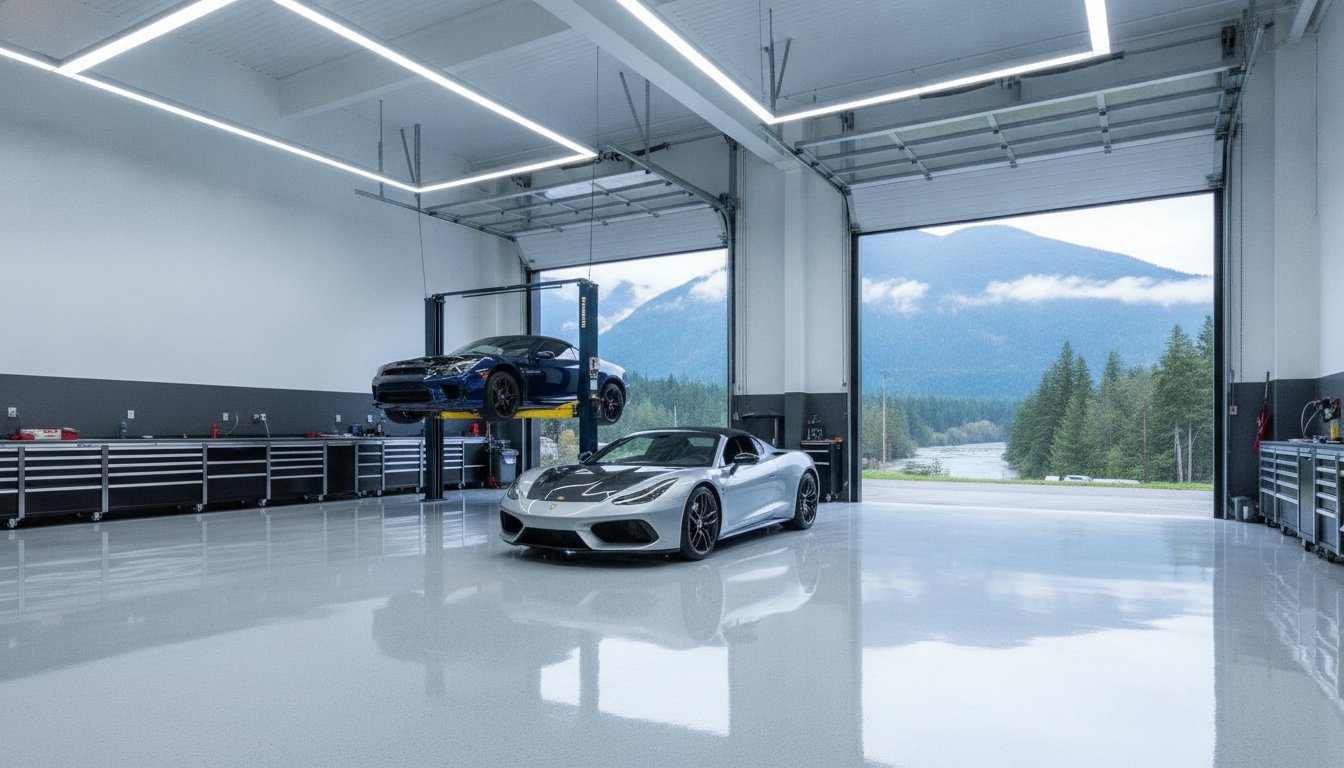
In the Fraser Valley, the local humidity isn't just a weather report; it's the primary reason most standard garage floor coatings fail within their first two years. You likely understand the frustration of watching a weekend DIY project peel away or seeing stubborn oil stains permanently mar your concrete. It's disheartening when a workspace meant for precision feels dusty, dark, and impossible to keep clean. Most shop owners realize that a porous concrete floor is a liability that absorbs every chemical spill and compromises air quality with constant dusting.
This article demonstrates how to protect your workspace with a high-performance automotive shop floor coating in the Fraser Valley designed specifically for our damp climate and heavy-duty mechanical use. You'll discover how industrial-grade polyaspartic and epoxy systems offer long-term resistance against road salt and corrosive fluids while providing a showroom-quality finish. We will detail the technical necessity of professional diamond grinding, the science of moisture-first engineering, and the specific ways a premium coating increases your property's professional appearance and overall value. By the end, you'll understand why a meticulous, craftsman-led approach is the only way to achieve true industrial luxury.
Key Takeaways
- Understand how the unique Fraser Valley climate and moisture vapour transmission (MVT) can cause standard coatings to fail and how to mitigate these risks.
- Learn the technical differences between epoxy and polyaspartic systems to determine which high-performance resin best suits your shop's specific workflow and downtime requirements.
- Discover why professional mechanical diamond grinding is the essential first step in achieving the correct concrete surface profile for a permanent chemical bond.
- Realize the long-term benefits of a professional automotive shop floor coating in the Fraser Valley, including resilience against road salts, corrosive fluids, and heavy mechanical equipment.
- Identify the critical criteria for selecting a local specialist with the technical expertise to deliver an industrial-grade finish from Chilliwack to Langley.
Table of Contents
Why Standard Concrete Fails in Fraser Valley Automotive Shops
Bare concrete is deceptively fragile. To the naked eye, it appears as a solid, impenetrable mass, but under a microscope, it reveals itself as a porous sponge filled with millions of microscopic capillaries. In an active mechanical environment, these pores act as conduits for oil, grease, and transmission fluids. Once these substances penetrate the surface, they don't just sit there; they begin a process of chemical degradation. Automotive fluids are often acidic or solvent-based, which directly attacks the calcium hydroxide, or lime, that gives concrete its structural integrity. Over time, this results in concrete dusting, where the surface literally disintegrates into a fine powder that settles on your tools, air filters, and client vehicles.
An automotive shop floor coating is not a simple layer of paint. It is a multi-layered resinous system, often utilizing high-solids epoxy or polyaspartic resins, engineered specifically for high tensile strength and chemical shielding. In our region, however, the challenge isn't just what falls on top of the floor, but what rises from beneath it. The unique geography of the region means that moisture is a constant factor in every installation.
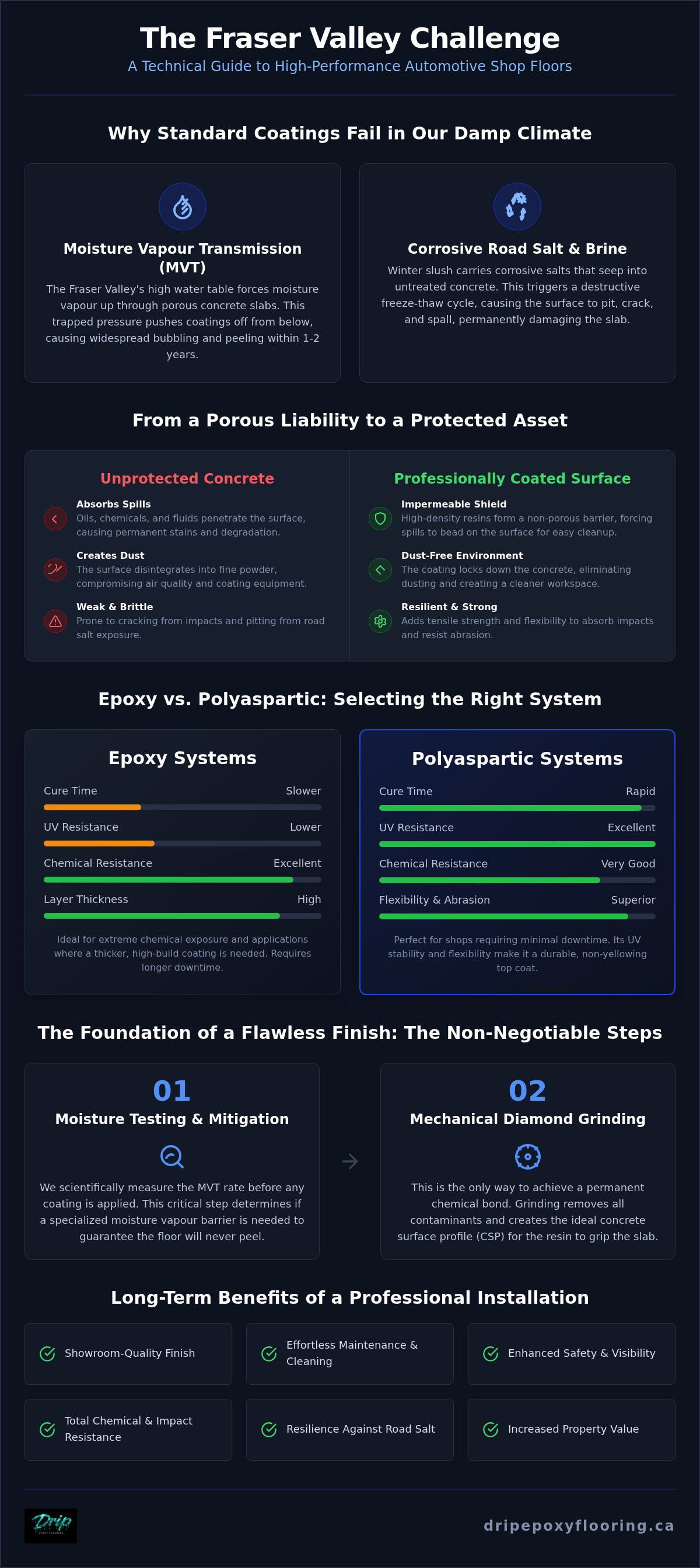
Our local climate presents a specific obstacle known as Moisture Vapour Transmission (MVT). Because the water table in many areas from Chilliwack to Langley is high, moisture is constantly pushed upward through the concrete slab via hydrostatic pressure. If a low-quality or DIY coating is applied without professional-grade moisture mitigation, this vapour pressure becomes trapped. Eventually, the force becomes strong enough to push the coating right off the concrete. This leads to the unsightly bubbling and peeling often seen in failed shop floors. Selecting a professional automotive shop floor coating in the Fraser Valley requires a technical understanding of these sub-surface forces.
The Impact of Road Salt and Brine in BC
Winter in British Columbia brings heavy applications of road salt and liquid brines. When vehicles enter your shop, they carry these corrosive agents in the slush clinging to their undercarriages. As the slush melts, the brine seeps deep into untreated concrete pores. This triggers a destructive freeze-thaw cycle. When temperatures drop, the moisture inside the concrete expands as it freezes, creating internal pressure that causes the surface to pit and spall. Simply hosing out the bay is insufficient; the salt is already embedded, attracting more moisture and accelerating the decay of the slab.
Identifying Moisture Vapour Issues
Visible signs of moisture issues include efflorescence, which is a white, powdery salt deposit that forms on the concrete surface. You might also notice "sweating" slabs during humid days where the floor looks damp despite no spills. This moisture is the primary enemy of resinous systems. Before any installation, we prioritize moisture testing to determine the MVT rate. Understanding whether your foundation requires a specialized moisture vapour barrier is the difference between a floor that lasts decades and one that fails in a single season.
The Science of Oil-Resistant Floor Coatings
The efficacy of a professional automotive shop floor coating in the Fraser Valley relies on high cross-linking density. In polymer chemistry, cross-linking refers to the chemical bonds that link one polymer chain to another. Industrial resins, unlike consumer-grade products, create a dense, lattice-like structure at the molecular level. This density is what prevents fluids from penetrating the surface. Instead of soaking into the concrete pores, liquids bead on top, allowing for effortless cleanup and maintaining the integrity of the substrate.
In a mechanical shop, the floor must manage two distinct types of stress: compressive and tensile. Concrete naturally possesses high compressive strength, meaning it can support the weight of a vehicle. However, it has very low tensile strength and inherent brittleness. A high-performance coating adds a layer of flexibility and impact resistance. When a heavy tool is dropped or a floor jack is shifted under load, the resinous system absorbs the energy without cracking, effectively shielding the concrete from structural damage.
Thermal shock resistance is another critical technical requirement for local facilities. Automotive shops frequently deal with "hot tire pickup," a phenomenon where heat from tires softens low-quality coatings, causing them to delaminate when the vehicle moves. Professional-grade systems are engineered to withstand these temperature fluctuations without losing their bond. If you are curious about which system fits your specific bay requirements, you can request a technical assessment of your workspace to ensure the right material selection.
Resistance to Automotive Fluids
Automotive fluids present unique chemical challenges that standard paints cannot survive. Brake fluid is a powerful solvent that can dissolve most standard coatings on contact. A true industrial system must pass the "solvent test," maintaining its bond even when exposed to harsh chemicals for extended periods. Used motor oil contains carbon and metal particulates that permanently stain porous surfaces, while battery acid and coolants can cause corrosive etching. Our systems utilize specialized resins that provide an inert barrier against these substances, preventing any chemical reaction with the underlying concrete.
Topcoat Technology: Polyaspartic vs. Urethane
The topcoat serves as the sacrificial layer and the primary line of defence. While urethane provides excellent chemical resistance, polyaspartic coatings offer superior UV stability and faster return-to-service times. UV stability is vital for shops with large bay doors where sunlight can cause traditional epoxies to yellow and become brittle. A high-performance automotive shop floor coating Fraser Valley technicians trust will always include a UV-stable topcoat to maintain its professional appearance. We calibrate these topcoats to balance slip resistance with cleanability, ensuring a safe grip without creating a surface that traps dirt and grime.
Comparing Automotive Coating Systems: Epoxy vs. Polyaspartic
Selecting the right automotive shop floor coating in the Fraser Valley requires balancing technical performance with operational constraints. While many owners view epoxy and polyaspartic as interchangeable, they possess distinct chemical profiles that dictate their suitability for specific shop environments. Industrial epoxy remains the traditional heavyweight for high-build thickness. Its long open time allows the resin to flow into the concrete’s profile, creating a level surface that can bridge minor imperfections. It is an excellent choice for shops requiring a thick, sacrificial barrier against heavy machinery and constant foot traffic.
Polyaspartic coatings represent a significant advancement in resin technology, specifically regarding cure speed and flexibility. Unlike traditional epoxy, which may require several days to fully harden, a polyaspartic system can often be installed and returned to service within 24 hours. This rapid-cure nature is invaluable for commercial shops that cannot afford extended downtime. For the best results, we often recommend hybrid systems. These utilize an epoxy base layer for maximum adhesion and thickness, followed by a polyaspartic topcoat for UV stability and chemical resistance. This combination ensures your floor is both structurally sound and aesthetically superior.
When to Choose a Flake System
Decorative flake systems are the preferred choice for high-traffic automotive bays. These systems consist of multi-coloured vinyl chips broadcast into a coloured base coat, which effectively hides minor concrete imperfections and repairs. Beyond the visual appeal, the flakes provide a necessary texture that enhances slip resistance, especially when the floor is wet from the Fraser Valley's frequent rain. This texture is a critical safety feature in bays where oil spills or water from incoming vehicles are common. For a more detailed breakdown of aesthetic options, you can read our guide on Metallic vs. Flake Epoxy Floor systems.
The Polyaspartic Advantage in BC
The primary benefit of polyaspartic technology in British Columbia is its resilience against thermal movement. Concrete slabs naturally expand and contract with the shifting seasons; a rigid coating may crack under this stress. Polyaspartic resins are inherently more flexible, allowing the coating to move with the substrate. This flexibility, combined with a one-day installation potential, makes it a premium choice for local businesses. For shop owners looking for a comprehensive overview of these high-speed systems, our Commercial Polyaspartic Flooring in Abbotsford guide provides deep technical insights into the local application process.
How to Install an Automotive Floor Coating That Lasts
The longevity of a high-performance automotive shop floor coating in the Fraser Valley depends almost entirely on the quality of the substrate preparation. Even the most advanced industrial resins cannot compensate for a poorly prepared concrete slab. We follow a methodical, five-step installation process designed to create a permanent mechanical bond between the resin and the concrete, ensuring the system survives the rigours of a busy mechanical shop.
- Step 1: Mechanical Diamond Grinding. We utilize heavy-duty planetary grinders equipped with diamond-segmented blades to remove the "laitance" layer and achieve a specific Concrete Surface Profile (CSP) of 2 or 3.
- Step 2: Crack and Pitting Repair. Using high-strength polyurea menders, we address any structural imperfections. These menders cure harder than the concrete itself, preventing cracks from telegraphing through the final finish.
- Step 3: Moisture Barrier Basecoat. This essential layer seals the slab and mitigates the risk of moisture vapour transmission, which is a common failure point in our damp local climate.
- Step 4: Decorative Layer. We broadcast decorative flakes to refusal or apply metallic pigments, creating the "industrial luxury" aesthetic while adding thickness and texture.
- Step 5: High-Solids Topcoat. The final shield is a high-solids polyaspartic or urethane topcoat, providing the ultimate defence against chemical spills and physical abrasion.
Why Diamond Grinding is Non-Negotiable
In many DIY scenarios, acid etching is used as a shortcut for preparation. However, in a professional automotive environment, acid etching is insufficient. It often fails to remove deeply embedded oil, grease, or old tire marks that have penetrated the concrete pores. Mechanical diamond grinding is the only reliable method to "open" the pores of the concrete. This process creates a textured surface that allows the resin to penetrate deep into the slab, forming a mechanical "root" system that prevents delamination. Without this step, the coating merely sits on top of the concrete rather than becoming a part of it.
Professional Detailing: Coving and Joint Filling
A truly professional installation extends beyond the flat surfaces of the bay. We prioritize detailing features like "coving," which is a curved transition from the floor to the wall. Coving eliminates the 90-degree corner where dirt and fluids typically collect, making shop wash-downs significantly more efficient. Additionally, we fill expansion joints with specialized flexible fillers. This creates a seamless, easy-to-sweep surface that integrates perfectly with floor drains and heavy-duty lift posts. If you are ready to transform your workspace with a system engineered for these standards, you can request a professional installation quote to begin the process.
Selecting an Automotive Coating Specialist in the Fraser Valley
Choosing the right partner for an automotive shop floor coating in the Fraser Valley is a decision that impacts your business's operational efficiency for years. Local expertise is not just about proximity; it's about a deep understanding of the specific environmental variables from Chilliwack to Langley. A contractor who understands the regional water table and humidity levels will select materials that resist the delamination issues common in our damp climate. When you evaluate a specialist, prioritize their experience with heavy-duty automotive environments over standard residential garage work.
A reputable contractor should provide a comprehensive portfolio of industrial and automotive projects. Look for evidence of large-scale installs where floor jacks, heavy lifts, and constant chemical exposure are the norm. It's also vital to scrutinize the warranty. In a shop setting, you need to know if the coverage includes protection against hot tire pickup and chemical staining. These are the most common points of failure in mechanical bays, and a professional warranty should reflect the reality of your daily operations.
At Drip Epoxy Flooring, we embrace the concept of "Industrial Luxury." This means we don't sacrifice aesthetic appeal for durability. We believe a high-performance automotive shop floor coating in the Fraser Valley should look as professional as the work performed on top of it. Our team functions as meticulous guides, ensuring every technical detail of the installation matches the high standards of local gearheads and shop owners who value precision.
Drip Epoxy’s Approach to Shop Floors
Our commitment to technical precision starts with our rigorous surface preparation standards. We customize every system's colour and texture to align with your brand's aesthetic or the specific safety requirements of your workspace. Whether you need a high-visibility safety floor or a sleek showroom finish, our Industrial Epoxy Flooring Services are engineered to deliver a superior end product that withstands the harshest conditions.
Start Your Shop Transformation
The process begins with a thorough on-site consultation where we assess your concrete's condition and perform necessary moisture testing. We'll walk you through the preparation required, such as clearing the bay and ensuring the slab is accessible for our planetary diamond grinding equipment. To begin your workspace upgrade, contact our Fraser Valley flooring experts for a detailed quote and technical assessment.
Elevate Your Workspace with Industrial-Grade Protection
Your automotive workspace deserves a foundation that matches the precision of your mechanical work. Protecting your concrete requires more than a topical finish; it demands a system engineered to withstand the unique moisture challenges of our region. By prioritizing specialized concrete diamond grinding and selecting resins with industrial-grade chemical resistance, you ensure your floor remains impervious to oil, salt, and heavy impact. Investing in a professional automotive shop floor coating fraser valley system transforms a dusty, porous slab into a showroom-quality environment that improves both safety and property value.
As a locally owned and operated team in Chilliwack, we understand the technical requirements of shops across the Lower Mainland. We focus on delivering industrial luxury through meticulous surface preparation and high-performance materials that won't peel or stain. If you're ready to eliminate concrete dusting and create a seamless, professional workspace, we're here to guide the process from the initial moisture test to the final topcoat application.
Request a Free Quote for Your Fraser Valley Shop Floor today to begin your shop's transformation. We look forward to helping you build a workspace that performs as well as it looks.
Frequently Asked Questions
Will an automotive shop floor coating be slippery when wet?
A professional automotive shop floor coating in the Fraser Valley is engineered with specific slip-resistant textures to ensure safety in wet conditions. We broadcast anti-slip aggregates like aluminum oxide or quartz into the topcoat to provide essential grip without compromising the floor's cleanability. This is particularly vital in local bays where rain and slush are frequently tracked in. The result is a surface that remains safe for technicians while maintaining its high-end aesthetic.
How long do I have to wait before driving my car on the new floor?
Return-to-service times vary based on the specific resin chemistry used during your installation. For a standard high-solids epoxy system, you should wait at least 72 hours before subjecting the floor to vehicle traffic or heavy machinery. If we utilize a rapid-cure polyaspartic system, you can often drive on the surface within 24 hours. We always provide a specific curing schedule based on local humidity levels to ensure the coating achieves its full chemical hardness.
Can an epoxy floor withstand a 2-post or 4-post car lift?
Yes, industrial-grade coatings are fully compatible with heavy-duty vehicle lifts. Because the coating is only a few millimetres thick and bonds directly to the concrete, it doesn't interfere with the structural anchoring of 2-post or 4-post lifts. We recommend installing the lifts after the coating has fully cured to ensure a seamless finish. The high compressive strength of the resin ensures the surface won't crack under the immense weight of lifted vehicles.
How do I clean oil spills off my new coated shop floor?
Cleaning oil and chemical spills is a straightforward process due to the non-porous nature of the resin. You can simply wipe up small spills with a shop rag or use a mild pH-neutral degreaser and a squeegee for larger areas. Because the cross-linked density of the coating prevents fluids from penetrating the concrete, stubborn stains are virtually eliminated. Regular maintenance involves a simple sweep and an occasional mop with a soft-bristle brush.
Is polyaspartic better than epoxy for a shop with no climate control?
Polyaspartic resins are often superior for shops lacking climate control because they are less sensitive to temperature fluctuations and humidity. While traditional epoxy requires specific conditions to cure correctly, polyaspartic can be applied in a wider range of temperatures common in BC. This makes it an ideal choice for an automotive shop floor coating in the Fraser Valley where dampness is a factor. It also offers better flexibility to handle seasonal concrete movement.
What happens if I drop a heavy tool on my coated floor?
Industrial-grade coatings possess exceptional impact resistance designed to withstand the daily rigours of a mechanical workspace. If a heavy tool like a wrench or a floor jack is dropped, the resinous system absorbs the energy rather than shattering. Unlike brittle DIY paints that chip away, these professional systems maintain their bond with the concrete. This durability ensures your floor stays looking like a showroom even under heavy-duty use in a busy shop.
Does the coating help with the brightness of my shop?
A high-performance coating significantly improves the brightness of your workspace by increasing light reflectivity. The high-gloss finish reflects overhead LED or fluorescent lighting, illuminating the underside of vehicles and reducing shadows in the bays. This extra visibility is a practical benefit for technicians performing detailed mechanical work. Many shop owners find they can achieve a brighter environment without the cost of installing additional lighting fixtures or increasing their energy consumption.
Can you coat over an existing, peeling floor paint?
We do not apply professional coatings over existing, peeling floor paint or old DIY kits. To ensure a permanent mechanical bond, we must first remove all previous layers of paint, oil, and contaminants through mechanical diamond grinding. This process exposes the raw concrete pores, allowing the new resin to penetrate and anchor itself deep within the slab. Applying a high-quality system over a failing layer would inevitably lead to delamination and a wasted investment.