commercial kitchen flooring Fraser Valley · 14 min read ·
Commercial Kitchen Flooring in the Fraser Valley: A 2026 Guide to Performance and Compliance
In a high-pressure culinary environment, the floor is the most overworked piece of equipment you own. You likely realize that constant exposure to boiling liquids, heavy impact, and organic fats can degrade a standard su
By Drip Epoxy Flooring · Chilliwack, BC
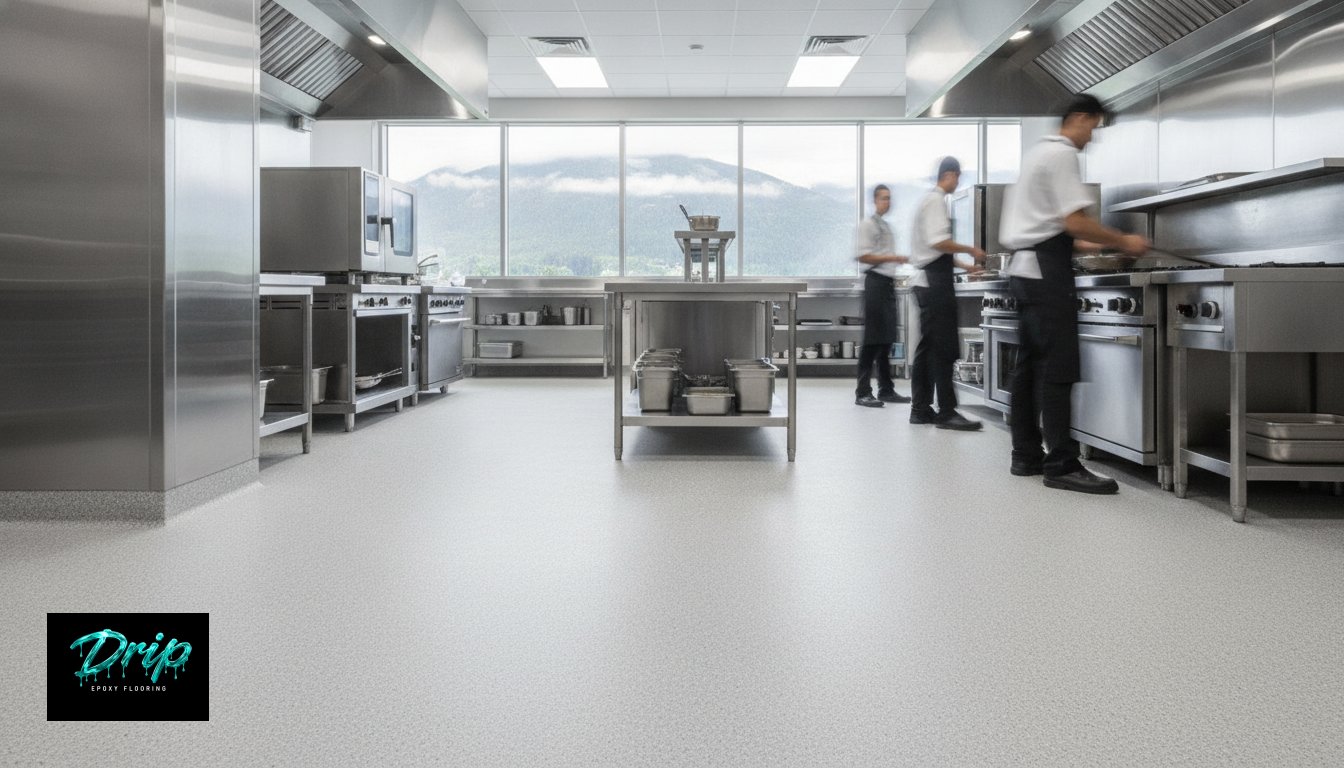
In a high-pressure culinary environment, the floor is the most overworked piece of equipment you own. You likely realize that constant exposure to boiling liquids, heavy impact, and organic fats can degrade a standard surface until it becomes a safety hazard or a hygiene liability. It's a stressful reality for many local operators who face the threat of operational downtime or failed health inspections because of a deteriorating foundation. Choosing the correct commercial kitchen flooring Fraser Valley system is not just a renovation choice; it's a critical safety investment.
This 2026 guide helps you identify the most durable and compliant flooring systems designed to withstand these industrial rigours. We'll explore how specialized quartz and polyaspartic coatings provide the necessary slip resistance and thermal shock protection required for modern food service. You'll learn about the technical requirements for seamless coved bases and why professional diamond grinding is the essential step for achieving a permanent bond that meets both WorkSafeBC and CFIA standards.
Key Takeaways
- Learn why standard coatings fail and how to select the right commercial kitchen flooring Fraser Valley system to withstand high-heat washdowns and organic fats.
- Understand the technical science of thermal shock and how choosing materials with high thermal resilience prevents floor delamination and peeling.
- Discover the critical balance between slip resistance for staff safety and seamless surfaces that meet strict BC health and CFIA hygiene standards.
- Compare the performance profiles of quartz and polyaspartic systems to find the ideal match for specific prep, dishwashing, or storage zones.
- Realize why professional diamond grinding is the non-negotiable foundation for long-term coating adhesion and a successful kitchen installation.
Table of Contents
- Why Commercial Kitchen Flooring in the Fraser Valley Requires a Specialized Approach
- The Science of Durability: Managing Thermal Shock and Chemical Exposure
- Comparing the Best Systems: Quartz vs. Polyaspartic vs. Solid Colour Epoxy
- Maximizing Safety: Slip Resistance and Ergonomics in Food Prep
- The Installation Process: Why Preparation in the Fraser Valley Matters
Why Commercial Kitchen Flooring in the Fraser Valley Requires a Specialized Approach
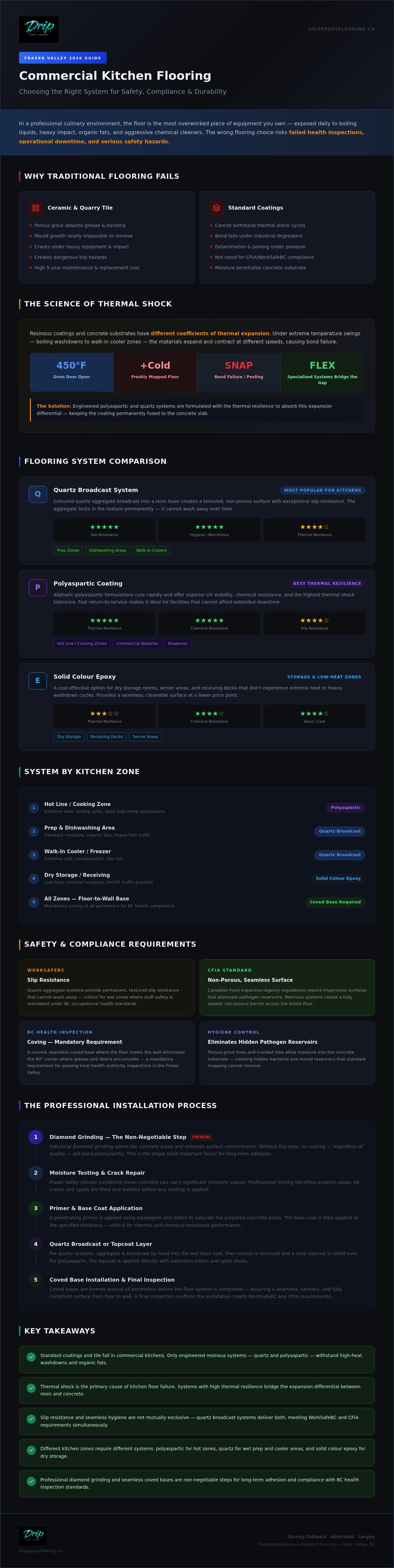
Commercial kitchens in Chilliwack, Abbotsford, and Langley operate under extreme conditions that would quickly destroy standard residential finishes. These environments are defined by constant exposure to organic fats, high-temperature spills, and aggressive high-pressure cleaning cycles. For a facility to remain operational, the foundation must be engineered to resist chemical degradation and thermal shock. Selecting a high-performance commercial kitchen flooring Fraser Valley system is a technical necessity that ensures your facility can handle the daily rigours of a professional culinary environment.
The integrity of your floor directly impacts your ability to adhere to foundational food safety principles. Porous surfaces or failing coatings allow moisture to seep into the concrete substrate, creating hidden reservoirs for pathogens. Resinous systems, such as quartz and polyaspartic coatings, have become the professional standard because they create a completely non-porous barrier. These systems don't just look premium; they provide a functional shield that simplifies sanitation and protects the structural health of your building.
The Failure of Traditional Tiling and Grout
While ceramic or quarry tiles were once common, they often fail in modern, high-volume kitchens. Grout lines are inherently porous, meaning they eventually absorb grease, dishwater, and food particles. Over time, these lines become breeding grounds for bacteria and mould that are nearly impossible to remove with standard mopping. In a fast-paced environment, tiles are also prone to cracking under the weight of heavy equipment or dropped pots. These cracks create dangerous trip hazards and allow liquids to penetrate the subfloor. When you calculate the five-year cost of frequent grout scrubbing and tile replacement, the "cheaper" initial price of tile quickly evaporates, making seamless resinous systems a more fiscally responsible long-term investment.
Meeting Fraser Valley Health and Safety Standards
Local health authorities in the Fraser Valley require surfaces that are smooth, durable, and easy to clean. A critical component of passing a BC health inspection is the installation of coving. Coving is a curved, seamless transition from the floor surface to the wall base that prevents the accumulation of moisture and debris in corners, ensuring the space remains hygienic. By eliminating the 90-degree angle where the floor meets the wall, you remove the areas where grime typically hides. This seamless integration is a mandatory requirement for any facility aiming for full compliance with CFIA and regional health standards.
The Science of Durability: Managing Thermal Shock and Chemical Exposure
The longevity of the commercial kitchen flooring Fraser Valley operators select depends entirely on how the material manages the laws of physics. In a professional kitchen, floors don't just sit there; they constantly expand and contract. This movement is driven by extreme temperature swings and the aggressive use of industrial-strength degreasers. If a flooring system lacks high thermal resilience, the bond between the resin and the concrete slab will eventually snap, leading to costly delamination and peeling.
It's vital to understand that resinous coatings and concrete substrates have different coefficients of thermal expansion. When you subject a floor to boiling water washdowns or the frigid air of a walk-in cooler, the materials move at different speeds. A specialized system is engineered to bridge this gap, ensuring the coating remains fused to the concrete despite the mechanical stress of rapid temperature changes. If you're concerned about the current state of your facility's foundation, you can request a technical assessment to determine the best path forward.
Thermal Shock: The Silent Killer of Kitchen Floors
Thermal shock is the primary cause of floor failure in high-volume culinary environments. Imagine the physics at play when a 450°F oven door is opened near a floor surface that was just mopped with cold water. This rapid temperature spike causes the top layer of the floor to expand faster than the concrete underneath. To combat this, Quartz Flooring Systems utilize a multi-layered, aggregate-reinforced structure that provides superior thermal stability. This reinforcement acts as a shock absorber, distributing the heat and preventing the localized tension that causes standard epoxies to crack and lift.
Chemical Resistance Against Fats, Oils, and Acids
The corrosive nature of a kitchen environment extends far beyond heat. Animal fats, hot oils, and citric acids are surprisingly aggressive, capable of eating through lower-grade coatings over time. While international standards like FDA Food Code requirements emphasize the need for non-absorbent materials, the technical reason is to prevent these chemicals from saturating the slab. Utilizing high-performance polyaspartic topcoats offers a superior level of protection against staining and chemical breakdown. Superior chemical resistance significantly reduces long-term maintenance labour by preventing the deep-set staining that typically requires aggressive, time-consuming scrubbing. This ensures your commercial kitchen flooring Fraser Valley investment remains easy to sanitize and visually professional for years to come.
Comparing the Best Systems: Quartz vs. Polyaspartic vs. Solid Colour Epoxy
Selecting a high-performance floor is a balancing act between specific operational needs and long-term durability. In a professional kitchen, one single material rarely suits every zone. High-traffic prep lines require different characteristics than a secluded dry storage room. By categorizing your facility into functional zones, you can optimize your investment in commercial kitchen flooring Fraser Valley while ensuring full compliance with OSHA safety standards regarding slip resistance. Beyond performance, maintaining a professional look is essential for open-concept kitchens where diners can see the workspace. A well-chosen resinous system ensures that your floor remains a point of pride rather than a visual distraction.
Quartz Flooring: The Gold Standard for Wet Areas
For areas prone to constant moisture, such as dish pits and heavy prep lines, quartz-reinforced systems are the premier choice. These floors consist of a high-strength resin binder broadcast with decorative quartz sand, creating a multi-layered surface that is exceptionally impact-resistant. The natural texture provides built-in slip resistance even when the floor is wet or greasy. While we often discuss these as a Quartz Flooring Systems for Retail and Showrooms option due to their aesthetic appeal, their industrial performance in a kitchen environment is unmatched for longevity and staff safety under heavy foot traffic.
Polyaspartic Coatings: When Speed of Installation is Paramount
In the competitive Fraser Valley restaurant scene, lengthy shutdowns are rarely an option. Polyaspartic Flooring systems provide a distinct advantage through their rapid cure times. While traditional epoxy may require several days to fully harden, polyaspartic coatings often allow for foot traffic in as little as four to six hours. This speed allows for "next-day" kitchen operation, minimizing lost revenue without compromising the chemical resilience of the finish. It's a premium choice for renovations where every hour of downtime impacts the bottom line and operational efficiency.
Solid Colour Epoxy: Cost-Effective Solutions for Storage and Dry Goods
Not every square foot of your facility faces the same thermal or chemical stress. In dry storage areas or employee break rooms, Solid Color Epoxy Flooring offers a professional, seamless finish at a more accessible price point. These systems provide a clean, non-porous surface that is easy to maintain and visually consistent with the rest of the facility. However, it's important to realize that solid colour epoxy has limits; it's generally less suited for high-heat zones near ovens or areas requiring the extreme slip resistance found in quartz-based commercial kitchen flooring Fraser Valley installations.
Maximizing Safety: Slip Resistance and Ergonomics in Food Prep
Safety in a professional kitchen involves more than just sharp knives and fire suppression; the foundation beneath your staff’s feet plays a decisive role in operational risk management. In the busy restaurants of the Fraser Valley, slip-and-fall accidents are a primary driver of increased WorkSafeBC premiums and rising insurance costs. Installing a high-performance commercial kitchen flooring Fraser Valley system allows you to mitigate these risks by engineering a surface with a precise Coefficient of Friction (COF). By customizing the size and density of the aggregate broadcast into the resin, we create a floor that provides reliable grip even in the presence of water or cooking oils.
Achieving the perfect balance between a non-slip texture and a surface that remains easy to mop is a technical challenge. If the texture is too aggressive, mop fibres will snag and dirt will become trapped in the profile. If it’s too smooth, the floor becomes a liability during a busy service. Beyond safety, resinous floors offer subtle ergonomic benefits that are often overlooked. Unlike rigid quarry tiles or bare concrete, specialized industrial floor coatings provide a slight degree of resilience. This minor flexibility reduces the physical strain on staff who spend eight-hour shifts standing, leading to better long-term comfort and potentially higher productivity.
Understanding Slip Resistance Ratings
Slip resistance is not a static measurement; it varies significantly depending on whether the floor is wet, dry, or contaminated with grease. A one-size-fits-all approach to texture rarely works because a dry storage area doesn't need the same aggressive profile as a dishwashing station. Maintaining these safety standards over years of heavy cleaning requires a commitment to proper sanitation. Using the correct neutral cleaners prevents the build-up of a slippery "biofilm" that can neutralize even the best non-slip texture. Regularly verifying the surface integrity ensures your commercial floor coatings continue to protect your team as effectively as the day they were installed.
Seamless Hygiene and Bacteria Control
Hygiene and safety are inextricably linked in food preparation. Traditional floors with grout lines or seams create "dead zones" where organic matter and moisture accumulate, providing a sanctuary for bacteria and mould. High-end resinous systems eliminate these risks by creating a completely monolithic surface. Many of our quartz flooring options can be enhanced with antimicrobial additives that actively inhibit the growth of pathogens. A seamless floor simplifies nightly deep-cleaning protocols by allowing staff to wash down the entire space without worrying about liquids seeping into joints or subfloors.
If you're ready to upgrade your facility's safety profile, request a professional site evaluation to determine the ideal slip resistance for your specific kitchen layout.
The Installation Process: Why Preparation in the Fraser Valley Matters
The success of a commercial kitchen flooring Fraser Valley project is determined long before the first layer of resin is applied. Industry professionals widely recognize that the vast majority of coating failures are the direct result of inadequate surface preparation. In a professional kitchen, where concrete is often saturated with years of organic fats and industrial cleaning chemicals, simply washing the surface is insufficient. A high-performance installation requires a meticulous, mechanical approach to ensure the new system achieves a permanent chemical bond with the substrate.
Environmental factors in the Fraser Valley also play a significant role in the longevity of your floor. Our damp local climate often leads to high moisture vapour emission rates within concrete slabs. If moisture is trapped beneath a non-porous coating without a proper vapour barrier, it can create hydrostatic pressure that causes the floor to blister or delaminate. Addressing these technical challenges during the initial phase is what separates a long-term flooring solution from a temporary fix that will peel under the stress of daily service.
Mechanical Diamond Grinding: The Critical Foundation
At Drip Epoxy, we rely exclusively on mechanical diamond grinding to prepare the concrete foundation. Unlike acid etching, which often fails to penetrate deeply enough or leaves behind neutralized salts, diamond grinding physically removes the top layer of contaminated concrete. This process opens the pores of the slab and creates a specific concrete surface profile that allows the resin to sink into the substrate. This mechanical "tooth" is essential for removing deeply embedded grease and oils that would otherwise prevent proper adhesion. You can learn more about this vital step in our guide to Professional Concrete Floor Preparation Services.
Planning Your Installation to Minimize Downtime
We realize that operational downtime is the primary concern for any restaurant owner in Chilliwack or Abbotsford. A typical installation window requires careful coordination, especially during a renovation where other trades are present. For 24/7 facilities, we can often implement multi-phase installation strategies that allow sections of the kitchen to remain functional while others are being treated. A standard timeline usually involves one full day for intensive diamond grinding and repairs, followed by the application of the base coats and broadcast media. Depending on whether you choose a fast-curing polyaspartic system or a traditional quartz build, your floor could be ready for foot traffic in as little as 24 to 48 hours. If you are ready to secure your facility's foundation, Contact Drip Epoxy Flooring for a professional site assessment and a quote tailored to your specific operational schedule.
Securing the Future of Your Culinary Foundation
Your kitchen floor is more than a simple surface; it's a critical piece of industrial equipment that dictates your operational safety and hygiene compliance. By prioritizing thermal resilience and precise slip resistance, you protect both your staff and your long-term profitability from the persistent risks of delamination and workplace accidents. The ultimate longevity of any commercial kitchen flooring Fraser Valley system relies on the technical precision of mechanical diamond grinding and the selection of resinous materials specifically engineered for the unique rigours of a high-volume environment.
Drip Epoxy Flooring is proud to be locally owned and operated in Chilliwack, serving as dedicated specialists in high-performance commercial systems across the Lower Mainland. We include detailed site assessments with every quote to ensure that your facility's specific environmental challenges are fully understood before any work begins. This professional approach guarantees a seamless, durable result that meets the highest standards of the food and beverage industry. We look forward to helping you transform your space into a more resilient and efficient workplace.
Get a Free Quote for Your Fraser Valley Kitchen Floor and secure a foundation that's built to last.
Frequently Asked Questions
Is epoxy flooring better than tile for a commercial kitchen?
Resinous systems provide a superior alternative to traditional tile because they eliminate porous grout lines that collect organic debris. In high-volume environments, tiles often crack under mechanical stress, creating hidden reservoirs for bacteria. A seamless quartz or polyaspartic floor creates a monolithic barrier that is entirely non-absorbent. This design ensures that your facility remains easier to sanitize while providing a much higher level of impact resistance than ceramic or quarry tiles.
How long does it take to install a commercial kitchen floor in the Fraser Valley?
The installation timeline for commercial kitchen flooring Fraser Valley projects typically ranges from two to four days. We dedicate the first full day to intensive mechanical diamond grinding to ensure a permanent bond. If you select a fast-curing polyaspartic system, your kitchen could be ready for foot traffic in as little as 24 to 48 hours. This efficiency minimizes lost revenue while delivering a durable, industrial-grade finish that lasts for decades.
Does commercial kitchen flooring meet BC health code requirements?
Yes, professional resinous systems are specifically engineered to exceed BC health code requirements. The BC Food Premises Regulation mandates that flooring must be durable, non-absorbent, and easily cleanable. By installing a seamless floor with an integrated coved base, you eliminate the 90-degree corners where pathogens typically accumulate. This configuration is essential for passing inspections from regional health authorities like Fraser Health and maintaining the highest standards of food safety.
Can you install new flooring over existing kitchen tiles?
Installing a new coating over existing tiles is generally not recommended for professional environments. For a floor to survive the rigours of a commercial kitchen, the resin must achieve a direct chemical bond with the concrete substrate. Tiles can hide subsurface moisture or structural cracks that will eventually cause the new coating to delaminate. Our approach involves removing old tiles and performing thorough diamond grinding to ensure a reliable and permanent foundation.
How do you clean and maintain a resinous kitchen floor?
Maintaining a resinous kitchen floor is highly efficient due to its seamless and non-porous nature. We recommend using neutral pH cleaners and hot water washdowns to remove fats and oils without degrading the topcoat. Soft-bristle brushes are ideal for cleaning the textured surfaces of quartz systems without damaging the slip-resistant profile. Unlike tile, you won't need to perform aggressive grout scrubbing, which significantly reduces your nightly maintenance labour and chemical costs.
What is the best way to prevent slip-and-fall accidents in a greasy kitchen?
The most effective way to prevent accidents is to install a quartz-reinforced system with a customized Coefficient of Friction. These floors utilize a broadcast of specialized aggregates that provide reliable grip even when the surface is contaminated with water or grease. By tailoring the texture to specific zones, such as dishwashing stations or heavy prep lines, you can maximize staff safety and potentially reduce your long-term insurance premiums and WorkSafeBC claims.
How does thermal shock affect kitchen flooring in Abbotsford and Chilliwack?
Thermal shock occurs when rapid temperature swings cause the flooring material to expand or contract at a different rate than the concrete slab. In local facilities from Abbotsford to Chilliwack, this often happens during high-temperature washdowns or near heavy ovens. To prevent delamination, we utilize specialized resin systems with high thermal resilience. These materials are engineered to move in harmony with the concrete, ensuring the bond remains intact despite extreme mechanical stress.
What is the average lifespan of a commercial quartz floor system?
A professionally installed quartz flooring system typically has a lifespan of 10 to 20 years, depending on the volume of foot traffic and cleaning protocols. This longevity is achieved through intensive surface preparation and the application of high-performance topcoats that resist chemical degradation. By investing in an industrial-grade system rather than a budget-driven fix, you ensure that your facility remains compliant and safe without the need for frequent, disruptive floor replacements or repairs.