high gloss concrete coatings · 15 min read ·
High Gloss Concrete Coatings: The Ultimate Guide to Premium Finishes in BC
What if your concrete floor could reflect the same level of precision and luxury as the high-end machinery parked on top of it? Many property owners across the Fraser Valley struggle with dull, dusty concrete that seems
By Drip Epoxy Flooring · Chilliwack, BC
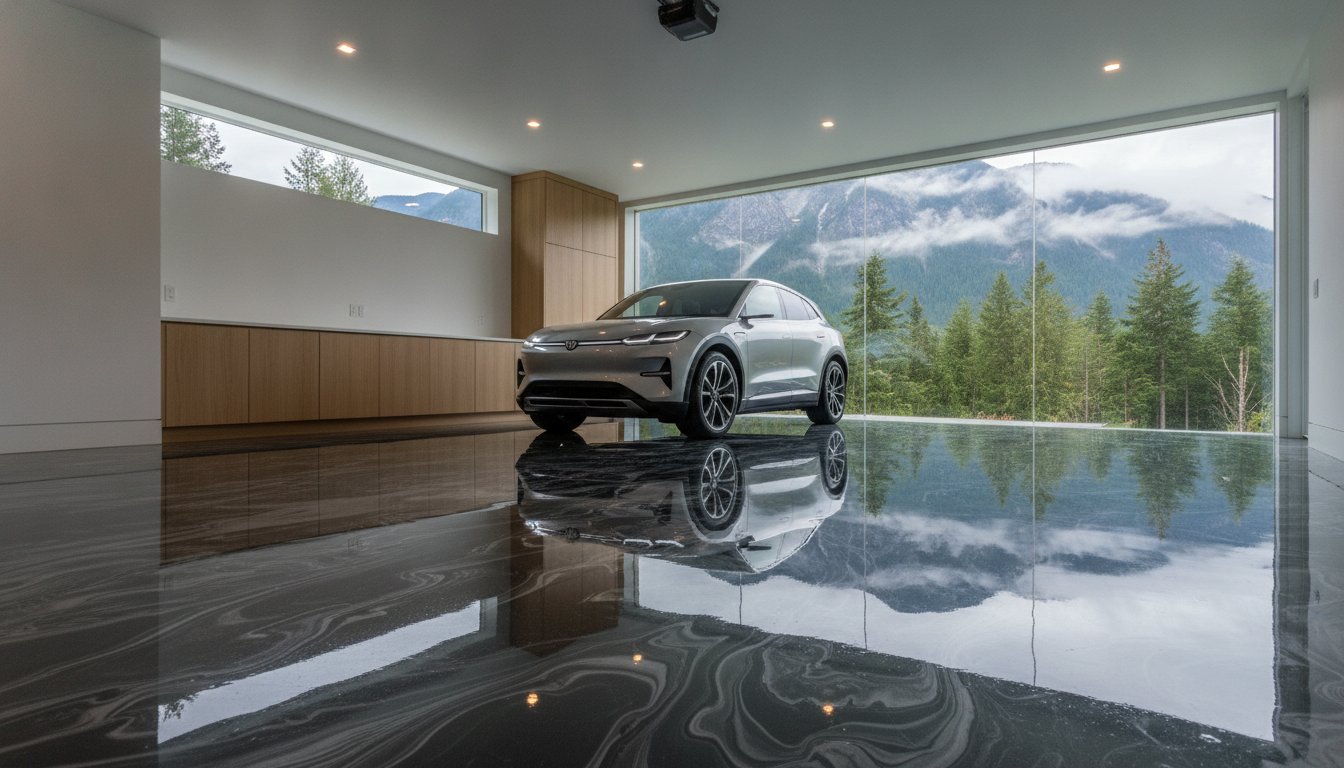
What if your concrete floor could reflect the same level of precision and luxury as the high-end machinery parked on top of it? Many property owners across the Fraser Valley struggle with dull, dusty concrete that seems to trap every ounce of grit and oil. You've likely felt the frustration of a DIY paint kit that peels under hot tires or bubbles because of the persistent moisture in our BC basements. It's a common cycle that leaves many wondering if a truly permanent, mirror-like finish is even possible in our damp coastal climate.
Professional high gloss concrete coatings are the solution, but they require more than just a bucket and a roller to succeed. We promise to show you exactly how to achieve a high-performance surface that survives the unique environmental pressures of the Lower Mainland. You'll learn why industrial-grade preparation is the secret to longevity and how to select a system that balances aesthetic brilliance with chemical resistance. This guide covers everything from the necessity of moisture vapour barriers to the technical precision of diamond grinding, ensuring your next flooring project is a permanent investment rather than a temporary fix.
Key Takeaways
- Understand why professional high gloss concrete coatings provide deep-dimension reflectivity that far exceeds the performance of standard hardware store gloss paints.
- Learn the technical distinction between thin-film sealers and industrial resinous coatings to ensure your floor withstands heavy traffic and resists hot-tire pickup.
- Discover how to mitigate the risks of peeling and adhesion failure caused by high humidity and damp concrete common in the Fraser Valley climate.
- Identify the specialized additives that allow you to maintain a premium mirror-like aesthetic without compromising on safety or slip resistance.
- Gain insight into the critical role of mechanical diamond grinding in creating a permanent bond between the concrete substrate and your new luxury finish.
Table of Contents
What are High Gloss Concrete Coatings?
High gloss concrete coatings are high-performance resinous systems, typically formulated from epoxy or polyaspartic resins, designed to transform standard concrete into a non-porous, highly reflective surface. These systems aren't simple paints. They're multi-layered chemical applications that provide a deep-dimension gloss, often described as a "liquid" or "poured-on" finish. This aesthetic differs significantly from the thin topical shine of a basic acrylic sealer. While a sealer sits on the surface and wears away quickly, industrial-grade high gloss concrete coatings build a thick, durable wear layer that maintains its brilliance even under heavy foot or vehicle traffic. In 2026, the "wet look" finish has become a primary interior design trend across British Columbia, as it perfectly bridges the gap between raw industrial architecture and sophisticated luxury.
The Science of Reflectivity and Concrete
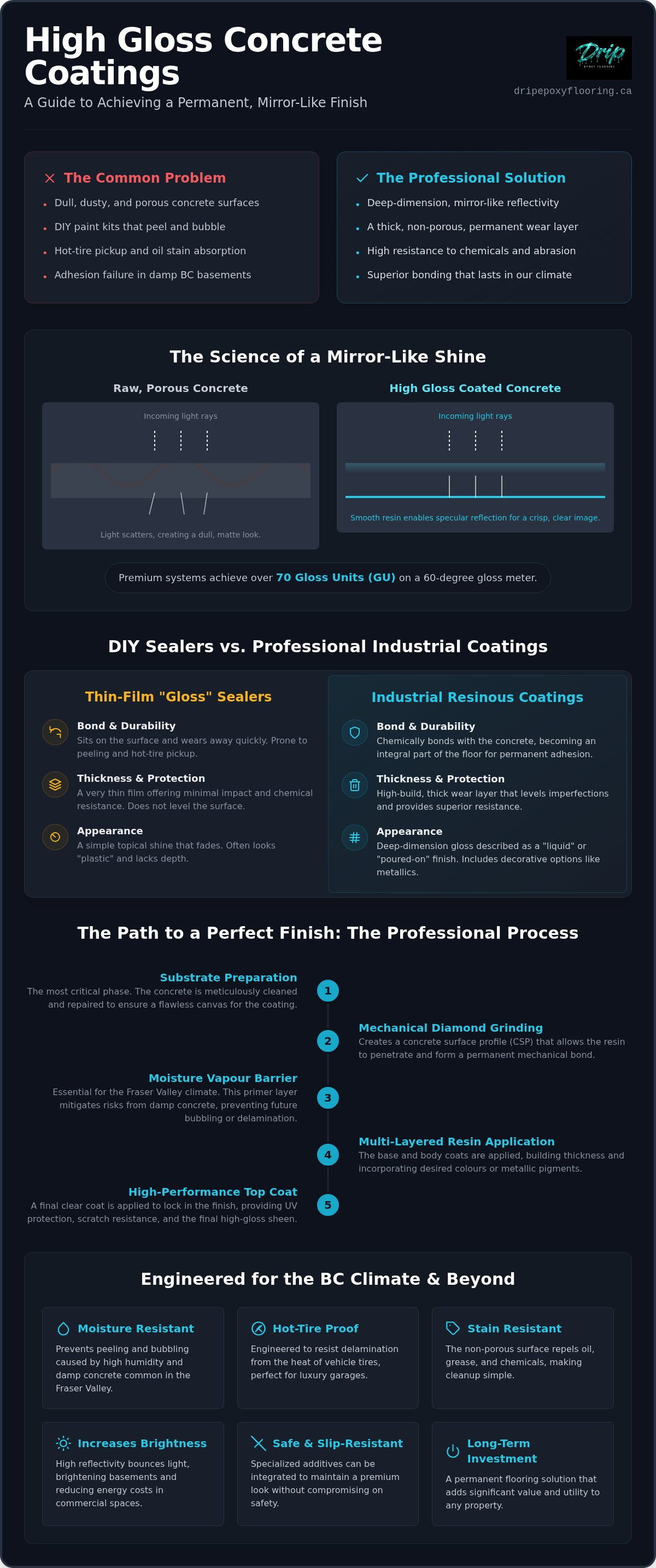
Raw concrete is naturally porous and full of microscopic irregularities. These peaks and valleys scatter light in multiple directions, which creates a dull, matte appearance to the naked eye. To achieve a mirror-finish, we use high-build resins to fill these pores and level the surface into a perfectly smooth plane. This enables specular reflection, where light bounces off the floor at the same angle it arrived, resulting in a crisp, clear image on the floor's surface. While Polished concrete achieves a similar effect through mechanical refinement of the stone, resinous coatings add a protective barrier that is often more resistant to chemical staining and moisture penetration. The Gloss Unit (GU) scale is the standardized industrial metric used to quantify this reflectivity, with premium high-gloss systems typically registering above 70 GU on a 60-degree gloss meter.
Common Uses in Residential and Commercial Spaces
Across the Fraser Valley, these coatings are a preferred choice for property owners looking to maximize both style and utility. In residential settings, luxury garage transformations in Langley and Abbotsford utilize high gloss systems to create a professional showroom environment for vehicles. These floors aren't just for show. They're engineered to resist hot-tire pickup and oil spills. In modern basements, the high reflectivity helps brighten subterranean spaces by bouncing natural light from windows across the entire room. For those reviewing professional flooring services, the functional benefits are just as compelling as the visual ones.
Commercial applications are equally diverse, ranging from high-traffic retail centres in Surrey to sleek corporate offices in Burnaby. Beyond the prestige of a mirror finish, businesses benefit from increased lighting efficiency. A floor with high reflectivity can significantly reduce the amount of artificial lighting required to illuminate a large space, which lowers energy costs. It's a practical application of "industrial luxury" that serves the bottom line while maintaining a premium brand image. Whether it's a boutique showroom or a high-end residential workshop, these coatings provide a seamless, easy-to-clean surface that withstands the rigours of the BC climate.
Exploring High Gloss Coating Systems: From Metallic to Polyaspartic
Selecting the right high gloss concrete coatings requires an understanding of how different resinous chemistries interact with your environment. While big-box retailers offer "gloss paint" that provides a temporary sheen, these products lack the cross-linking density found in professional high gloss concrete coatings. Professional-grade systems, adhering to technical standards like those established by the American Concrete Institute (ACI), are engineered to bond at a molecular level with the concrete substrate. This ensures the finish doesn't just sit on top but becomes an integral part of the floor's structure, providing the resilience needed for both residential and commercial use.
Metallic Epoxy: The "Industrial Luxury" Finish
Metallic epoxy is the pinnacle of decorative resinous flooring, utilizing suspended mica pigments to create a three-dimensional, marbled effect. These pigments are manipulated during the curing process to produce organic patterns that mimic natural stone or flowing water, all while maintaining a mirror-like reflectivity. You can explore our metallic epoxy floor samples to see how these systems create a bespoke look that's impossible to replicate with standard coatings. It's the premier choice for modern Fraser Valley interiors, offering a unique blend of high-end aesthetics and industrial strength.
Polyaspartic Coatings: Fast Cure and High Shine
For property owners in Chilliwack and Abbotsford who require minimal downtime, polyaspartic coatings offer an efficient alternative to traditional epoxy. These systems can often be installed in a single day, allowing for rapid return-to-service without sacrificing the high-gloss aesthetic. Polyaspartic is the gold standard for UV-exposed areas because its aliphatic chemistry prevents the "ambering" or yellowing that occurs when standard epoxies are exposed to direct sunlight. Beyond its UV stability, it offers superior scratch resistance and flexibility, making it ideal for high-traffic entryways or sun-drenched commercial showrooms.
Solid Colour and Clear Coating Options
If your design goal is a clean, minimalist aesthetic, solid colour high-gloss epoxy provides a seamless and sophisticated foundation. These systems offer a uniform appearance that conceals imperfections in the concrete while providing a bright, light-reflective surface. Alternatively, clear high-gloss topcoats are used to protect decorative quartz or flake systems, adding a layer of "industrial luxury" that enhances the underlying colours. You can customize the level of shine to match your specific vision, ensuring the final result complements your interior architecture perfectly. If you're ready to discuss which system fits your space, reach out to our technical team for a detailed assessment.
High Gloss Sealers vs. Industrial Coatings
When evaluating options for a reflective floor, the distinction between a topical sealer and a high-build coating is often misunderstood by property owners. Sealers are measured in microns, whereas industrial-grade high gloss concrete coatings are measured in mils, where one mil equals 25.4 microns. This discrepancy in thickness directly impacts both the longevity and the physical performance of the floor. A typical sealer provides a thin film that rests on the surface, while a resinous coating creates a substantial structural layer. This technical difference is detailed further in this guide to concrete floor coatings, which highlights how thickness correlates with long-term substrate protection.
In the Fraser Valley, many homeowners face the "hot tire pickup" problem. When a vehicle enters a garage after a long drive, the heat from the tires softens thin acrylic sealers. As the tires cool, they bond to the sealer and pull it off the concrete when the car moves again. High-build resinous coatings are engineered to resist this specific thermal stress. While the initial investment for a high-build system is higher than a bucket of retail sealer, the lifecycle cost is significantly lower. Property owners avoid the recurring labour and material costs of biennial resealing, and the added durability contributes to the overall resale value of the home.
When to Choose a Simple Sealer
Simple sealers have their place, primarily in exterior applications such as driveways or patios in Chilliwack and Agassiz. Because exterior concrete must "breathe" to allow moisture vapour to escape, a breathable acrylic sealer is often the appropriate choice. They also serve as a temporary dustproofing solution for low-traffic storage areas where aesthetics are secondary. However, these products are prone to wearing down within 12 to 24 months. They lack the depth of shine found in professional systems and require frequent maintenance to prevent the concrete from looking dull and weathered.
The Case for High-Build Resinous Coatings
For interior spaces requiring "industrial luxury," high-build resinous systems are the professional standard. Unlike sealers that rely on simple chemical adhesion, these coatings utilize mechanical bonding. This process involves diamond grinding the concrete to open the pores, allowing the resin to penetrate deep into the substrate. This creates an inseparable bond that resists road salt, oil spills, and harsh cleaning chemicals common in BC workshops. To understand how these systems can be tailored to your specific space, you can learn more about our professional services. The result is a surface that doesn't just look premium but maintains its integrity for years without the need for constant re-application.
Durability and Safety: Managing High Gloss in the BC Climate
The aesthetic appeal of high gloss concrete coatings is often met with questions regarding safety, particularly during the wet winters of the Lower Mainland. While a mirror finish looks sleek, it must remain functional when exposed to tracked-in rain or snow. Achieving this balance is a matter of technical chemistry rather than just surface appearance. By integrating specialized aggregates into the wear layer, we create a floor that maintains its "industrial luxury" look while providing the necessary traction to meet Canadian safety standards.
Anti-Slip Solutions for Glossy Surfaces
Slippery floors are a valid concern for any high-reflectivity surface. To mitigate this risk, professional installers incorporate transparent suspension agents such as aluminum oxide or micronized polymer grit into the final topcoat. These additives are nearly invisible to the naked eye, allowing the deep-dimension gloss to remain clear while creating a microscopic texture that increases the coefficient of friction. Professional application is vital here. If these agents aren't distributed evenly with a high-speed mixer, they can clump, leading to "bald spots" that compromise safety and ruin the uniform finish of the floor.
The Role of Moisture Vapour Barriers
In regions like Surrey and Mission, the soil is notoriously damp, which leads to significant hydrostatic pressure beneath concrete slabs. Without a dedicated moisture vapour barrier, this pressure forces water vapour through the concrete's capillaries, eventually causing the coating to bubble or delaminate. We prioritize the installation of an epoxy moisture mitigator that can withstand up to 25 pounds of vapour pressure. The anhydrous calcium chloride test serves as the industry standard for quantifying the moisture vapour emission rate of a concrete slab before any resinous system is applied. This scientific approach ensures the longevity of high gloss concrete coatings by preventing the bond failure common in improperly prepared BC basements.
Cleaning and Maintaining the Mirror Finish
Maintaining a high-performance shine requires a specific maintenance routine to prevent micro-scratches from dulling the surface over time. Dust and grit act like sandpaper underfoot, so regular sweeping with a soft-bristle broom or microfibre dust mop is essential. When mopping, property owners should use pH-neutral cleaners specifically formulated for resinous floors. Harsh acidic or alkaline chemicals can etch the surface, leading to a cloudy appearance that is difficult to reverse. For those interested in how these maintenance steps preserve more complex aesthetics, see our guide on Custom Metallic Epoxy Designs: A Guide to Luxury Concrete Finishes in BC. Consistent care ensures your investment retains its value and visual impact for decades. If you're concerned about the current state of your concrete, request a professional moisture assessment for your property.
Achieving the Perfect Shine: The Professional Installation Process
The brilliance of high gloss concrete coatings is the result of meticulous engineering rather than just a high-quality topcoat. While the final resin layer provides the reflectivity, the integrity of that shine depends entirely on the mechanical preparation of the concrete slab. DIY high-gloss kits often fail because they rely on chemical cleaning which lacks the power to create a proper profile for the resin to bond to. This frequently results in a finish that appears "cloudy" or begins peeling under the weight of a vehicle within months. A professional installation ensures that the mirror finish is a permanent feature of the architecture, not a temporary surface treatment.
Mechanical Preparation: Diamond Grinding
Mechanical diamond grinding is the definitive industry standard for high-end resinous installations. This process utilizes heavy planetary grinders equipped with diamond-infused segments to mill the concrete surface. This equipment effectively removes old sealers, deep-seated oils, and surface contaminants common in Chilliwack garages. Unlike acid etching, which is an outdated method that introduces unwanted moisture and only provides a superficial clean, diamond grinding opens the "pores" of the concrete substrate. This creates a specific mechanical profile that allows the initial base coat to achieve a permanent, structural bond that resists delamination even under heavy industrial use.
The Multi-Layer Application Sequence
Achieving a deep-dimension gloss requires a methodical, multi-step application sequence. Each layer is applied with precision to ensure the final result is both aesthetically perfect and functionally resilient. The process typically follows this progression:
- Base Coat and Moisture Barrier: An industrial-grade epoxy primer is applied to seal the slab and prevent moisture vapour from compromising the bond.
- Decorative Layer: This stage involves the application of metallic pigments or solid colour resins to create the desired visual effect.
- High-Gloss Clear Topcoat: A final layer of polyaspartic or high-build epoxy is applied to provide the mirror-like depth and essential chemical protection.
Why Local Expertise Matters in the Fraser Valley
Understanding the specific concrete mixes and environmental conditions of the Lower Mainland is essential for a successful cure. Local weather windows, particularly the high humidity levels in the Fraser Valley, significantly impact how resins flow and bond. As specialized metallic epoxy floor installers in BC, we recognize that a subterranean basement in Mission requires a different technical profile than a sun-drenched showroom in Langley. You can learn more about Drip Epoxy Flooring in Chilliwack and our commitment to these professional standards. If you are ready to upgrade your property with a high-performance surface, book your free quote in the Fraser Valley to begin your transformation.
Elevate Your Space with Industrial Luxury
Transforming a standard concrete floor into a mirror-like surface is a precise technical process that begins with expert diamond grinding. The longevity of high gloss concrete coatings depends on selecting the right resinous system and accounting for the specific moisture levels found in the Fraser Valley. By choosing industrial-grade materials over temporary sealers, you're investing in a durable, easy-to-clean finish that resists chemicals and hot-tire pickup for years to come.
We specialize in bringing this level of professional craftsmanship to residential and commercial properties throughout Chilliwack, Abbotsford, and the Lower Mainland. Whether you're designing a modern retail showroom or a high-end home workshop, the right coating provides a permanent foundation of style and resilience. It's time to stop settling for dusty, dull concrete. Get a Free Quote for Your High Gloss Concrete Transformation and discover the difference that meticulous preparation and premium materials make for your space.
Frequently Asked Questions
Are high gloss concrete coatings slippery when they get wet?
High gloss surfaces can be slippery when wet, but this risk is mitigated through the addition of anti-slip aggregates during the installation process. By incorporating micronized polymer grit or aluminum oxide into the final wear layer, we create a floor that maintains its mirror-like aesthetic while providing the necessary traction for safety. This specialized texture ensures the floor remains functional even in the damp climate of the Lower Mainland.
How long do high gloss epoxy floors last in a typical BC home?
In a typical BC home, a professionally installed high-gloss floor can last between 10 and 20 years depending on the level of maintenance and traffic. Unlike thin DIY kits that peel after a few seasons, these industrial-grade resinous systems create a permanent bond with the concrete substrate. Regular cleaning and the use of protective pads under heavy furniture will help preserve the deep-dimension shine for the duration of the floor's lifespan.
Can I apply a high gloss coating over my existing garage floor paint?
Applying a high-performance coating over existing garage floor paint is not recommended because the bond is only as strong as the weakest layer. For high gloss concrete coatings to adhere properly, the old paint must be removed through mechanical diamond grinding to expose the raw concrete pores. This preparation ensures that the new resinous system achieves a structural bond, preventing the delamination and bubbling that occurs when coatings are applied over inferior products.
How do I clean a high gloss concrete floor without scratching it?
To clean a high-gloss floor without scratching, you should use a soft microfibre dust mop for daily maintenance and a pH-neutral cleaner for wet mopping. Avoiding abrasive scrubbing pads and harsh chemicals is critical, as these can etch the surface and create micro-scratches that dull the reflectivity over time. A simple solution of warm water and a specialized resinous floor cleaner is usually sufficient to maintain the finish without leaving streaks or residue.
What is the difference between a high gloss sealer and a high gloss coating?
The primary difference lies in the thickness and the level of protection provided to the substrate. A high-gloss sealer is a thin topical film, often measured in microns, that requires frequent re-application every one to two years. In contrast, a high-gloss coating is a thick, multi-layered resinous system measured in mils. These coatings offer superior resistance to impact, chemicals, and hot-tire pickup, providing a much longer-lasting solution for interior spaces.
How much do high gloss concrete coatings cost per square foot in Chilliwack?
The cost of installing high gloss concrete coatings in Chilliwack varies based on the condition of the concrete and the specific resinous system selected. Factors such as the extent of diamond grinding required, the need for moisture vapour barriers, and the choice between metallic or solid colour finishes all influence the final investment. To receive an accurate estimate tailored to your project's unique requirements, we recommend requesting a professional on-site assessment and quote.
Can high gloss coatings be used on outdoor patios in the Fraser Valley?
High gloss resinous coatings are generally not recommended for outdoor patios in the Fraser Valley due to the lack of breathability and potential for UV degradation. Exterior concrete must allow moisture vapour to escape from the ground; non-porous coatings can trap this moisture, leading to bubbles and peeling. For outdoor spaces, a breathable, UV-stable acrylic sealer is a more appropriate choice to achieve a "wet look" while withstanding BC's freeze-thaw cycles and heavy rainfall.
How long does the installation process take for a high gloss floor?
A standard professional installation typically takes between two and three days to complete, depending on the complexity of the project and the curing requirements of the chosen system. The process involves one day for mechanical diamond grinding and base coat application, followed by the decorative and topcoat layers on subsequent days. While polyaspartic systems can sometimes be completed faster, allowing for proper cure times ensures the maximum durability and clarity of the final mirror finish.