food grade floor coatings canada · 14 min read ·
Food Grade Floor Coatings in Canada: The Ultimate 2026 Compliance Checklist
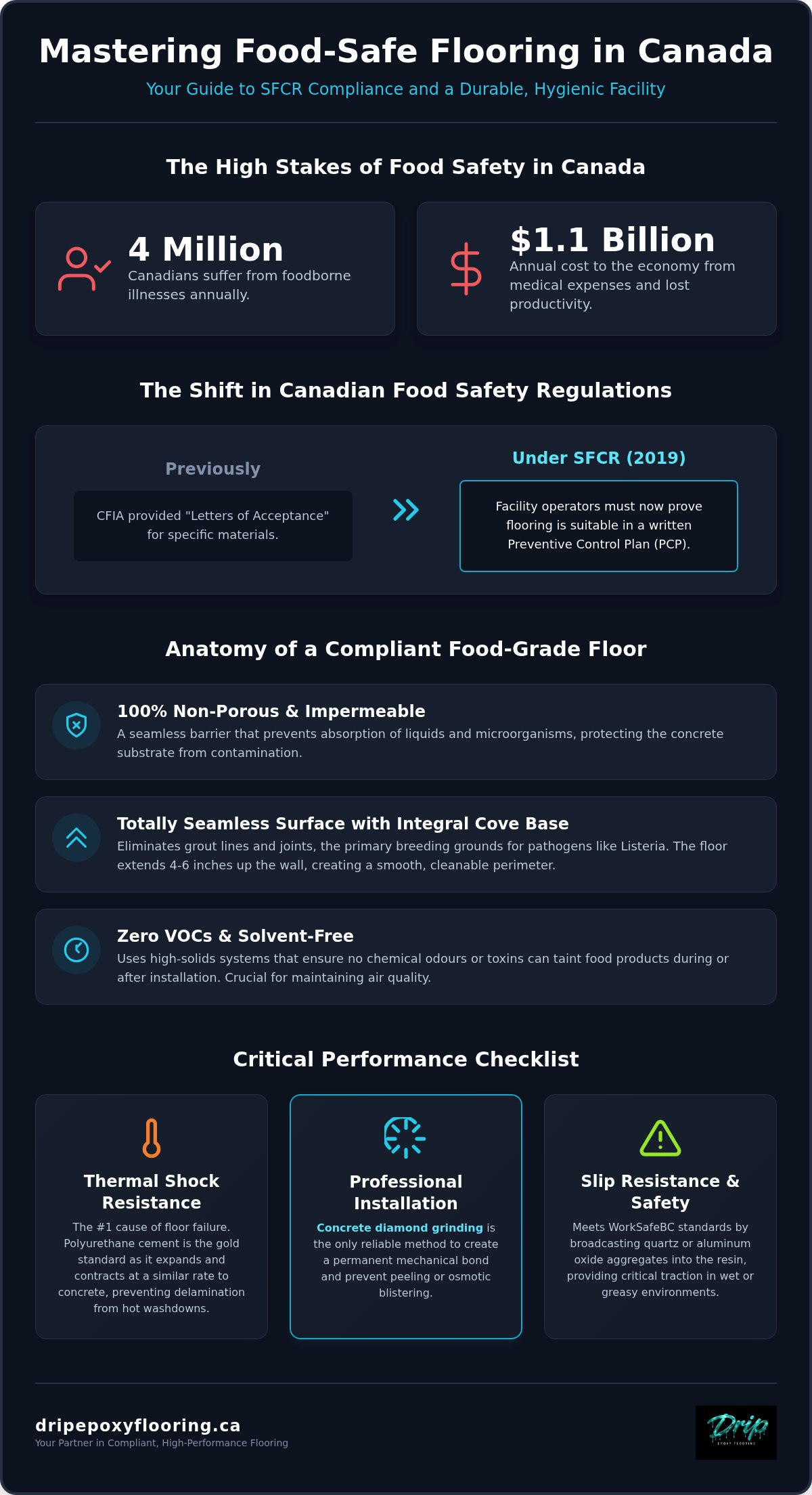
Approximately 4 million Canadians suffer from foodborne illnesses every year, costing the national economy nearly $1.1 billion in medical expenses and lost productivity. For food and beverage facility managers, these fig
By Drip Epoxy Flooring · Chilliwack, BC
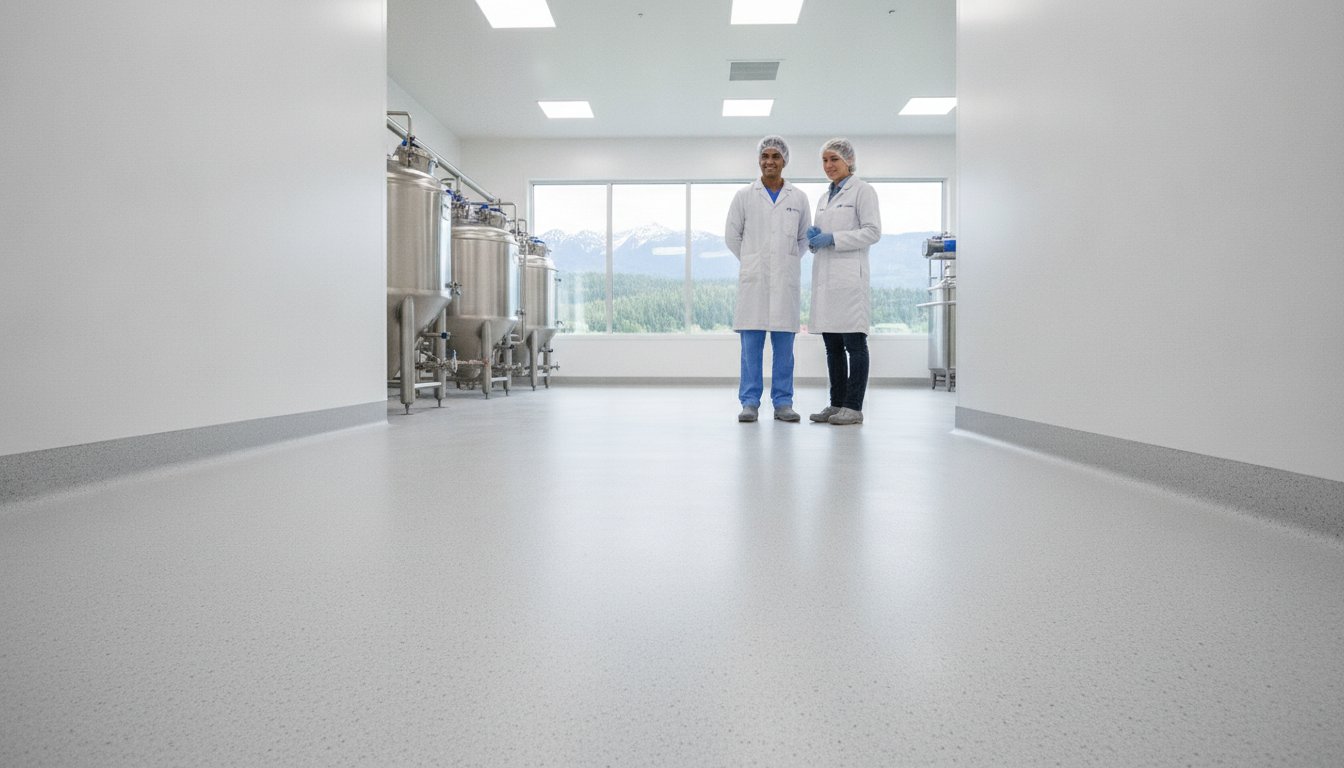
Approximately 4 million Canadians suffer from foodborne illnesses every year, costing the national economy nearly $1.1 billion in medical expenses and lost productivity. For food and beverage facility managers, these figures represent more than just data; they highlight the immense pressure to maintain a sterile, compliant environment. You likely understand that a floor is not merely a surface to walk on, but a critical line of defence against bacterial growth and the threat of a failed CFIA inspection. The fear of significant operational downtime during a renovation often makes the decision even more stressful.
By choosing the right food grade floor coatings canada, you can secure a facility that exceeds 2026 regulatory standards while achieving a premium, industrial luxury finish. This article provides the technical expertise you need to master the Safe Food for Canadians Regulations (SFCR) and select a flooring system built for longevity. We will detail the essential components of a Preventive Control Plan, compare the performance of various resins, and outline a step-by-step checklist to ensure your upgrade is seamless, durable, and fully compliant for years to come.
Key Takeaways
- Understand how to meet the Safe Food for Canadians Regulations (SFCR) and why the responsibility for validating impermeable surfaces now rests with the facility operator.
- Learn to select the correct resin chemistry, ensuring your food grade floor coatings canada can resist thermal shock and corrosive cleaning agents.
- Realize why professional concrete diamond grinding is the only reliable method to prevent peeling and ensure a permanent bond in BC's humid environment.
- Identify the critical role of seamless cove bases and slip-resistant quartz systems in eliminating bacterial harbourage points and improving worker safety.
- Master the 2026 compliance checklist to avoid installation errors like osmotic blistering, securing a durable surface that lasts over a decade.
Table of Contents
What Defines Food Grade Floor Coatings in Canada?
In the Canadian food and beverage industry, "food grade" isn't a specific product brand or a simple label. It's a rigorous performance standard. When we discuss food grade floor coatings canada, we're referring to surfaces that are entirely non-porous and capable of withstanding aggressive chemical sanitization without degrading. Historically, the Canadian Food Inspection Agency (CFIA) provided "Letters of Acceptance" for specific materials. However, under the Safe Food for Canadians Regulations (SFCR) that came into effect in 2019, this has changed. The responsibility now rests with the facility operator to prove that their flooring is suitable for its intended use as part of a written Preventive Control Plan (PCP).
Choosing a system that meets these standards requires a focus on the "industrial luxury" aspect, which involves surfaces that look pristine but perform like tanks. These coatings must be VOC-free (Volatile Organic Compounds) to ensure that no chemical odours or toxins taint food products during or after the installation. In the damp climate of the Fraser Valley, selecting a solvent-free, high-solids system is essential for maintaining air quality and ensuring a safe environment for both staff and products.
Canadian Regulatory Compliance: CFIA and HACCP
HACCP (Hazard Analysis Critical Control Point) principles require facility managers to identify and control biological, chemical, and physical hazards. Your floor is a primary control point. In British Columbia, provincial health inspectors prioritize surfaces that don't trap organic matter or moisture. During a walk-through, they specifically look for signs of delamination, cracking, or standing water that could indicate a failure in the flooring system. Within the context of Canadian food safety, an impermeable surface is defined as a material that prevents the absorption or passage of liquids and microorganisms into the concrete substrate. Failing to maintain this barrier can lead to costly fines or forced operational shutdowns.
Why Seamlessness is Non-Negotiable
Traditional flooring types and materials that utilize grout lines or physical expansion joints are a significant liability in food production. These gaps serve as microscopic breeding grounds for pathogens like Listeria and Salmonella, which can survive deep within joints even after a standard washdown. High-performance industrial floor coatings eliminate these risks by creating a monolithic, wall-to-wall surface. To achieve total compliance, we implement an integral cove base. This process extends the flooring material 4 to 6 inches up the wall, removing the 90-degree angle where dirt typically accumulates and making the entire perimeter of the room easy to sanitize with a simple squeegee or pressure washer.
The Critical Performance Checklist for Food & Beverage Facilities
Beyond regulatory compliance, the physical survival of your floor depends on its ability to handle daily operational abuse. High-performance food grade floor coatings canada are engineered to withstand specific environmental stressors that would cause residential or light commercial products to fail within months. A successful installation must address a facility's unique thermal, chemical, and physical requirements to prevent premature degradation.
Thermal Shock: The #1 Cause of Floor Failure
Thermal shock occurs when a floor surface is subjected to rapid temperature changes, such as during a high-pressure steam cleaning or a hot water washdown. Standard epoxy systems often have a different coefficient of thermal expansion than the concrete substrate. When hit with 180°F water, the coating expands faster than the concrete, causing the bond to snap and the floor to delaminate. Polyurethane cement is the gold standard for commercial kitchens, dairies, and meat processing plants because it expands and contracts at a rate similar to concrete. High-risk zones like areas surrounding ovens, fryers, and walk-in freezers require this specific chemistry to maintain a permanent bond despite constant thermal cycling.
Slip Resistance and Workplace Safety
Safety is a priority that cannot be sacrificed for ease of cleaning. You can realize a slip-resistant surface by incorporating quartz or aluminum oxide aggregates into the resin. This provides the traction required to meet WorkSafeBC standards in industrial environments. Finding the perfect balance is essential; a floor that is too smooth becomes a skating rink when wet, while a floor with too much texture becomes impossible to sanitize. Balancing these food industry flooring attributes ensures that your facility remains safe for workers in wet conditions while remaining easy to scrub and squeegee.
Chemical resilience is another vital factor in the checklist. Surfaces must resist corrosive agents like lactic acid, animal fats, blood, and aggressive sanitizing chemicals that eat through porous materials. In the Lower Mainland and Fraser Valley, the damp climate also introduces the risk of high moisture vapour transmission through concrete slabs. Without a specialized moisture vapour barrier, osmotic pressure can cause the coating to blister and peel from the bottom up. If you are unsure which system fits your specific production zone, you can request a professional site assessment to identify potential failure points before they become costly repairs.
Selecting the Right System: Epoxy vs. Polyurethane Cement vs. Polyaspartic
Selecting the correct resinous chemistry for your facility is a decision that balances operational requirements with long-term compliance. Not all food grade floor coatings canada are interchangeable. A system designed for a dry storage warehouse will likely fail if installed in a high-temperature dairy processing plant. Understanding the specific strengths of each material allows you to invest in a surface that provides both industrial-grade reliability and a premium aesthetic finish.
Solid colour commercial epoxy floors serve as an excellent choice for dry storage zones, laboratories, and light-duty corridors. These systems offer high compressive strength and a seamless finish that is easy to sanitize. For retail food spaces or cafes where downtime must be kept to an absolute minimum, polyaspartic coatings provide a rapid-cure solution. These materials can often be installed and returned to service within 24 hours, ensuring that operational disruptions don't impact your bottom line.
In contrast, polyurethane cement is the essential choice for "wet" production areas. This heavy-duty system is specifically engineered to handle the thermal cycling and aggressive washdowns discussed in previous sections. For facilities that require a higher degree of slip resistance and a more decorative appearance, quartz flooring systems utilize coloured aggregates broadcast into the resin. This results in a multi-layered, highly durable surface that maintains its traction even when saturated with oils or water.
ZONE MAP: Matching Materials to Usage
Craft breweries and distilleries in the Fraser Valley often face a combination of heavy impact, acidic spills, and frequent moisture. For these environments, polyurethane cement is the only material that provides the necessary resilience. Commercial bakeries and confectionaries, which deal with high-heat ovens and fine powders, benefit from smooth, high-build epoxy systems that prevent dust accumulation. For walk-in freezers and cold storage units, we utilize specialized low-temperature resins that can cure in sub-zero conditions without compromising the bond strength or the final finish.
Durability and Longevity Expectancy
An industrial-grade flooring system is a significant investment in your facility's infrastructure. When properly specified and installed, these systems typically offer a lifespan of 10 to 15 years, even under the stress of heavy forklift traffic and pallet jack movement. While the initial cost of a professional installation may be higher than a budget-driven alternative, the long-term ROI is realized through reduced maintenance and the avoidance of premature floor failure. A meticulous approach to material selection ensures that your floor remains a functional asset rather than a recurring liability.
The Installation Checklist: Ensuring a Lifetime Bond
The success of food grade floor coatings canada depends entirely on the quality of the bond between the resin and the concrete substrate. Even the most advanced polyurethane cement system will fail if the installation process skips critical preparatory steps. A meticulous installation ensures that the floor remains impermeable and easy to clean for its entire service life, preventing the peeling and delamination that often plague facilities in British Columbia's damp environment. This phase is where technical expertise and professional equipment become your greatest assets.
The Foundation: Professional Surface Prep
Diamond grinding is the industry standard for surface preparation. Unlike acid etching, which only provides a superficial cleaning, diamond grinding mechanically removes the top layer of "laitance" to reveal the open pores of the concrete. This creates a specific mechanical profile that allows the resin to "anchor" into the slab. Before the coating is applied, all cracks and spalls must be repaired with high-strength fillers to ensure the final surface is monolithic and free of defects. Learn more about our concrete floor preparation services to understand why this step is the foundation of every successful project.
Sanitary Details: Cove Bases and Drainage
Sanitation is about more than just the flat floor surface; it involves how that surface interacts with the rest of the facility. An integral cove base is essential for eliminating the 90-degree corner where the floor meets the wall. By extending the coating 10 to 15 centimetres up the vertical surface, you create a bathtub-like seal that prevents liquids from seeping into the wall cavity. This transition must be handled with precision, especially when integrating with existing stainless steel trench drains. Proper installation also requires verifying the slope-to-drain accuracy to prevent standing water, which is a major red flag during health inspections.
In the Fraser Valley, high moisture levels in the concrete slab are a constant concern. We utilize specialized moisture vapour testing to ensure the slab is dry enough for the specific resin system. If moisture levels are too high, a dedicated moisture vapour barrier is installed to prevent osmotic blistering. Finally, planning for curing times is vital for operational efficiency. While some systems require several days to fully cure, rapid-cure polyaspartic options can be ready for foot traffic in mere hours. You should always coordinate with your installer to establish a realistic "return to service" window that minimizes facility downtime.
To ensure your facility meets all 2026 safety standards and receives a floor that performs like a tank, book a technical site walkthrough with our installation team.
Implementing Food-Safe Flooring in the Fraser Valley
Selecting high-performance food grade floor coatings canada requires more than just picking a durable material. It demands an understanding of the specific environmental conditions and regulatory expectations found within British Columbia. From the humid conditions of the Fraser Valley to the rigorous standards of local health inspectors, local expertise is the bridge between a simple renovation and a fully compliant facility upgrade. Our approach, defined as industrial luxury, ensures that your production environment remains a sterile, high-functioning space that also reflects a professional, premium aesthetic.
Customization plays a vital role in facility organization. We help you organize your production floor by utilizing colour-coded zones to distinguish between high-risk processing areas, dry storage, and pedestrian walkways. This visual workflow improves safety and simplifies the path for auditors during a walk-through. Whether your facility is located in Chilliwack, Abbotsford, or Langley, we provide a meticulous site assessment to determine the exact resin chemistry and slip-resistance profile required for your specific operation.
Local Success Stories: BC Food & Beverage Facilities
We take pride in helping local businesses pass their health and CFIA inspections with confidence. Our team serves the entire Lower Mainland, providing specialized service from Burnaby to Hope. By focusing on the unique challenges of the BC climate, such as high concrete moisture levels, we ensure that every installation is built to last a decade or more. You can explore our commercial epoxy flooring solutions to see how we have transformed local processing plants into models of sanitary efficiency.
Next Steps: Planning Your Facility Upgrade
A successful installation requires careful coordination to minimize the impact on your production schedule. We often recommend scheduling major coating projects during off-hours, weekend shifts, or holiday shutdowns to ensure your facility remains operational when it matters most. Before our team arrives, you will need to clear the designated zones of heavy machinery and ensure the workspace is accessible for our diamond grinding equipment. This preparation allows us to maintain a steady, methodical pace, moving from surface preparation to the final decorative topcoat without unnecessary delays.
Securing a compliant, durable floor is a long-term investment in your brand's reputation and safety record. If you are ready to realize a seamless, easy-to-clean environment that meets the highest Canadian standards, the first step is a professional site evaluation. Contact Drip Epoxy Flooring for a free industrial quote today and let our craftsmen guide you through the 2026 compliance checklist.
Securing Your Facility’s Future and Compliance
Navigating the complexities of the Safe Food for Canadians Regulations requires a strategic approach to your facility’s infrastructure. By prioritizing high-performance food grade floor coatings canada, you ensure your operation remains both compliant and efficient. Success depends on matching the correct resin chemistry to your specific production zones and ensuring every square foot is prepared through meticulous diamond grinding. These essential steps eliminate the risks of bacterial growth and premature floor failure, providing a foundation that survives the most rigorous sanitation schedules.
Drip Epoxy Flooring provides specialized industrial and commercial coatings that deliver industrial luxury and long-term resilience. As local specialists serving Chilliwack and the broader Fraser Valley, we include professional concrete diamond grinding in every project to guarantee a permanent bond. Protecting your brand’s reputation starts with a floor that performs like a tank while maintaining a pristine, professional appearance. Request Your Free Food-Grade Flooring Quote today to secure your facility’s compliance for 2026 and beyond. We're ready to help you transform your production space into a model of safety and durability.
Frequently Asked Questions
Is epoxy flooring actually food-safe for commercial kitchens in Canada?
Yes, high-performance epoxy is food-safe if it's a 100% solids, VOC-free system. Under the current Safe Food for Canadians Regulations, these food grade floor coatings canada provide the impermeable, non-absorbent surface required to prevent microbial growth. It's essential to select a system that won't release odours or toxins during the curing process. Our commercial installations in Chilliwack focus on creating these seamless barriers to ensure your kitchen remains fully compliant with health standards.
How long does it take to install a food-grade floor coating?
A standard installation usually requires 3 to 5 days, though this varies based on the specific resin chemistry. The process begins with meticulous diamond grinding and substrate repairs, followed by the application of the base and decorative layers. While polyaspartic systems offer a faster return to service window, heavy-duty polyurethane cement often needs more time to reach full chemical resistance. We coordinate with Fraser Valley businesses to schedule work during low-production periods.
What is the difference between CFIA compliant and FDA approved flooring?
FDA approval is a United States regulatory standard, whereas Canadian facilities must follow the Safe Food for Canadians Regulations (SFCR). The CFIA no longer issues formal letters of acceptance for specific products. Instead, facility operators in Burnaby and Hope must maintain a Letter of Guarantee from the supplier. This document proves that your chosen flooring system is safe and suitable for use within a high-risk production environment and meets all national safety standards.
Can food-grade coatings be applied over existing tile or old epoxy?
While coatings can technically be applied over tile, we don't recommend it for industrial environments. Tiles often have compromised grout lines or hollow spots that lead to future delamination. To ensure a lifetime bond in the damp climate of Langley or Mission, our team prefers to remove existing materials and perform professional diamond grinding. This process reveals the raw concrete pores, allowing the new resin to anchor deeply into the substrate for maximum durability.
How do I maintain and clean a resinous food-grade floor?
Cleaning a seamless resinous floor is straightforward because there are no grout lines to trap organic matter. You should use a pH-neutral degreaser and a soft-bristle brush or automatic scrubber. For facilities in Agassiz or Harrison Hot Springs with integral cove bases, a simple squeegee helps move water toward the drains efficiently. Avoid using harsh abrasive tools that could dull the finish. Regular maintenance ensures your industrial floor remains sanitary and visually impressive for years.
What happens if my floor fails a health inspection due to cracks or peeling?
If an inspector identifies cracks or peeling, your facility may be cited for a health hazard. These defects are seen as breeding grounds for pathogens like Listeria. You’ll typically be given a strict timeline to complete repairs before a follow-up inspection. We help businesses in Surrey and Coquitlam resolve these issues by installing food grade floor coatings canada that meet all current 2026 safety requirements, ensuring you pass your next walk-through with total confidence.
Which is better for a brewery: epoxy or polyurethane cement?
Polyurethane cement is the superior choice for breweries and distilleries. These environments face constant thermal shock from boiling liquids and exposure to acidic byproducts that can degrade standard epoxy. Polyurethane cement expands and contracts at the same rate as the concrete slab, preventing the bond from snapping during temperature shifts. For local brewers in Abbotsford, this material provides the necessary resilience to survive heavy impact and aggressive daily washdowns without failing or delaminating.