benefits of professional floor coating · 14 min read ·
Benefits of Professional Floor Coating: What Quality Installation Changes
A floor coating’s finish is only as reliable as the concrete beneath it. The benefits of professional floor coating come from more than a fresh appearance: preparation and system selection influence how the surface handl
By Drip Epoxy Flooring · Chilliwack, BC
A floor coating’s finish is only as reliable as the concrete beneath it. The benefits of professional floor coating come from more than a fresh appearance: preparation and system selection influence how the surface handles daily traffic, spills and cleaning. Bare concrete or a basic finish may suit some spaces, but wear, maintenance demands and slab condition can change what makes sense for yours.
If you’re weighing a coating or concerned that shortcuts in preparation could undermine the result, start with the concrete and how you use the space. This article explains how assessment and mechanical diamond grinding prepare a slab for resin bonding, and why the right system matters. You’ll learn how epoxy and polyaspartic systems, along with decorative flake, quartz, metallic and solid-colour finishes, can balance appearance with practical demands. From a home garage to a busy commercial floor, the goal is to identify which benefits fit your space and what to consider before installation.
Key Takeaways
- The benefits of professional floor coating depend on the slab’s condition and the space’s daily demands, including traffic, equipment, spills and cleaning.
- A site assessment helps identify concrete conditions that preparation must address before a coating system is applied.
- Compare bare concrete, conventional floor paint and resinous coatings by considering surface protection, cleanability, finish choices and preparation needs.
- Epoxy, polyaspartic topcoats, decorative flake, quartz and metallic finishes serve different functional and aesthetic goals. Match the system to your priorities.
- In the Fraser Valley, project planning should account for each installation stage. Cure and return-to-service timing depend on the system and site conditions.
Table of Contents
- Benefits of Professional Floor Coating: What Changes on a Concrete Floor?
- How Professional Preparation Supports Floor Coating Performance
- Professional Floor Coating Compared with Bare Concrete and Floor Paint
- How to Match a Professional Floor Coating to Your Space
- What to Expect from Professional Floor Coating in the Fraser Valley
Benefits of Professional Floor Coating: What Changes on a Concrete Floor?
What changes day to day after a concrete floor is professionally coated? Depending on the slab and the system selected, the surface may be easier to clean, better suited to routine foot or equipment traffic, and more consistent in appearance. These benefits vary by space. A home garage, retail space and active work area place different demands on a floor, so consider the finish alongside how the space is used.
A coating is a resin layer applied to prepared concrete, not a new concrete floor. It changes the surface, but it doesn’t replace the slab or automatically correct cracks, movement, moisture concerns or other underlying conditions. The concrete must be assessed and prepared for the selected system so the coating can bond as intended. A coating’s suitability depends on concrete condition, intended use and system selection.
The benefits of professional floor coating matter most when they address a real day-to-day need. In a Surrey garage, easier removal of routine dirt may be the priority. In a work area with repeated equipment movement, abrasion resistance and cleaning requirements may carry more weight. Epoxy coatings are one type of resin-based coating. The specific system and its application determine the finished surface, not the material name alone.
How a coated surface changes everyday cleaning
A seamless resinous surface has no grout lines or joints between floor sections for dirt to collect in, which can simplify routine sweeping and washing. Many cured coating surfaces are non-porous, but that describes a surface characteristic, not food-safety status, sanitation certification or approval for a regulated facility. Cleaning still depends on the space, the coating and the products and procedures used. A coated floor isn’t stain-proof or maintenance-free.
Where durability and appearance matter together
Abrasion resistance describes how well a surface withstands wear from foot traffic, equipment and cleaning. Those demands should guide system selection: repeated cart movement calls for different considerations than occasional residential use. Colour and finish also shape the room. Solid-colour coatings create a uniform look, while decorative flake, quartz and metallic finishes add different visual textures. Quartz can contribute a slip-resistant texture, but traction and other performance characteristics depend on the full system and site conditions.
For a useful recommendation, consider what crosses the floor, what contacts it and how it’s cleaned. Chemical exposure, impact and slip performance vary across coating systems. A finish chosen for appearance alone may not address the space’s operational needs. Considering these factors during assessment connects the visual result to the floor’s daily demands.
How Professional Preparation Supports Floor Coating Performance
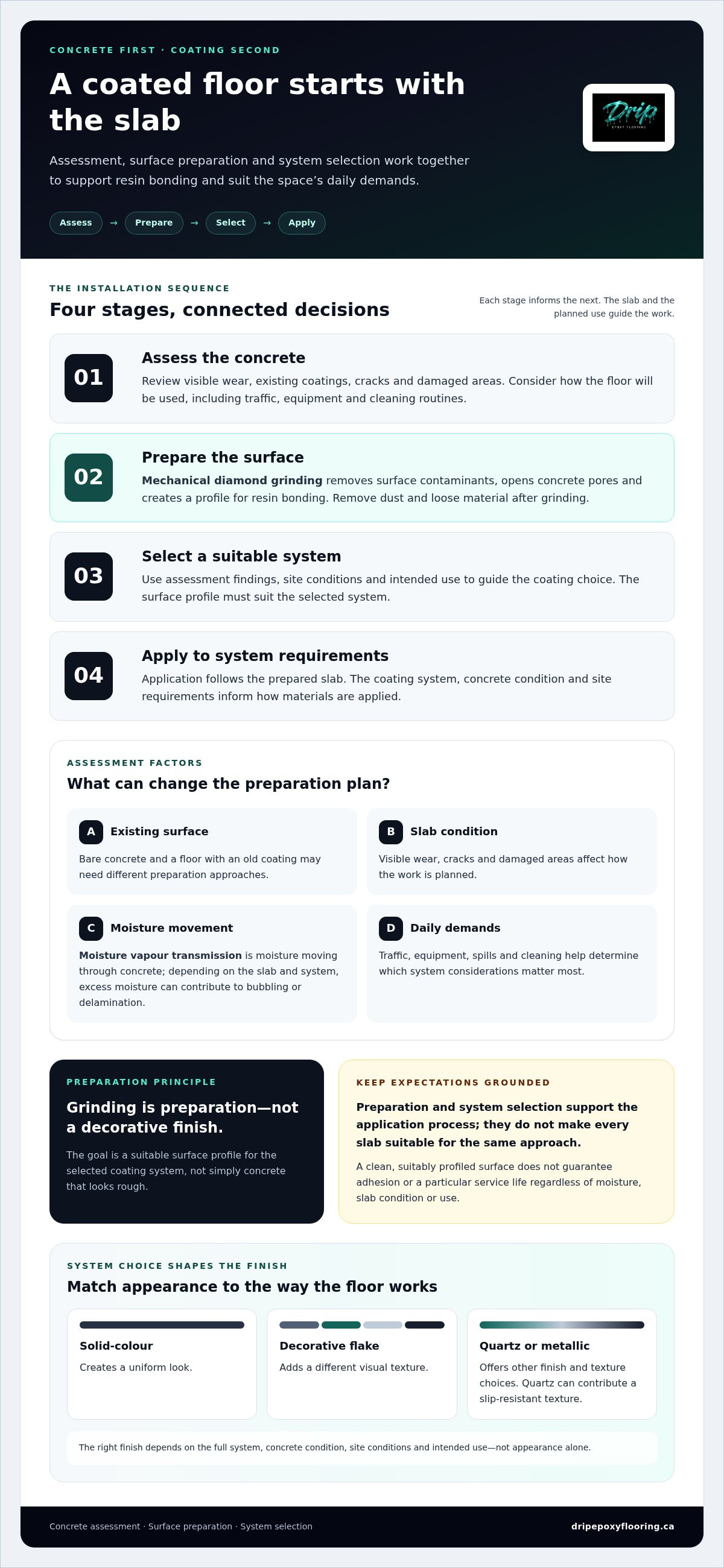
A coated floor starts with the concrete already in place. Professional installation follows a sequence: assess the slab, prepare its surface, select a system for site conditions and intended use, then apply it according to the system requirements. Each stage informs the next. Preparation addresses the existing slab; it doesn’t replace assessment or make every concrete surface suitable for the same coating approach.
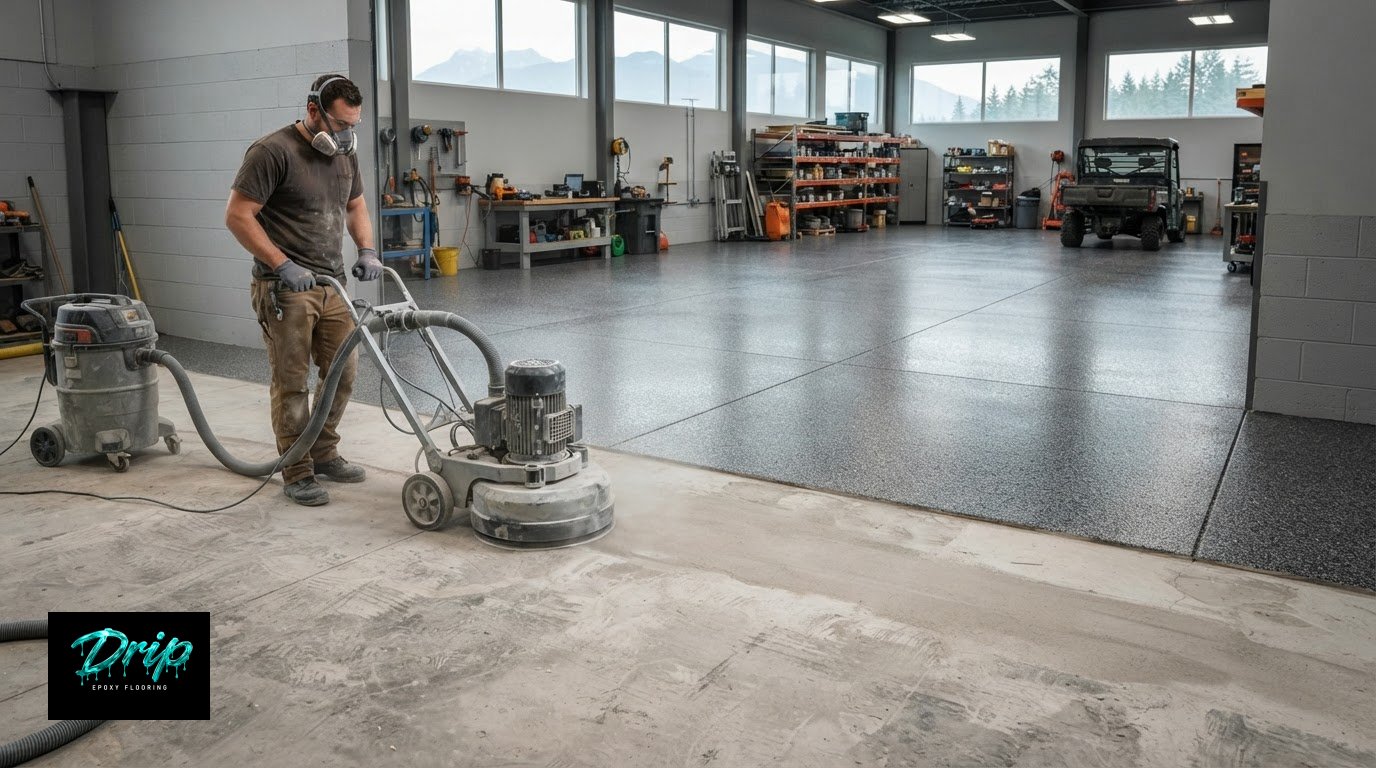
Mechanical diamond grinding opens concrete pores and creates a profile for resin bonding. It’s a preparation process, not a decorative finish. The resulting surface helps create suitable conditions for coating application. Assessment determines what preparation is needed and whether other concrete concerns must be addressed first.
What a professional concrete assessment considers
Before work begins, the slab is reviewed for visible wear, existing coatings, cracks and the demands of the planned use. A floor with an old coating may need a different preparation approach from bare concrete. Cracks or damaged areas also affect how the work is planned. Intended traffic, equipment and cleaning routines help guide system selection.
Moisture vapour transmission is the movement of moisture through concrete. Depending on the slab and coating system, excess moisture can contribute to bubbling or delamination. Assessment findings guide the preparation plan and system choice rather than relying on appearance alone. For a closer look at how slab preparation supports a finished coating, the related article, Professional Concrete Floor Preparation Services: The Foundation of Durable Coatings, explores the groundwork in more detail.
Why preparation and application belong together
Mechanical diamond grinding removes surface contaminants and opens the concrete pores to create a suitable profile for resin bonding. After grinding, dust and loose material need to be removed so they don’t interfere with application. The surface profile must also suit the selected system. Preparation isn’t simply a matter of making concrete look rough.
Application follows the prepared slab. The coating system, concrete condition and site requirements inform how materials are applied. A clean, suitably profiled surface supports the process, but it doesn’t guarantee adhesion or a particular service life regardless of moisture, slab condition or use. Preparation and system selection should be considered together, not treated as separate decisions.
For a Surrey property or facility, clear information about the existing floor helps make project planning more specific. Note where coatings are lifting, where cracks or wear are visible, and how the floor will be used. You can share your floor coating project details to begin a discussion about the concrete and the demands of your space.
Professional Floor Coating Compared with Bare Concrete and Floor Paint
Choosing between bare concrete, conventional floor paint and a professionally installed resinous coating depends on what you need the floor to do. An occasional-use storage room has different demands from a workspace with regular traffic, equipment and cleaning. The comparison below highlights broad differences, not a performance ranking. Actual outcomes depend on the slab, coating design, use and maintenance.
| Floor type | Surface protection | Cleaning | Finish options | Preparation |
|---|---|---|---|---|
| Bare concrete | No added resinous coating layer; the slab remains exposed. | Cleaning needs depend on the concrete finish and condition. | Appearance comes from the concrete itself. | Coating preparation isn’t required, though the slab’s condition still affects how it performs as a floor. |
| Conventional floor paint | Adds a surface paint layer; results depend on product, substrate and application. | A painted surface may change routine cleaning, depending on its condition and use. | Typically changes the visible colour of the surface. | Surface preparation and product directions affect application. |
| Professionally installed resinous coating | Adds a resinous layer designed around the concrete and intended use. | A seamless finish can make routine cleaning more straightforward. | Options can include solid colour, decorative flake, quartz or metallic effects. | Assessment, mechanical preparation and system application are planned for the slab. |
What bare concrete offers, and what it leaves exposed
Bare concrete can be a practical finished surface where its existing condition meets the room’s needs. It has no added resinous coating layer, so the decision to coat may come down to concerns such as dust, staining or visible wear. Those issues don’t occur equally on every slab. Consider where they appear and whether they interfere with cleaning, appearance or the floor’s intended use.
How a professional coating differs from floor paint
Conventional floor paint is a surface paint layer. A professional resinous system is selected and applied as a coating system, with preparation and layer design tied to the concrete and project requirements. Resinous systems offer a wider choice of finishes, but not every option suits every environment. The benefits of professional floor coating depend on matching the system to the slab and daily demands, not simply choosing a thicker-looking or more decorative finish.
A coating may not be the right choice for every slab or operating environment. Concrete condition, moisture, intended use and maintenance all matter, and no coating is immune to wear or application issues. Compare the specific needs of your space with the proposed system before deciding. That makes the choice more useful than assuming bare concrete, paint or resin is always the best fit.
How to Match a Professional Floor Coating to Your Space
Start with how the floor operates, then consider its appearance. A coating that suits a lightly used room may not fit a space with regular vehicle traffic, carts, machinery or frequent washing. Before selecting a finish, map out the main demands: foot traffic, equipment and point loads, spills or chemical exposure, cleaning methods, and the visual effect you want. Equipment, point loads, repeated travel and cleaning routines should inform system selection.
Epoxy can form the base layer in a resinous flooring system. A Polyaspartic topcoat is a UV-stable, fast-curing clear coat applied over epoxy or base layers for durability and chemical resistance. Its role and the full system design should suit the slab and operating conditions. Commercial projects also need project sequencing that accounts for how work activities and access will be managed during installation and curing. For more on commercial system considerations, explore commercial polyaspartic flooring.
Choose a finish around use and visual priorities
Finish categories offer different visual directions. Metallic epoxy creates a flowing, varied effect; decorative flake adds a patterned appearance; solid-colour coatings provide a more uniform look. Quartz flooring embeds quartz grains in resin and can be specified where a slip-resistant texture is a project priority. Consider texture, cleaning needs and system design together, since traction requirements vary by space and use.
Colour and finish decisions are easier to assess against the room’s lighting, walls and equipment. Reviewing epoxy floor samples can help you compare the visual direction before settling on a system. A decorative preference should complement, not override, the functional requirements of the floor.
Account for traffic, exposure and operating routines
Think through a typical day, not only the floor’s appearance when the room is empty. A garage may see vehicles and tracked-in debris; a commercial work area may have carts, repeated foot traffic or equipment resting in fixed positions. Note where turning, loading or frequent cleaning occurs. These patterns help identify the performance characteristics the system needs to address.
Also consider what can reach the floor. Spills, cleaning products and temperature changes can affect system requirements, so include exposure details in the assessment. A coating selected for one room isn’t automatically suited to another. The benefits of professional floor coating depend on aligning concrete condition, system design and intended use, then maintaining the finished surface according to its requirements.
List your traffic patterns, equipment, likely spills, cleaning routine and finish preferences to create a useful starting brief. Request a project quote for your floor coating based on the demands of your space.
What to Expect from Professional Floor Coating in the Fraser Valley
A professional floor coating project moves from understanding your space to preparing and coating the existing concrete. Initial discussion establishes the floor’s intended use, visible concerns, traffic patterns and finish preferences. A site assessment then informs preparation and system selection. This sequence gives the project a practical foundation, whether you’re planning a residential garage in Surrey or a commercial or industrial floor elsewhere in the Fraser Valley.
Drip Epoxy Flooring is a locally owned and operated business based in Chilliwack, serving communities across the Fraser Valley and Lower Mainland. Its service area includes Chilliwack, Abbotsford, Mission, Langley, Surrey, Coquitlam, Burnaby, Hope, Harrison Hot Springs and Agassiz. The owner completed in-person flooring installation training and certification through XPS Canada. That is installer training and certification, not a certification of a flooring product or a facility.
Plan the project around the space and its use
Access and daily operations shape how work is organized. Before the site review, note what needs to be moved, where equipment is located, which areas must remain accessible and how people or vehicles typically travel through the space. These details help inform project sequencing, or the order of work steps, while avoiding assumptions about a fixed schedule or level of disruption.
Different settings call for different reviews. A residential floor may centre on vehicle access and household routines. In commercial or industrial spaces, equipment, repeated travel, work activities and cleaning procedures can affect system planning. Share what the floor encounters during a typical shift or day, including areas with concentrated use. This context connects preparation and coating choices to the actual site.
Move from assessment to a project-specific quote
Following assessment, professional concrete preparation addresses the condition of the existing slab before epoxy or polyaspartic coating is applied. The selected finish and system are considered alongside the floor’s intended use. Care guidance helps you understand how to look after the completed surface. Cure and return-to-service timing aren’t one-size-fits-all; they depend on the coating system and site conditions. Plan access around project-specific guidance rather than assuming the floor can be used immediately.
Drip Epoxy Flooring provides concrete preparation and professional coating services for residential, commercial and industrial spaces. To define the project, share the location, current floor condition, intended use, access needs and finish direction. Those details create a clearer starting point for a site-specific assessment and quote, without assuming every concrete slab or operating environment calls for the same solution.
For the benefits of professional floor coating to fit your space, begin with its concrete condition and daily demands. Request a project quote for your Fraser Valley or Lower Mainland floor coating project.
Plan a Floor Coating That Fits Your Next Step
Before moving ahead, consider how the space may be used beyond its current routine. Changes in equipment, traffic or cleaning practices can affect what you need from the floor, so include those expectations in your project brief. A clear picture of present demands and planned use helps keep system decisions grounded in how the space works.
The benefits of professional floor coating are most meaningful when the finished surface supports your priorities without overlooking the concrete beneath it. Use your project discussion to identify what matters most, whether that’s a particular finish, a more manageable cleaning routine or a surface designed around regular activity. The right direction starts with practical information about your space.
When you’re ready to put those details into a project plan, request a project quote. Start planning a coated floor selected for your space and its daily demands.
Frequently Asked Questions
Can professional floor coating be applied over existing concrete?
Yes. Professional coatings are applied over existing concrete after the slab is assessed and prepared for the selected system. The review considers the surface condition, cracks, contamination and any coating already present. For example, a floor with peeling material may need a different preparation plan from sound, uncoated concrete. The benefits of professional floor coating depend on addressing those site conditions before application, not simply covering the existing surface.
Does professional floor coating make concrete waterproof?
No. A resinous coating can create a non-porous finished surface, but it shouldn’t be treated as waterproofing for the entire concrete slab or structure. Moisture can still move through concrete, and water pressure or ongoing moisture issues may affect a coating system. If the space has dampness or water intrusion, include it in the site assessment. The appropriate system and any moisture mitigation depend on the slab and project conditions.
Is a coated concrete floor slippery when wet?
It can be, depending on the system, surface texture and conditions on the floor. Water, oil, cleaning residue, footwear and maintenance practices can all affect traction. Where wet-floor grip is a concern, a slip-resistant option such as a quartz system may be considered, with the texture selected for the environment and cleaning needs. No finish should be assumed slip-proof; safe use also depends on managing spills and maintaining the surface.
How do you maintain a professionally coated floor?
Follow the care instructions for the installed system, since recommended cleaning products and methods can vary. In general, remove loose grit before washing, clean spills in a timely way and avoid leaving residue that could affect the surface. For a garage, this might mean clearing tracked-in debris before wet cleaning. In a work area, align cleaning practices with the substances and equipment that regularly contact the floor.
Can a professional floor coating be installed in a commercial kitchen?
Resinous floor systems may be used in commercial kitchens, where seamless construction and cleanability can be relevant to daily operations. The system needs to be selected around the kitchen’s spills, cleaning routine, traffic and operating conditions. A coating is not automatically food-safe or regulatorily certified, and it doesn’t guarantee inspection approval. Confirm facility-specific material and sanitation requirements with the appropriate authority, inspector or project specifier.
What happens if moisture is present in a concrete slab?
Elevated moisture vapour transmission can affect coating performance and may contribute to bubbling or delamination. Moisture concerns should be identified during assessment, since the findings can influence preparation and system selection. Depending on the slab and specified system, a moisture vapour barrier may be considered. It’s not a universal fix; the approach must suit the measured conditions and the coating manufacturer’s requirements.
Can you customize the appearance of a professional floor coating?
Yes. Finish directions include solid colour, decorative flake, quartz and metallic effects, with colour and texture choices shaping the room’s appearance. You can compare how a uniform solid-colour finish differs visually from flake patterns or the movement of metallic effects. Quartz can also contribute surface texture where traction is a consideration, though suitability depends on the space and its cleaning needs.