oil resistant floor coatings · 10 min read ·
Technical Specifications for Oil Resistant Floor Coatings in 2026
Choosing an appropriate chemistry means assessing chemical exposure and film thickness so the system can shield the concrete. The decision questions stay the same from start to finish: what fluids hit the slab, how much
By Drip Epoxy Flooring · Chilliwack, BC
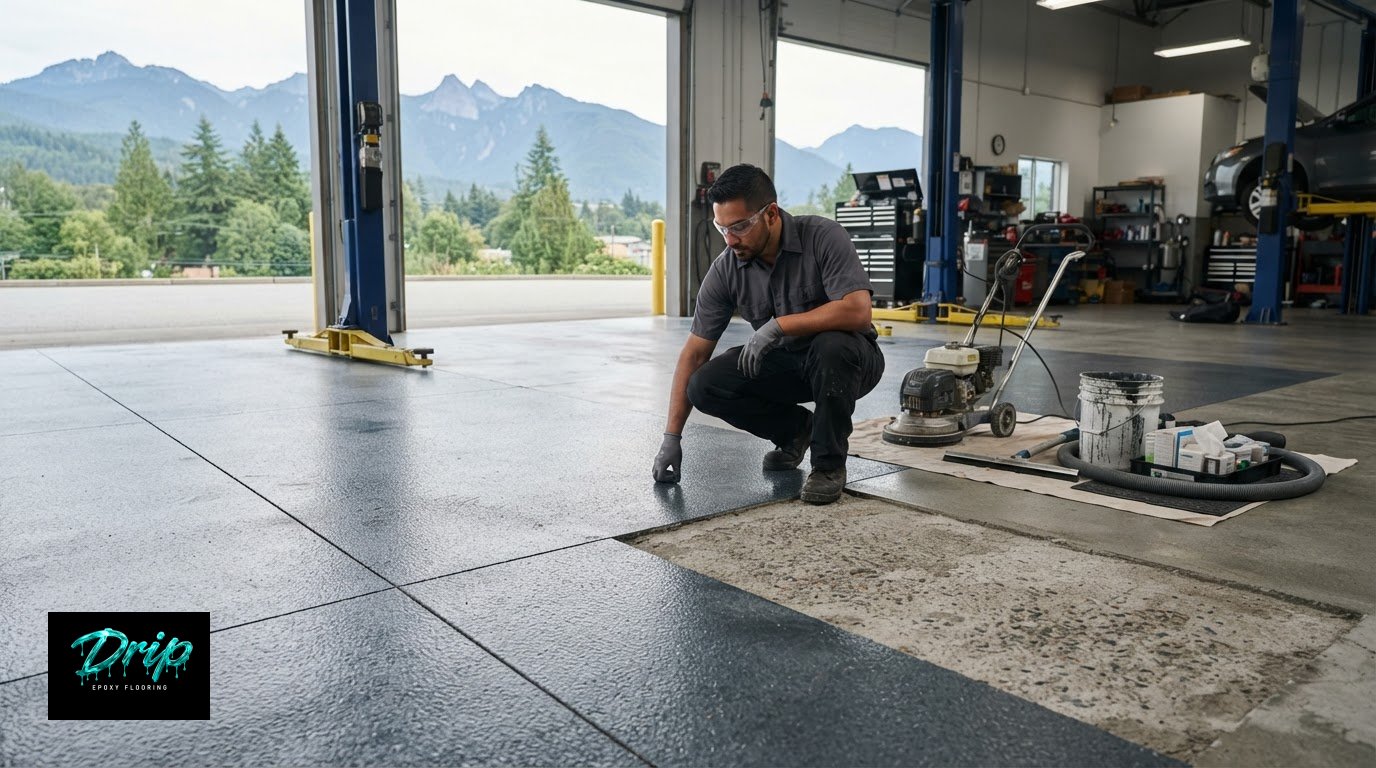
Choosing an appropriate chemistry means assessing chemical exposure and film thickness so the system can shield the concrete. The decision questions stay the same from start to finish: what fluids hit the slab, how much downtime you can spare, and whether preparation is mechanical enough for the bond to hold against machinery leaks and petroleum spills.
Key Takeaways: Select oil resistant floor coatings based on chemical exposure and downtime, ensuring a 20 to 30 mil thickness for industrial-grade protection against petroleum spills.
- Professional installation costs typically range from C$89 to C$1,750 depending on preparation needs.
- Skip it when using uncertified paints, as they lack ASTM D1308 chemical exposure verification.
- Choose polyaspartic systems for 2–6 hour rapid curing or epoxy for high mechanical strength.
- Reflective multi-colour systems can reduce your facility lighting requirements by up to 30%.
Table of contents
- 3 Floor Situations: Match the System to the Slab You Have
- Chemical Resistant Floors Belong in High-Spill Work Zones
- Cost Analysis: Why Prep Drives the C$89-C$1,750 Range
- ASTM Testing Separates Oil-Resistant Systems from Generic Paint
- Epoxy vs Polyaspartic: Choose by Downtime and UV Exposure
- 4 Steps That Lock in an Oil Resistant Coating Bond
- Oil Resistance Plus Traction: What a Reliable Garage Floor Needs
3 Floor Situations: Match the System to the Slab You Have
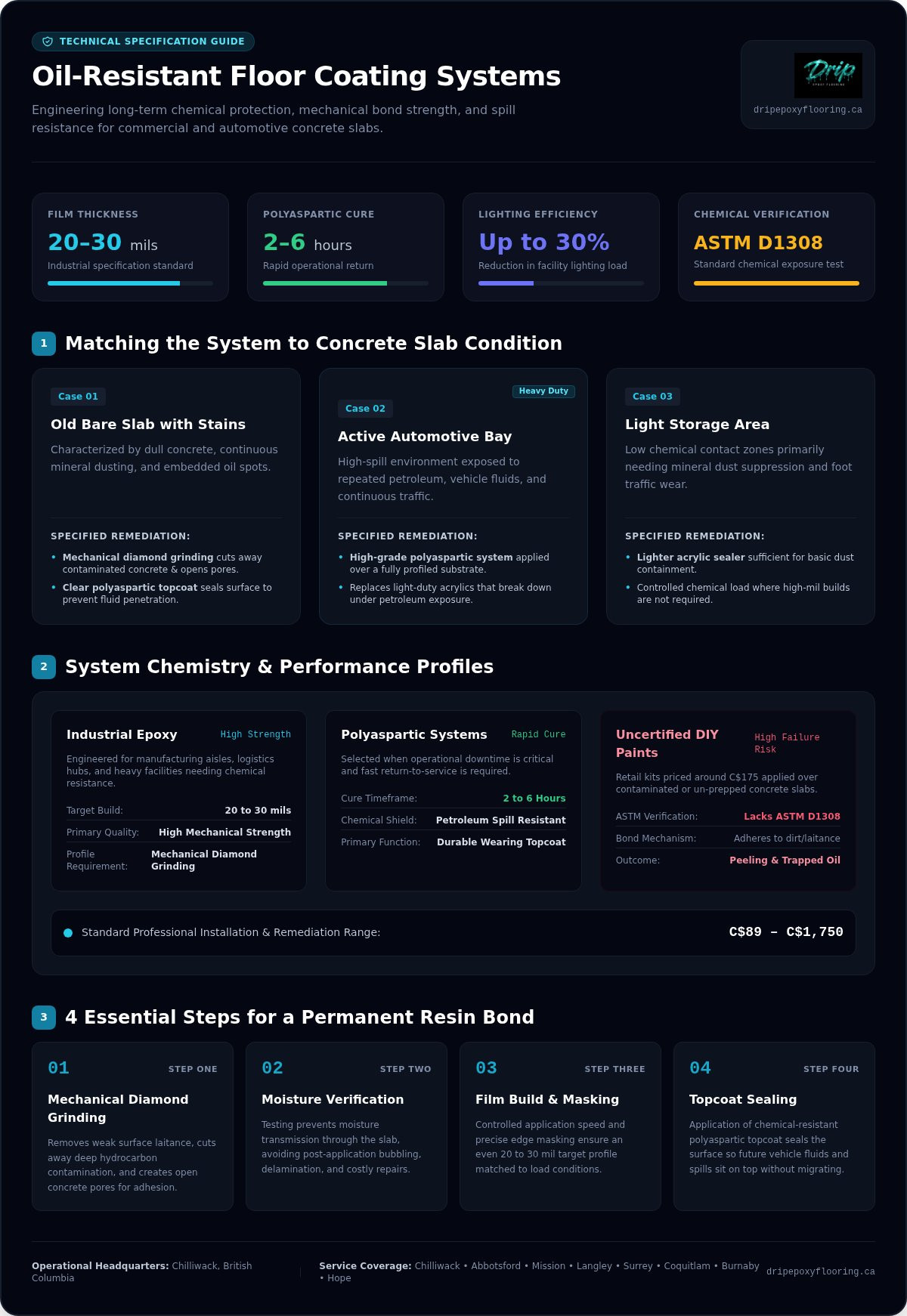
Before you pick a resin, map the floor you actually have. Three common cases show how the same facts point to different builds:
- Old bare slab with oil marks and dusting: grind first with mechanical diamond grinding so deep oil contamination is cut away, then seal with a clear polyaspartic topcoat so fluids stop soaking in.
- Active automotive bay: specify a high-grade polyaspartic system over a fully prepared slab; light-duty acrylics will not keep up with repeated petroleum exposure.
- Simple storage area with light foot traffic: a lighter acrylic sealer can be enough when chemical load stays low and you mainly need dust control.
Determining the right floor treatment still depends on the age of your concrete and its contamination levels. Old bare slabs often look dull, stained, and dusty, and oil marks make them hard to keep clean. Mechanical diamond grinding removes the weak surface layer and opens a profile the coating can lock into. A clear top layer (polyaspartic topcoat) then seals the surface so future spills sit on the film instead of migrating into the slab. For severe garage damage, premium garage floor coatings in Chilliwack restore a cleanable, sealed wearing surface once preparation is complete. Surface preparation is not optional: the bond of the full build begins with the prepared concrete surface. Based on market listings, standard floor remediation systems usually cost C$89-C$1,750. Long-term bond strength tracks with professional mechanical preparation, which is why many homeowners only move to protective sealers after bare concrete keeps shedding fine mineral dust.
A commenter in the houserepairtalk.com thread "Epoxy flooring":
"We are certainly not looking into putting flooring down again, and we are considering epoxy flooring." (source)
That situation is familiar: finished coverings failed under oil and dusting, so the household stopped replacing layers and looked at a seamless resin system instead. The practical outcome they are aiming for is one bonded build that tolerates spills without another full tear-out.
Chemical Resistant Floors Belong in High-Spill Work Zones
If your aisles see corrosive liquids, vehicle fluids, or repeated impact, chemistry and thickness stop being cosmetic choices. Selection depends on your environment. According to Wikipedia's epoxy overview (2025), epoxy resins offer high mechanical strength and strong chemical resistance, which is why heavy manufacturing often specifies them. Polyurethane suits food processing plants that face thermal shock.
Installing high-performance coatings still demands moisture control, precise masking, controlled application speed, and an even final layer. Specifying commercial epoxy flooring in Chilliwack pairs the resin with proper surface preparation, including mechanical diamond grinding. Skipping that profile is a common path to early failure. Industrial build sheets for logistics hubs or manufacturing plants often list 20 to 30 mils of film; treat that figure as a specification to verify against your traffic pattern and product data sheet, not as a stand-in for structural concrete repair. According to market listings, system installation costs typically fall in the C$89-C$1,750 band. Paying for professional installation is how you keep chemicals out of the slab rather than trapping them under a failed film.
Tip: Confirm the specified industrial build (including any 20 to 30 mil target) against your load profile so the film thickness matches the duty you actually run.
Cost Analysis: Why Prep Drives the C$89-C$1,750 Range
Price only makes sense when you weigh first cost against how long the film stays bonded. According to market listings, prices typically range from C$89-C$1,750 in local material supply channels. Cheap store kits at C$175 look affordable until an un-prepped surface peels and you pay twice. Proper surface preparation uses mechanical diamond grinding so the chemistry can bond to sound concrete, not to laitance or oil residue.
Failing a concrete moisture test can double project expenses later, because you discover the problem after product is already on the floor. Buying cheap paint at C$175 for a contaminated slab is like pressing a sticker onto wet mud: the failure mode is already built in. For larger commercial facilities, booking industrial epoxy flooring specialists in Chilliwack reduces application mistakes that waste resin and labour. High resin costs worry owners for good reason; the spend only protects capital if preparation and film build are correct.
A commenter in the flooringforum.com thread "Should I be offering epoxy? | Flooring Forum":
"The epoxy floors are really popping up on Facebook. Some are real purty, but using 100-200 gallons of resin has got to cost $100k after prep and polish?" (source)
That cost anxiety is the problem side of the arc: visible online installs make owners fear six-figure resin bills. In practice, industrial installations rarely reach that level unless you are coating massive commercial spaces. The action that protects the budget is professional prep plus a graded resin system sized to the area, so you are not replacing a peeled film within a season. The numeric frame from market listings remains C$89-C$1,750 for typical professional work, not an automatic six-figure outcome.
ASTM Testing Separates Oil-Resistant Systems from Generic Paint
ASTM D1308 testing checks how protective coatings withstand harsh automotive fluids, chemical spills, and continuous oil exposure without blistering. Technical data sheets are where that proof lives. Standard off-the-shelf paints often fail under hot tires and chemical immersion because they lack certified exposure testing. Professional-grade systems are formulated to bond with prepared concrete when the surface profile and moisture conditions are right.
Hiring an installer who cannot show test-backed products is how buyers end up with peeling film and a sense that the project was a mistake. Choosing low-cost options without standard certifications risks rapid failure. According to market listings, testing-verified industrial systems typically land in the C$89-C$1,750 range. Specifying validated urethane coatings helps limit chemical breakdown and repeat repair work in a garage or shop. Uncertified products behave like water-based paint on a frying pan: heat and grease destroy adhesion quickly. Before you start a Vancouver-area project, request a site assessment so someone evaluates slab integrity on site rather than from a product brochure alone.
Epoxy vs Polyaspartic: Choose by Downtime and UV Exposure
Epoxy brings strong adhesion to prepared concrete; polyaspartic coatings cure rapidly and resist UV damage. Your choice should follow chemistry performance and how long the space can stay offline.
According to market listings, floor coating materials typically cost C$89-C$1,750 depending on formulation and coverage rates.
| Performance Parameter | Epoxy Systems | Polyaspartic Coatings |
|---|---|---|
| Cure Time | 24-72 hours | 2–6 hours |
| UV Resistance | Moderate (may yellow) | High (non-yellowing) |
| Chemical Resistance | Excellent against oils | High against chemicals |
Epoxy behaves like heavy, slow-setting armour that bonds deep into open concrete pores; polyaspartic behaves like a fast, flexible shield that is ready sooner. Polyaspartic fits facilities that need immediate turnarounds; epoxy fits projects that prioritise build thickness and open time. Neither chemistry forgives a weak substrate, so durability still tracks surface preparation. Ask Drip Epoxy Flooring for a facility quote when you want the system matched to downtime and exposure.
4 Steps That Lock in an Oil Resistant Coating Bond
Visible roller marks and high spots usually trace back to rushed application, not to the colour chip you picked. A controlled sequence keeps the finish even.
- Prepare the surface Mechanical diamond grinding opens the pores and establishes the profile adhesion needs. As a locally owned and operated team in Chilliwack, we focus on high-performance mechanical diamond grinding so the floor can handle the moisture conditions common in this region.
- Apply base layer Apply the base coat evenly with notched squeegees so thickness stays consistent across the pour path of the bay.
- Broadcast decorative flakes Spread vinyl chips to full refusal for a non-slip finish (slip-resistant rating R10–R12).
- Seal topcoat Roll a clear top layer at a steady pace so you avoid ridges and thin spots.
Uneven backrolling shows up as roller marks under bright lighting, similar to a wall painted without maintaining a wet edge. Keeping that wet edge during rolling is what produces a smooth film; careful timing is what stops high spots from curing into permanent texture faults.
Oil Resistance Plus Traction: What a Reliable Garage Floor Needs
A garage floor coating only earns its keep when oil resistance and traction work together. Water puddles on smooth epoxy and turns slippery when condensation forms. A non-slip finish cuts that hydroplaning risk in wet Vancouver climates.
Safety is a traction specification, not a slogan. The high reflectivity of a light-coloured multi-colour system can reduce the need for artificial lighting by up to 30%, which interior design studies treat as a practical gain for garage bays in Chilliwack. Reflective finishes bounce ambient light across the bay so you see spills sooner.
For facility managers in Coquitlam and Burnaby, a clear top layer with broadcast aggregate addresses footing while shielding the slab from vehicle fluids. Mechanical diamond grinding of the concrete substrate is what lets those layers bond for the long term. Pick texture grade from the moisture and traffic you actually run, then request a quote sized to that layout.
When High-Gloss Epoxy Works Against Safety
High-gloss epoxy can create sliding hazards in oily Vancouver work environments. Slick film turns into an ice-rink surface the moment fluids spill, and high reflectivity advertises every scratch. When safety leads the brief, a non-slip surface serves you better than a mirror finish.
Glossy resin still fits clean showrooms. Busy service bays need functional traction first. According to market listings, specialized industrial systems typically cost C$89-C$1,750. Budget weight should sit on preparation and texture: mechanical diamond grinding readies the substrate, and a clear top layer locks aggregate in place. Function over shine is the working rule in spill-prone bays. Reach out when you want that traction-led build priced for your space.
Fraser Valley Installation: Local Grind, Coat, and Handover
Our installation crew brings oil resistant floor coatings to your facility with a local schedule, not a distant call centre. As a locally owned and operated business based in Chilliwack, we plan logistics across the Fraser Valley and the Lower Mainland with response times remote contractors struggle to match. According to market listings, industrial floor services typically range from C$89-C$1,750 depending on size. Substrate preparation means mechanical diamond grinding to establish a proper surface profile before any fluid goes down. Raw concrete behaves like a sponge for hazardous fluids until a sealed build stops absorption; preparation is what makes adhesion last. Call to request a site assessment when you want the slab read before product is chosen.
Frequently Asked Questions
Are epoxy floors chemical resistant?
Epoxy coatings provide strong chemical resistance against petroleum fluids and motor oil. On average, market prices for professional chemical resistant treatments range between C$89-C$1,750 according to market listings. When you review industrial systems for logistics or manufacturing, read the specified film build (some sheets list 20 to 30 mils) against your traffic and chemical list rather than assuming one thickness covers every forklift aisle.
What will damage an epoxy floor?
Heavy impact from falling tools or sharp mechanical objects can chip surface layers. Skipping surface preparation such as mechanical diamond grinding leads to poor bonding and eventual flaking under load. Wear accelerates when concrete never receives a proper surface profile before application.
What are other types of chemical resistant flooring besides epoxy?
Polyaspartic coatings and polyurethane systems are the usual alternatives for industrial facilities. High-reflectivity multi-colour systems can reduce artificial lighting needs by up to 30%. For a figure tied to your British Columbia layout, ask for a personalised quote rather than relying on a generic square-metre average.
Is urethane flooring better than epoxy for chemical resistance?
Urethane coatings often handle organic acids better than standard epoxy systems. Secure bonding still depends on professional installation over a correctly prepared slab, not on the resin name alone. Evaluate facility traffic and the chemicals you store before you lock a formula.
Where can I get technical support or download product brochures?
Contact our locally owned and operated team in Chilliwack for product literature or technical data sheets. Support covers Fraser Valley communities such as Coquitlam, Mission, and Vancouver. Call when you want literature, a quote discussion, or a concrete surface preparation review.
Protect Your Concrete Surface
Oil resistant floor coatings limit chemical penetration and slow subfloor deterioration in your British Columbia facility when the system matches the fluids and traffic you run. Mechanical diamond grinding opens the pores and sets adhesion before any coating starts, which is the same preparation thread that runs through the situation guide, the cost logic, and the finish choice above.
Our locally owned and operated team at Drip Epoxy Flooring delivers custom concrete preparation and protective coating solutions in 2026. Surface profiling remains the step that decides whether the visible finish lasts. You can request a custom site assessment and detailed project estimate via our quote request page. Schedule that evaluation when you are ready to tie chemistry, thickness, and prep to the slab you have.