polyaspartic vs epoxy for garages · 15 min read ·
Polyaspartic vs Epoxy: Best Garage Coating for BC Homes
Your garage floor shouldn't be a seasonal maintenance project that peels every time the Fraser Valley humidity spikes. If you've noticed bubbling or unsightly yellowing from UV exposure in your Chilliwack or Langley home
By Drip Epoxy Flooring · Chilliwack, BC
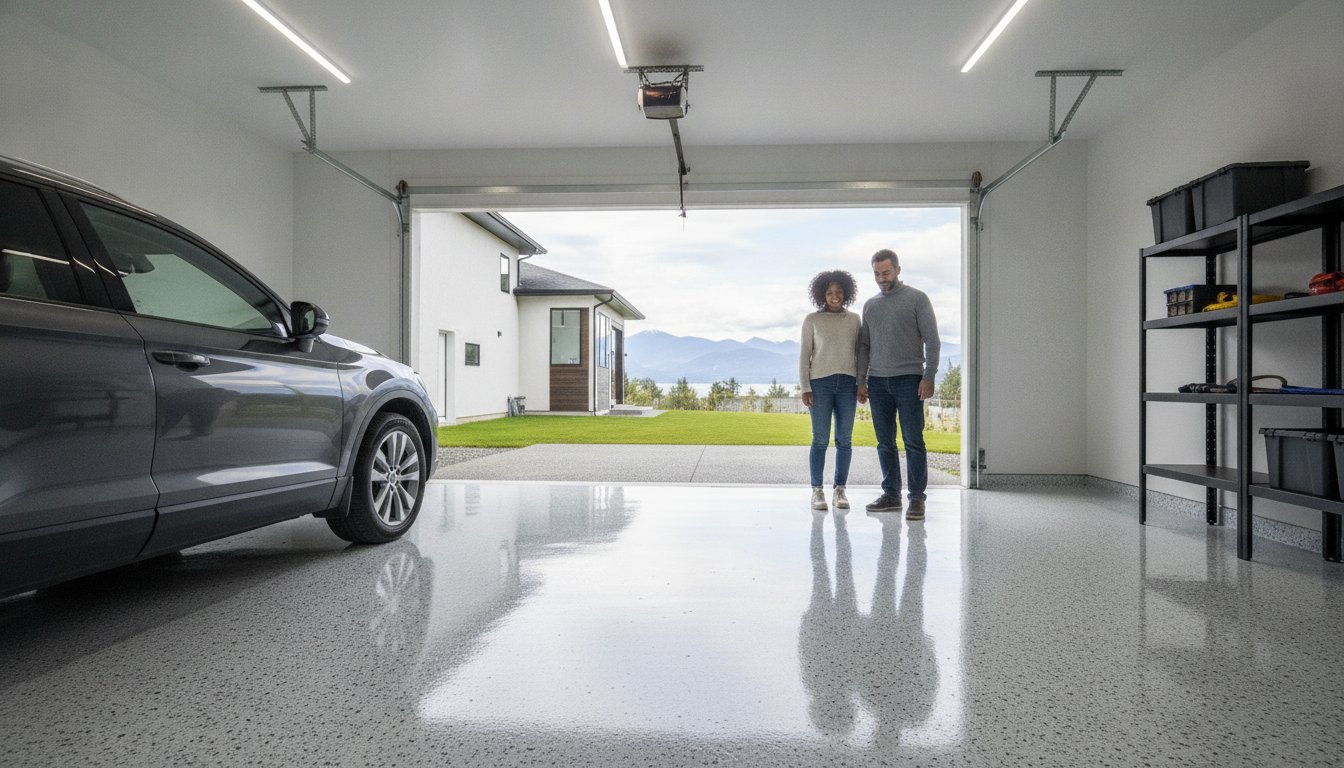
Your garage floor shouldn't be a seasonal maintenance project that peels every time the Fraser Valley humidity spikes. If you've noticed bubbling or unsightly yellowing from UV exposure in your Chilliwack or Langley home, you're likely seeing the limitations of standard materials. The choice between polyaspartic vs epoxy for garages is a technical decision that impacts the long-term value and functionality of your property. You want a surface that provides a high-end showroom aesthetic while remaining completely impervious to hot tire pick-up and damp concrete issues.
We recognize that local homeowners seek a balance of industrial-grade reliability and premium visual appeal. In this guide, you'll discover the critical differences in durability, cure time, and resilience to determine which professional coating truly survives the BC climate. We will explore how these systems perform under pressure, ensuring you have the technical knowledge to achieve a maintenance-free finish that lasts for years. From rapid return-to-service times to UV-stable topcoats, we'll help you realize the potential of your garage space through the lens of industrial luxury.
Key Takeaways
- Analyze the technical differences of polyaspartic vs epoxy for garages to select a system that withstands the significant temperature fluctuations and humidity of the Lower Mainland.
- Identify why UV-stable polyaspartic topcoats are essential for preventing the unsightly yellowing and peeling often seen in south-facing or high-exposure garage entries.
- Learn how meticulous surface preparation through professional diamond grinding mitigates the risks of moisture vapour transmission common in damp Fraser Valley concrete.
- Discover the aesthetic versatility of decorative flake and metallic systems that deliver a maintenance-free, "industrial luxury" finish without sacrificing durability.
- Understand the performance benefits of a hybrid system that pairs the superior bonding of an epoxy primer with the rapid cure time and impact resistance of a polyaspartic finish.
Table of Contents
- Understanding the Chemistry: What are Polyaspartic and Epoxy Coatings?
- Performance Comparison: Durability, UV Stability, and Resilience
- The Fraser Valley Factor: Installation and Environmental Challenges
- Aesthetic Customization: Metallic, Flake, and Quartz Systems
- The Verdict: Which Coating Is Right for Your BC Garage?
Understanding the Chemistry: What are Polyaspartic and Epoxy Coatings?
To determine the winner in the debate of polyaspartic vs epoxy for garages, one must first understand the molecular foundations of these high-performance systems. Epoxy is a thermosetting polymer, created through a precise chemical reaction between a resin and a polyamine hardener. This process results in a dense, rigid structure that is celebrated for its incredible bonding strength and ability to build significant thickness. It effectively fills minor cracks and smooths out the porous surface of a concrete slab, creating a seamless foundation that's nearly impossible to peel when applied correctly.
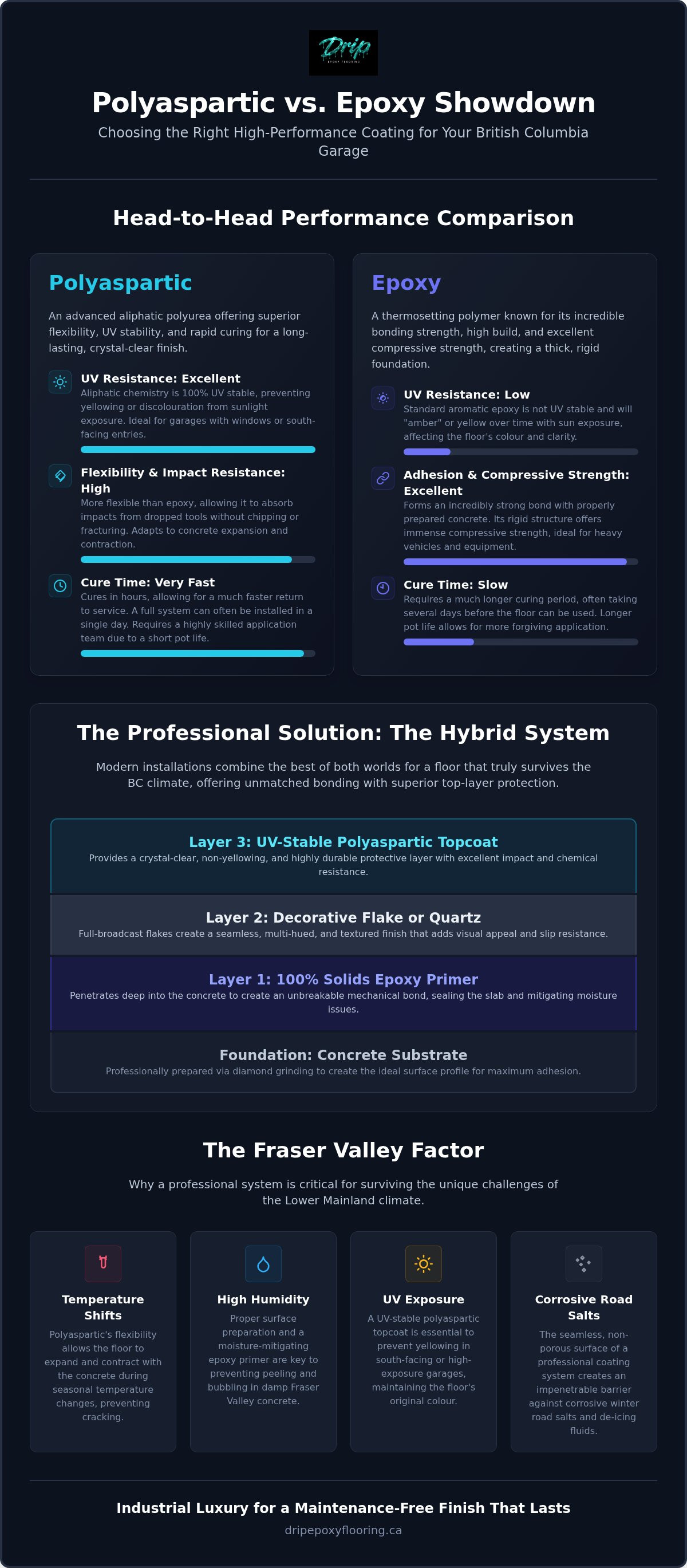
Polyaspartic is a high-performance aliphatic polyurea. While epoxy focuses on sheer adhesion and mass, polyaspartic offers a higher degree of flexibility and inherent UV resistance. This flexibility is a critical advantage in the Fraser Valley, as it allows the coating to expand and contract alongside the concrete during our seasonal temperature shifts. Professional-grade versions of both materials represent the pinnacle of "industrial luxury." They provide the rugged resilience required for heavy-duty workshops while delivering the sophisticated, high-end aesthetic expected in a premium British Columbia home. These resinous systems act as a permanent shield, protecting your concrete from the corrosive road salts and constant moisture ingress common in the Pacific Northwest.
The Evolution of Garage Floor Protection
Epoxy became the industry standard decades ago, originally designed to transform porous industrial floors into chemical-resistant surfaces for factories and hangars. As residential garage use evolved from simple storage to multi-purpose showrooms, the limitations of traditional epoxy led to the emergence of polyaspartic coatings. Originally developed for industrial applications like bridge and tank linings, polyaspartic was adapted for residential use due to its rapid-cure properties and superior longevity. Modern professional installations often leverage a hybrid approach, utilizing the unmatched bonding of an epoxy primer with the protective, fast-curing advantages of a polyaspartic topcoat.
Key Terminology for BC Homeowners
Understanding the technical specifications of your coating ensures you select a system built for the long term. A primary metric to consider is "solids content." Professional systems are typically 100% solids, meaning no solvents evaporate during the curing process. This results in a thicker, more durable dry film that won't shrink or leave behind pinholes. You should also distinguish between "pot life" and "cure time." Pot life is the narrow window an installer has to apply the material; polyaspartic has a much shorter pot life than epoxy, requiring a meticulous and highly skilled application team.
For garages with south-facing entries or windows, the distinction between aliphatic and aromatic chemistry is vital. Polyaspartic ester chemistry is aliphatic, which means it's inherently UV-stable and won't discolour or "chalk" when exposed to sunlight. Aromatic epoxies, while physically strong, will eventually undergo a chemical shift that causes yellowing under UV stress. Choosing an aliphatic system ensures your floor maintains its original colour and clarity for its entire lifespan.
Performance Comparison: Durability, UV Stability, and Resilience
When evaluating polyaspartic vs epoxy for garages, the decision often hinges on how the material reacts to external stressors. Professional-grade high-solids epoxy offers immense compressive strength, making it ideal for garages housing heavy machinery or multiple vehicles. However, polyaspartic provides a level of impact resistance that rigid epoxy cannot match. If you drop a heavy wrench or floor jack, the flexible nature of polyaspartic allows it to absorb the energy and rebound; standard epoxy might develop a hairline fracture or chip under the same force.
UV Resistance and Colour Longevity
Standard epoxy resins are aromatic, meaning they naturally react to ultraviolet light. This reaction causes an "ambering" effect, where the clear topcoat turns a murky yellow over time. This is a significant concern for Fraser Valley homes with large windows or south-facing garage doors. Polyaspartic maintains its crystal-clear finish for decades because it is aliphatic, remaining completely unaffected by sunlight. To preserve an "industrial luxury" aesthetic, it is essential to select a system that won't discolour, ensuring your chosen floor looks as vibrant in ten years as it does on day one.
Hardness vs. Flexibility
Shore D Hardness is a standardized measurement used to determine the indentation resistance of rigid polymers, with higher numbers indicating a harder, more puncture-resistant surface. While epoxy typically scores higher on this scale, its rigidity can be a liability. British Columbia experiences significant temperature swings that cause concrete slabs to expand and contract. Polyaspartic boasts superior elongation properties, meaning it moves with the substrate rather than cracking under the pressure of thermal movement. This flexibility is a primary reason why polyaspartic is often preferred for residential spaces that experience seasonal shifts.
Chemical Resilience and Hot Tire Pick-up
Both professional systems offer excellent protection against oil leaks and brake fluid. However, polyaspartic provides a slight edge in resisting the corrosive effects of winter road salts brought in from the Coquihalla or local mountain passes. The most common failure point for DIY epoxy kits is "hot tire pick-up." This occurs when heated tires from a long drive soften a low-quality coating, causing it to peel away from the concrete when the car moves. Professional-grade polyaspartic and high-solids epoxy systems are chemically engineered to resist this heat, maintaining a permanent bond. If you are unsure which system suits your specific usage, consulting with a technical specialist can help clarify the best path forward for your space.
The Fraser Valley Factor: Installation and Environmental Challenges
Living in British Columbia means dealing with a unique set of atmospheric challenges that directly impact resinous floor performance. When deciding on polyaspartic vs epoxy for garages, the environment during installation is just as important as the material's final strength. In regions like Chilliwack and Abbotsford, temperature fluctuations can be extreme. Polyaspartic coatings offer a much wider installation window, often allowing for application in temperatures as low as -30°C or as high as 40°C. Conversely, standard epoxy typically requires a stable, moderate temperature range to cure properly, making winter installations difficult without significant climate control.
Moisture Vapor Transmission (MVT) in BC
The Pacific Northwest is notoriously damp. This high humidity often leads to Moisture Vapor Transmission (MVT), a process where water vapour pushes upward through the concrete slab. If a coating is applied over a damp slab without proper mitigation, it can lead to osmotic blistering. This phenomenon occurs when the vapour pressure causes the floor to bubble and eventually delaminate. To prevent this, we prioritize professional moisture testing and the application of specialized moisture vapour barriers. These barriers act as a primary shield, ensuring the bond remains secure despite the ground moisture common in our region. To ensure a successful application, you can learn about our concrete preparation services, which include industrial diamond grinding to open the concrete's pores.
Curing Windows and Homeowner Convenience
For busy families in Langley or Surrey, downtime is a significant factor. Polyaspartic systems are celebrated for their rapid-cure properties, often allowing foot traffic in just 4 to 6 hours and vehicle access within 24 hours. This speed minimizes the time your belongings spend on the driveway and reduces the risk of dust or debris settling into the wet coating. Epoxy, while exceptionally strong, requires a much longer curing period. It often takes 24 to 48 hours for foot traffic and up to 7 days before you can safely park a car. Managing a multi-day drying process in the variable Chilliwack air can be challenging, as any sudden rain or shift in humidity can interfere with the finish. Choosing a fast-curing system ensures a more predictable result and a faster return to your daily routine.
Aesthetic Customization: Metallic, Flake, and Quartz Systems
While the technical debate of polyaspartic vs epoxy for garages often focuses on chemical resilience, the visual transformation is what truly redefines the space. A professional coating does more than protect concrete; it creates an intentional environment that complements the rest of your home. Whether you're looking for the clean, speckled look of a flake system or the high-end depth of a metallic finish, the choice of material impacts how the light interacts with your floor. Homeowners in Burnaby and Surrey often select colour palettes that mirror their home's exterior stone or siding, ensuring the garage feels like a seamless extension of the living space.
Decorative flake systems remain the most popular choice for residential settings. By broadcasting multi-coloured vinyl chips into a wet base coat, we create a textured surface that masterfully conceals the dirt and road salt tracked in during a typical Lower Mainland winter. This system provides a classic, clean aesthetic that is both durable and easy to maintain. For those seeking maximum slip resistance, quartz systems utilize double-broadcast coloured sands. This creates a dense, industrial-grade texture that is ideal for wet BC winters, providing a safe, high-traction surface even when tires bring in heavy rain or slush.
The Luxury Appeal of Metallic Epoxy
For homeowners desiring a truly bespoke finish, metallic epoxy represents the pinnacle of "industrial luxury." Unlike the uniform look of flake systems, metallic pigments are suspended in a clear resin, allowing them to flow and settle into unique patterns. This process creates a three-dimensional effect with depth and movement reminiscent of natural marble or flowing water. Because the pigments react differently every time they're applied, no two floors are ever identical. You can view our epoxy floor samples to see how these pearlescent additives create a sophisticated, showroom-quality environment that standard coatings cannot replicate.
Safety and Traction Control
Safety is a non-negotiable factor in the Pacific Northwest. While a smooth metallic finish offers a stunning visual, it can become slippery when wet. We address this by integrating specialized anti-slip aggregates into the final topcoat. These nearly invisible additives provide the necessary grip without compromising the floor's clarity or aesthetic appeal. In contrast, full-broadcast flake and quartz systems have inherent texture that naturally aids traction. If your garage serves as a workshop or a primary entry point for your family, selecting a system with a higher profile is a wise decision. If you're ready to design a floor that balances safety with a premium aesthetic, contact our team for a detailed consultation on the best system for your specific needs.
The Verdict: Which Coating Is Right for Your BC Garage?
The decision between polyaspartic vs epoxy for garages isn't a matter of one being universally superior; it's about matching the chemical properties to your garage's specific function. For a basic storage area where UV exposure is minimal and budget is a primary driver, a high-solids epoxy system provides a resilient and cost-effective barrier. However, for a high-traffic workshop or a luxury showroom in the Fraser Valley, the investment in polyaspartic pays dividends in longevity and ease of maintenance. Industry data suggests that while epoxy typically serves a lifespan of 5 to 10 years, a professionally applied polyaspartic coating can remain pristine for over 15 years.
Many homeowners find the highest long-term value in a hybrid approach. This strategy leverages the superior mechanical bond of an epoxy primer to anchor the system deep into the concrete pores, followed by a polyaspartic topcoat to provide UV stability and impact resistance. This combination effectively neutralizes the individual weaknesses of each material while maximizing their collective strengths. It ensures your floor won't yellow or peel under hot tires while maintaining the "industrial luxury" finish that defines a high-end British Columbia property.
Regardless of the resin you select, the success of the installation rests entirely on the quality of the substrate preparation. Professional diamond grinding is more vital than the chemical choice itself. Without opening the concrete's surface to a specific profile, even the most expensive polyaspartic will eventually fail due to moisture vapour pressure or poor adhesion. Meticulous preparation is the only way to guarantee a permanent bond in our damp climate.
When to Choose Polyaspartic
This system is the definitive choice for fast-turnaround projects where you need vehicle access within 24 hours. It's also the essential selection for garages with south-facing entries that receive direct sunlight throughout the day. If you're a homeowner looking for a "one and done" permanent solution that resists scratching and chemical spills, polyaspartic is the industry gold standard. You can read our guide to commercial polyaspartic flooring in Abbotsford to see how these systems perform in even more demanding environments.
When Epoxy Still Wins
Epoxy remains a formidable choice for indoor spaces where UV ambering isn't a concern. Its high-build nature makes it superior for filling deep pits or smoothing out older, rough concrete surfaces that require more mass to level. It also serves as the ideal canvas for decorative effects that require a longer working time to manipulate. To see how this material creates a marble-like aesthetic in local homes, you can explore metallic epoxy installers in BC.
Ready for a Transformation?
A professional installation provides a level of precision and durability that DIY kits simply cannot replicate. From industrial diamond grinding to the application of moisture vapour barriers, every step is designed to ensure your floor withstands the unique Pacific Northwest environment. If you're ready to upgrade your space with a maintenance-free, showroom-quality finish, contact Drip Epoxy Flooring for your free quote today. Our team specializes in delivering high-performance systems tailored to the specific needs of Fraser Valley and Lower Mainland homes.
Secure Your Investment with a High-Performance Garage Floor
Selecting the right system involves more than just picking a colour; it requires a technical understanding of how different resins interact with the damp BC climate. Whether you prioritize the rapid-cure resilience of polyaspartic or the high-build strength of epoxy, professional diamond grinding remains the non-negotiable foundation of a successful installation. The technical evaluation of polyaspartic vs epoxy for garages concludes that a tailored approach, often utilizing a hybrid system, delivers the best balance of industrial durability and sophisticated aesthetic appeal for your home.
As a locally owned and operated BC business, we specialize in high-end metallic and polyaspartic systems designed to withstand the unique environmental challenges of the Lower Mainland. We serve homeowners from Chilliwack to Burnaby, providing the meticulous preparation and precision required for a maintenance-free finish. You don't have to settle for a temporary fix when a professional, showroom-quality floor is within reach. Book your free garage floor consultation in the Fraser Valley today and realize the potential of your space.
Frequently Asked Questions
Is polyaspartic really 4x stronger than epoxy for garage floors?
Strength is measured by both hardness and flexibility. While epoxy has excellent compressive strength for heavy loads, polyaspartic is significantly more flexible and impact-resistant. This flexibility allows it to absorb the energy of a dropped tool or a heavy floor jack without chipping or cracking. This resilience is what industry professionals mean when discussing the superior durability of polyaspartic vs epoxy for garages.
Can I apply polyaspartic over an existing epoxy floor coating?
Applying polyaspartic over an existing coating is possible only if the original layer is structurally sound and properly prepared. The surface must be mechanically abraded via sanding or diamond grinding to ensure the new layer can bond effectively. If the underlying epoxy is already peeling or bubbling, it must be removed entirely to prevent the new system from failing alongside the old one.
How long do I have to wait to drive on my new garage floor?
One of the primary advantages of polyaspartic is the rapid return to service. You can typically walk on the surface in 4 to 6 hours and park your vehicle within 24 hours of the final coat. Standard epoxy systems require a much longer window; they often need a full week to reach the chemical hardness necessary to resist hot tire pick-up and heavy traffic.
Does polyaspartic get slippery when it rains in the Fraser Valley?
Any smooth resinous floor can become slick when wet, especially during a typical Lower Mainland rainfall. To mitigate this risk, we incorporate specialized anti-slip aggregates into the final topcoat. These clear additives provide essential traction for tires and foot traffic without compromising the floor's visual clarity. This ensures your garage remains safe even when tires track in heavy rain or slush.
Why is my current garage floor peeling and will a new coating fix it?
Peeling is almost always a symptom of inadequate surface preparation or high moisture levels within the concrete slab. A new coating will only resolve the issue if the failed material is completely removed through professional diamond grinding. This process opens the pores of the concrete, allowing the new resin to create a permanent mechanical bond that prevents future delamination and bubbling.
What is the price difference between epoxy and polyaspartic in BC?
Polyaspartic carries a higher upfront cost than epoxy because of its advanced UV-stable chemistry and rapid curing properties. When comparing the long-term value of polyaspartic vs epoxy for garages, homeowners should account for the total lifecycle of the floor. While epoxy is more budget-friendly initially, polyaspartic’s extended lifespan and resistance to yellowing often make it the more economical choice over fifteen years.
Can polyaspartic be installed during a cold British Columbia winter?
Polyaspartic is uniquely suited for the British Columbia climate because it cures through a chemical reaction that is not hindered by cold temperatures. Unlike epoxy, which requires a warm substrate and stable environment to bond, polyaspartic can be successfully installed in sub-zero conditions. This allows for high-quality garage transformations even during the peak of a Fraser Valley winter.
What kind of maintenance is required for a polyaspartic garage floor?
These floors are designed to be virtually maintenance-free due to their non-porous surface. Because road salts, oils, and chemicals cannot penetrate the finish, they won't leave permanent stains. Simple cleaning with a soft-bristle broom and an occasional damp mop using a pH-neutral solution is all that is required to keep the industrial luxury aesthetic looking new for years to come.