permanent garage floor solutions · 9 min read ·
Permanent garage floor solutions: 2026 price per square foot
Permanent garage floor solutions in Canada typically cost between C$73 and C$144 per square foot $130 across market offerings, based on recent market research. Actual installation expenses vary with concrete surface prep
By Drip Epoxy Flooring · Chilliwack, BC
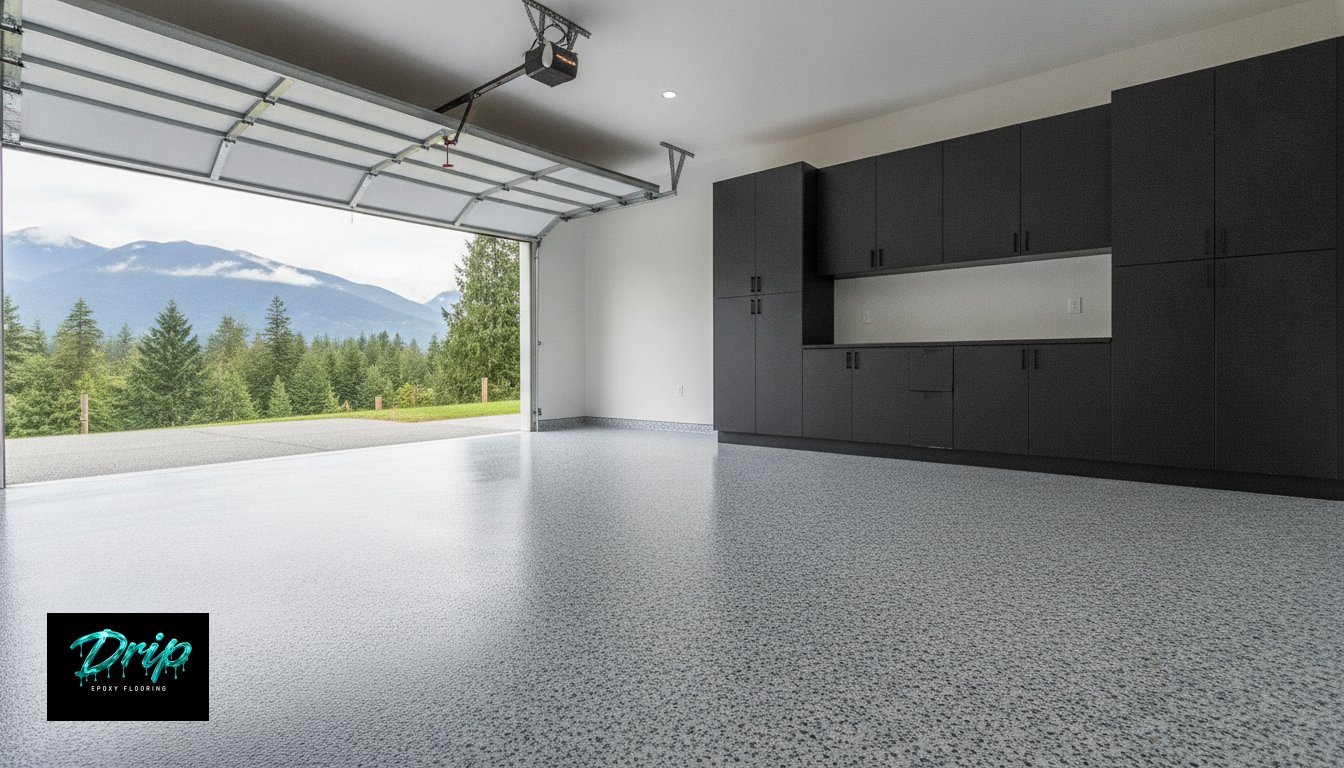
Permanent garage floor solutions in Canada typically cost between C$73 and C$144 per square foot $130 across market offerings, based on recent market research. Actual installation expenses vary with concrete surface preparation, moisture mitigation, and the coating system you choose. Contact us directly for a personalized quote on your property in British Columbia.
Key Takeaways: Permanent garage floor solutions require professional mechanical diamond grinding and high-build coatings to achieve a durable 10 to 20 year operational lifespan.
- Market rates range from C$73 to C$144 per square foot for professional installations.
- Except when concrete is structurally broken, as coatings will mirror underlying cracks within months.
- Choose polyaspartic systems for heavy electric vehicles to prevent failure under high tire pressure.
- Light-colored multi-color systems can decrease your artificial garage lighting demands by up to 30%.
Table of contents
- Match your garage needs to a system built for how you use the space
- Know what drives installed cost within the published market range
- Pick epoxy or polyaspartic for cure speed, UV, and bond strength
- Profile the slab first so the coating can lock onto the concrete
- Spec a heavy-duty build when you park electric vehicles
- Leave damaged concrete alone until a pro has assessed it
- Keep sealed floors clear of standing water and harsh cleaners
Match your garage needs to a system built for how you use the space
Before you compare colours or flake blends, map the job to how the bay actually works day to day. Three common situations show how the same facts point to different choices:
- Oil-stained, dull, dusty concrete that is hard to keep clean: grind away the contaminated top layer, then install a protective build so fluids sit on the surface instead of soaking in.
- A high-traffic home where the bay must return to service quickly: a specialized polyaspartic option suits fast curing without giving up a hard-wearing finish.
- A slab that must grip under wet shoes or tires: a non-slip surface (slip-resistant quartz system) adds traction where coastal moisture is routine.
Upgrading the slab permanently addresses surface degradation. With clients we see old concrete turn dull, stained, and dusty from oil marks because untreated concrete behaves like a dry sponge for everyday automotive fluids. Mechanical diamond grinding removes contaminated top layers so the raw concrete is ready for coating. Installed work in this market falls in the range cited in the key takeaways, according to market listings.
Drip Epoxy Flooring completes full surface preparation before protective layers go down. Review our Burnaby homeowners’ reference for how systems perform in local British Columbia climate conditions. Reach out for a quote sized to your layout.
Know what drives installed cost within the published market range
Looking only at base resin understates what you pay. Total installed rates follow the span already noted above C$130, according to market listings, because preparation intensity moves the number as much as material choice.
| Cost Component | Pricing Factor |
|---|---|
| Base System | Material selection and total thickness |
| Surface Prep | Repair needs and grinding intensity |
Many property owners treat prep like painting over dust, yet skipping mechanical diamond grinding leads to early system failure. Prep line items often surprise buyers: heavy profiling, crack filler, and moisture remediation push the project total up. For local scope and pricing detail, explore Chilliwack garage coatings.
A simple roll-on does not replace structural concrete repair. The bond of the full build begins with the prepared concrete surface, so durability tracks prep quality more than brochure gloss.
Online posts about six-figure residential installs often mix large industrial halls with standard home garages. The overall investment still tracks structural needs on your slab, so ask for a personalized quote when you want exact pricing.
Tip: Always ask contractors if heavy diamond grinding and crack repair are included in the baseline cost per square foot.
Inside the flooringforum.com thread "Should I be offering epoxy?", a commenter posted their thoughts:
"The epoxy floors are really popping up on Facebook. Some are real purty, but using 100-200 gallons of resin has got to cost $100k after prep and polish?" (source)
Residential installs do not reach six figures. Those high totals apply to massive industrial facilities, not home garages.
Pick epoxy or polyaspartic for cure speed, UV, and bond strength
Polyaspartic systems cure faster than traditional epoxy finishes, which suits quick turnarounds in British Columbia garages where you cannot leave vehicles outside for long.
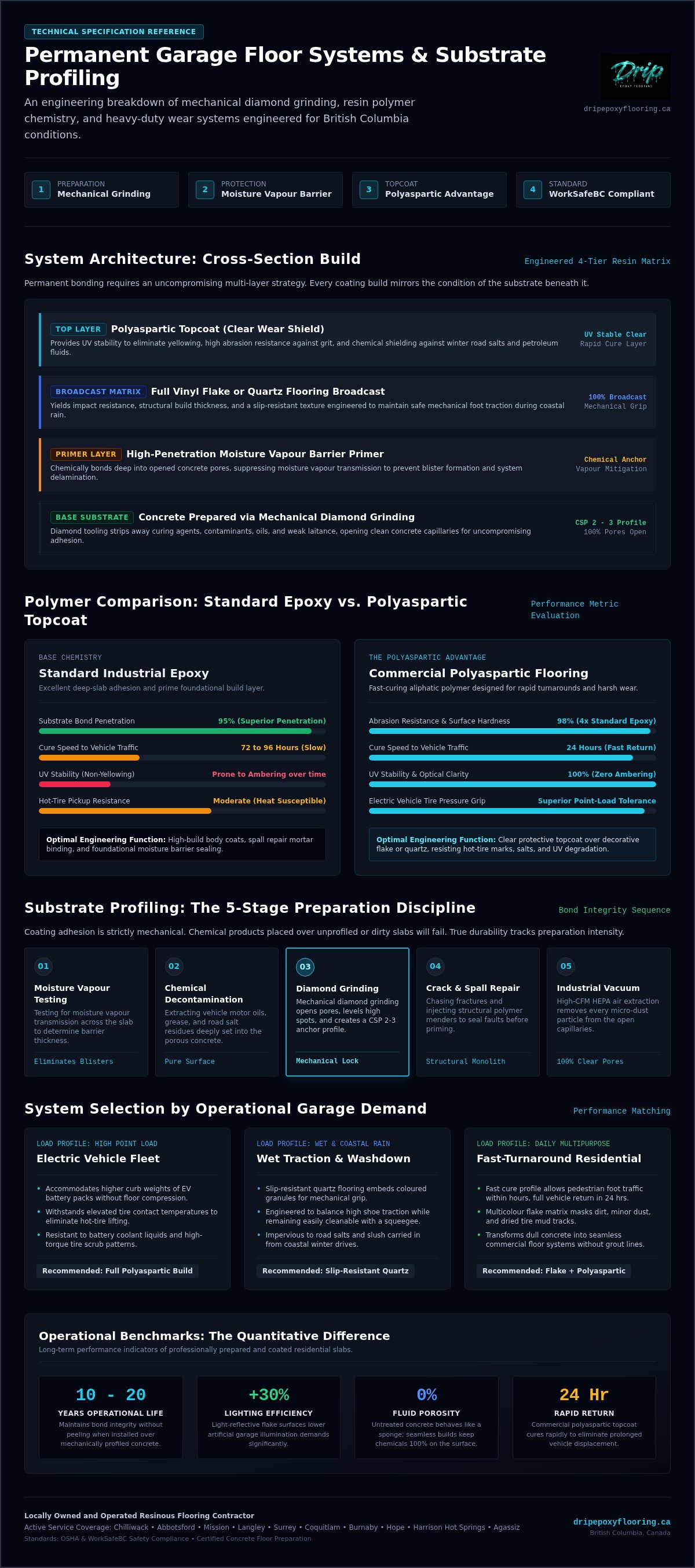
You can expect a professionally installed finish to last between 10 and 20 years on average. Which chemistry you choose depends on performance needs and timeline: standard epoxy brings strong bond strength, while fast-curing polyaspartic handles extreme UV exposure better. Professional installation pricing sits in the market span covered earlier, according to market listings.
Surface preparation dictates whether either chemistry holds. Without a profiled slab, even high-end formulas fail early. If you want a finish that stays put, Chilliwack residential epoxy work starts with that prep discipline. Epoxy fits budget-conscious homeowners; polyaspartic suits rapid projects. Ask for a quote when you are ready to compare both on your slab.
Profile the slab first so the coating can lock onto the concrete
Proper substrate preparation prevents costly coating failure and supports long-term adhesion. As a locally owned and operated team in Chilliwack, we use high-performance mechanical diamond grinding so the floor can handle the moisture patterns common in British Columbia. Hiring people who do this work daily cuts installation risk you would otherwise carry alone.
- Test moisture: Check concrete for high vapor emissions.
- Clean substrate: Remove oils, grease, and contaminants.
- Grind concrete: Use mechanical diamond grinding to create a profiled surface.
- Repair cracks: Fill existing fissures with rigid fillers.
- Apply system: Install your chosen Hope garage coating protection layer.
Substrate profiling acts like micro-anchors for the film. Skipping professional preparation risks full delamination, so address the floor in sequence if you want a durable, permanent finish.
A commenter in the houserepairtalk.com thread "Epoxy flooring":
"I haven’t done DIY epoxy. Like any coating prep is 90% of the job and that is what the pros do well." (source)
That forum note captures a common owner worry: weak prep ends in adhesion failure. It is also why professional grinding sits at the centre of a permanent bond in garage work.
Spec a heavy-duty build when you park electric vehicles
Heavy electric vehicles need high-tensile floor coatings that resist extreme point-loading and hot-tire pickup. From client work we see EV battery weight push soft coatings past their yield point. Rigid polyaspartic systems help prevent localized failure under high tire pressure. For any garage that houses heavy electric vehicles, self-leveling professional builds outperform thin roll-on paints. Substrate preparation still depends on mechanical diamond grinding so adhesion holds under those loads.
Heavy vehicle traffic shows surface flaws quickly. Visible roller marks and high spots frustrate owners who care about a flat finish; poor self-leveling leaves ridges that read like miniature speed bumps under the tire.
The high reflectivity of a light-coloured multi-colour system can reduce the need for artificial lighting by up to 30%, a practical gain for garage floors in Mission. Request a quote when you want the slab evaluated for EV use.
Leave damaged concrete alone until a pro has assessed it
Coating over broken slabs invites early system failure. From daily installation work, surface cracks mirror through fresh resin within months when structural faults stay open. According to Natural Resources Canada (2024), uninsulated concrete basement and garage slabs continuously exchange moisture with underlying soil. DIY kits do not manage that vapor drive.
Minor temperature shifts open underlying fractures and tear thin store-bought epoxies apart the way wet paper fails under tension. DIY work also demands professional-grade moisture control, careful masking, fast application, and an even finish: steps kit instructions rarely match on a damaged slab. Skipping mechanical diamond grinding blocks proper adhesion.
Drip Epoxy Flooring provides professional site assessments across Vancouver and Burnaby so you know the substrate’s integrity before money goes into film. Contact the team when you want a quote aimed at lasting repairs rather than a short-lived cover-up.
Keep sealed floors clear of standing water and harsh cleaners
Clear standing water right away with a soft squeegee so sealed surfaces do not become fall risks. Water puddles on epoxy and turns slick when condensation forms in damp climates such as Tsawwassen or Burnaby. Broadcast aggregate builds a non-slip surface and improves traction underfoot.
From client work we see condensation form quickly when cool slabs meet humid coastal air. Regular washing stops oil build-up from filling the texture and neutralizing grip. Care means neutral cleaners, not harsh degreasers, and you should avoid acidic compounds completely.
Routine sweeping protects the finish you paid for and supports warranty conditions. If you assumed professional coatings need no attention at all, treat standing water as the exception: remove it promptly so traction stays consistent.
Hire Chilliwack installers who know Fraser Valley moisture
An inexperienced installer often leaves homeowners paying twice. Weak substrate preparation is the usual path to early failure. As a locally owned and operated business based in Chilliwack, we plan logistics for the Fraser Valley and the Lower Mainland, and we treat mechanical diamond grinding as the step that sets bond strength. Local installs follow the market pricing span noted at the top of this page, according to market listings.
Skipping professional preparation ruins the bond before the topcoat ever sees traffic. Drip Epoxy Flooring focuses on precise moisture management so performance holds through coastal seasons. You avoid costly rework when regional professionals who already know these slabs run the job. Book a site assessment when you want that evaluation on your concrete.
Frequently asked questions
Can garage flooring increase the value of my home?
Permanent garage floor solutions raise your home’s appeal by protecting the concrete substrate from chemical spills, salt damage, and moisture penetration. A professionally installed finish typically lasts between 10 and 20 years. According to market listings, general installation rates in the regional market span the range given in the key takeaways. A well-executed garage coating signals that the property has been maintained with care. Ask for a personalized quote when you need an accurate figure for your square footage.
What are the benefits of epoxy floor coatings for my garage?
Epoxy coatings seal raw concrete, cut dust, and create a durable surface that resists automotive fluids and heavy impacts. The high reflectivity of a light-coloured multi-colour system can reduce the need for artificial lighting by up to 30%, which lowers energy use in dark bays while giving you a safer, easier-to-clean workspace. You spend less time scrubbing oil drips and more time using the room.
How do I maintain and clean my new garage floor?
Sweep loose debris regularly and mop with mild soap and warm water. A non-slip surface keeps dirt from bonding to the raw concrete beneath, so soil lifts off without aggressive scrubbing. Avoid acidic cleansers that can harm the top coat over time. Those simple routines preserve gloss and protect the investment without specialized tools.
Can I install garage flooring myself?
You can attempt DIY application, but weak surface preparation often leads to premature peeling and coating failure. Long-term professional performance needs mechanical diamond grinding so the pores open for mechanical adhesion. DIY kits frequently skip heavy preparation, which shows up later as delamination under hot vehicle tires. Professional execution is what keeps the install stable under environmental stress and daily vehicle use.
What flooring works for electric vehicles?
High-durability resinous coatings handle the heavier static loads and high torque stress electric vehicles place on residential garage floors. As a locally owned and operated team in Chilliwack, Drip Epoxy Flooring works with regional weather patterns and concrete conditions across Lower Mainland properties. Proper surface profiling helps the protective layer cope with thermal transfer and weight. Contact a professional to evaluate your slab and request a custom quote.
Choosing Permanent Garage Floor Solutions in 2026
Selecting permanent garage floor solutions means weighing your slab’s moisture levels, surface hardness, and grinding requirements against how you use the bay. In 2026, surface preparation remains the deciding factor for long-term coating adhesion, the same through-line that opened this guide: match the system to the job, price the full prep build, and only then lock in chemistry and finish.
Our locally owned and operated team brings hands-on Fraser Valley experience to each site assessment and checks substrate conditions directly to head off delamination. For custom pricing tied to your concrete in Chilliwack and the Lower Mainland, request a tailored quote.