garage floor recoating chilliwack · 14 min read ·
Fixing Peeling Garage Floors in Chilliwack: A Guide
That unsightly, peeling mess on your garage floor isn't actually a sign of a low-quality paint; it's the inevitable result of a surface that was never technically prepared to bond. Many homeowners across the Fraser Valle
By Drip Epoxy Flooring · Chilliwack, BC
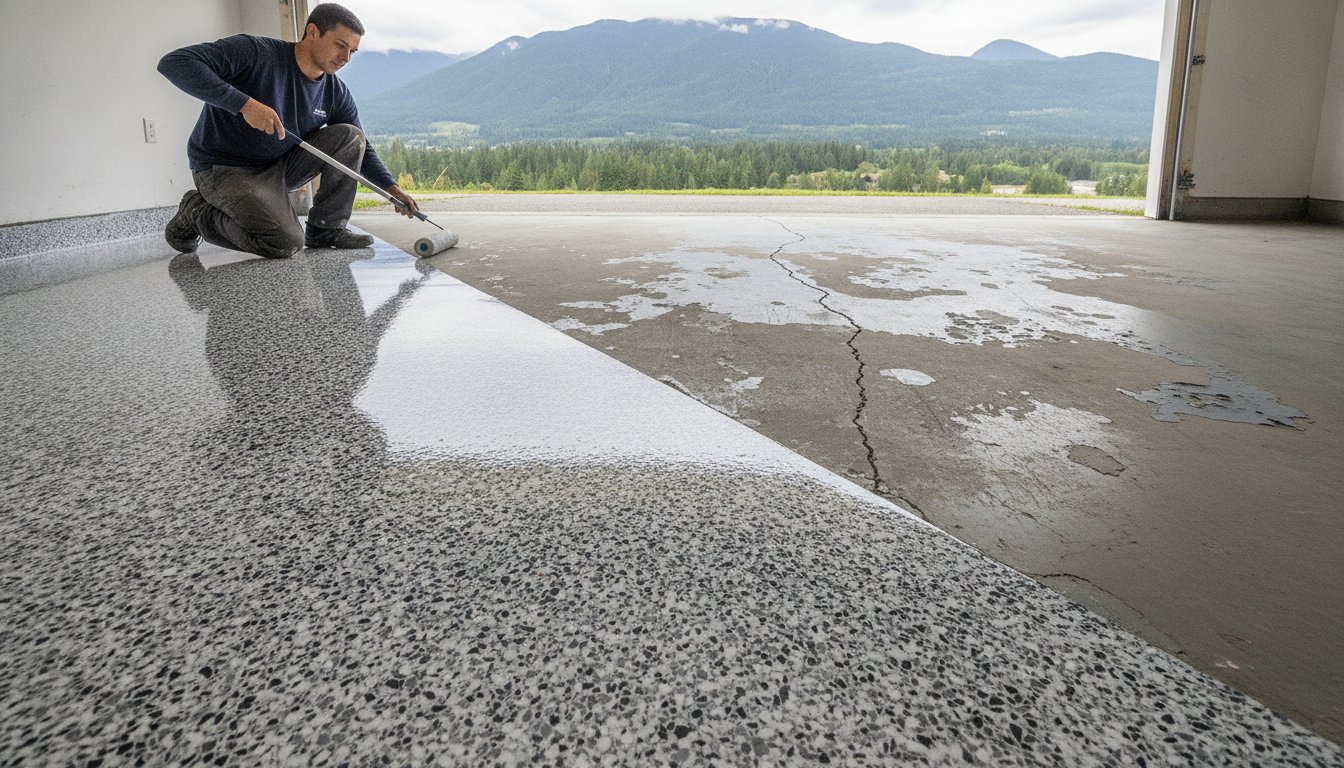
That unsightly, peeling mess on your garage floor isn't actually a sign of a low-quality paint; it's the inevitable result of a surface that was never technically prepared to bond. Many homeowners across the Fraser Valley have experienced the frustration of a DIY kit failing within a single season, leaving behind a floor that looks worse than the original concrete. If you're tired of watching your investment flake away and tracking grey debris into your home, you're not alone. This guide to professional garage floor recoating in Chilliwack explains exactly why these failures occur and how a meticulous, industrial-grade approach can transform your space.
Understanding the science of adhesion is the first step toward a permanent solution. You'll discover how the damp BC climate and moisture vapour contribute to delamination, and why professional diamond grinding is the only way to ensure a lifetime bond. We will walk through the specific steps required to achieve a durable, hot-tire resistant finish that remains maintenance-free for years. By the end of this article, you'll have a clear roadmap to a garage floor that balances high-end aesthetic appeal with the technical resilience required for our local environment.
Key Takeaways
- Identify the technical causes of delamination and hot-tire lift to prevent repeating the common mistakes of failed DIY installations.
- Master simple diagnostic techniques like the "tape test" to evaluate the integrity of your existing coating and the underlying concrete laitance.
- Learn why successful garage floor recoating in Chilliwack necessitates mechanical diamond grinding to ensure a permanent bond between the substrate and the new resinous system.
- Explore the functional benefits of polyaspartic topcoats and decorative flake systems designed to handle the Fraser Valley's unique temperature swings and moisture levels.
- Understand how specialized moisture vapour barriers provide a critical line of defence against peeling in the damp British Columbia climate.
Table of Contents
Why Garage Floor Coatings Peel: The Fraser Valley Context
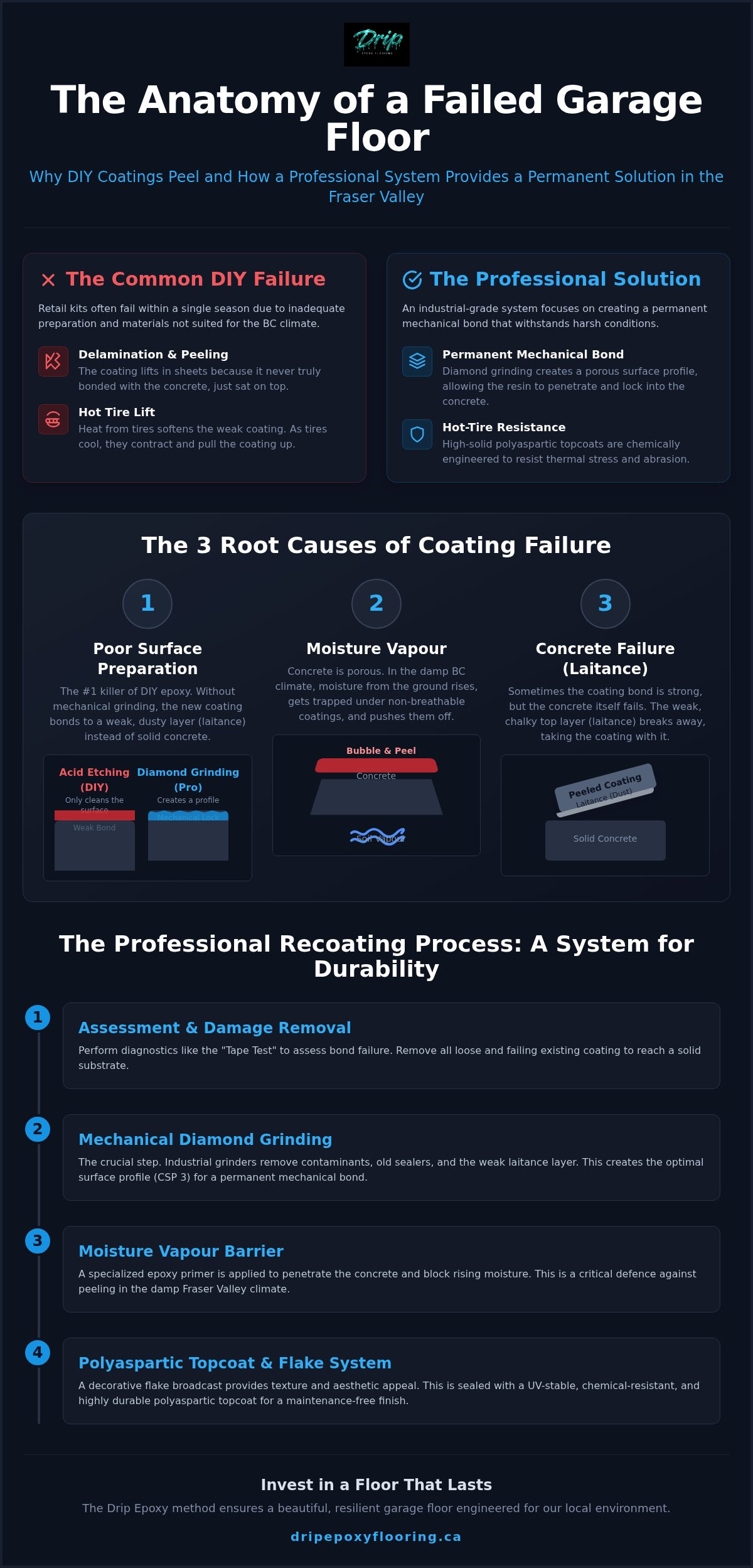
Delamination is the technical term for the total separation of a coating from its concrete substrate. In many residential garages, this isn't a slow process of wear but a sudden, structural failure where the material lifts in brittle sheets or large flakes. This is particularly common during projects involving garage floor recoating in Chilliwack, where previous DIY attempts often ignored the underlying physics of the concrete slab. Without a sophisticated bond, the coating simply sits on the surface rather than becoming part of the floor itself.
The environmental conditions in the Fraser Valley act as a relentless catalyst for these failures. Our high water table and frequent precipitation create a high-moisture environment that constantly tests the integrity of your floor. While a retail-grade paint might look sufficient upon application, it lacks the industrial-grade resilience to withstand the hydrostatic pressure and temperature fluctuations common in British Columbia. Successful garage floor recoating in Chilliwack relies on moving beyond topical adhesion to create a permanent mechanical bond.
Hot tire lift is perhaps the most frustrating symptom for local drivers. As you drive from Highway 1 to your driveway, your tires accumulate significant thermal energy. When you park on an inferior coating, the heat softens the material; as the tires cool, they contract and literally grab the floor, pulling it up as you pull out of the garage. This happens because the fundamental chemistry of the epoxy resins used in budget kits cannot maintain their bond under such localized thermal stress.
The Role of Moisture Vapour in Floor Failure
Concrete is inherently porous, functioning much like a hard sponge that draws moisture from the damp soil beneath your home. This ground moisture travels upward through the slab as vapour. If your floor is sealed with a low-quality product, this rising vapour becomes trapped, building pressure until the coating bubbles and snaps. Many unsealed floors in BC experience "sweating" during humid months, which is a clear indicator that the slab requires specialized moisture vapour barriers to prevent future delamination and ensure a long-term result.
Poor Surface Preparation: The #1 Killer of DIY Epoxy
Most failed floors share a common history: the reliance on acid etching. While hardware store kits suggest a quick chemical wash is enough, this method only cleans the surface without creating the necessary profile for a professional-grade system. True durability requires mechanical profiling, which involves grinding the concrete to open the pores and remove contaminants. Residual oils and road salts, which are ubiquitous in Chilliwack garages after a typical winter, will inevitably prevent a new coating from bonding if they aren't professionally removed. We prioritize diamond grinding for several reasons:
- Contaminant Removal: It strips away deep-seated oils, old sealers, and road salts that chemicals cannot reach.
- Mechanical Anchor: It creates a rough texture, often compared to a "sandpaper" finish, that allows the resin to root itself deep within the concrete.
- Laitance Elimination: It removes the weak, dusty top layer of concrete that naturally forms during the original pour.
Without this level of preparation, any new layer is merely resting on a foundation of dust and debris, destined to fail when the next temperature swing or heavy vehicle enters the space.
Assessing the Damage: Can Your Peeling Floor Be Saved?
Before committing to a garage floor recoating in Chilliwack, you must determine if the current failure is localized or symptomatic of a total system collapse. A simple but effective diagnostic tool is the "Tape Test." By applying a strip of high-tack duct tape to a seemingly healthy area and pulling it back sharply, you can observe if the coating remains intact. If the tape comes away with flakes of paint or a powdery residue, the adhesion has failed globally, and a simple patch will not suffice.
Identifying "laitance" is equally critical to your assessment. This is a weak, milky layer of cement and sand that rises to the surface during the original concrete pour. If your peeling coating has a thin layer of concrete dust attached to its underside, it means the epoxy didn't fail; the concrete itself did. Inadequate mechanical preparation remains the most common reason for coating failure, as the resin simply bonds to this brittle top layer instead of the solid slab beneath.
The Problem with Spot-Fixing Peeling Epoxy
Attempting to paint over a peeling section is a temporary "band-aid" that often leads to aesthetic and functional disappointment. The new material will rarely bond seamlessly with the old edges, a phenomenon known as "telegraphing" where the outline of the original damage remains visible through the topcoat. Additionally, mismatched cure times and chemical compositions between old DIY kits and new products can lead to further cracking. For a uniform, high-performance result, removing the failed system entirely is usually the only professional path forward.
Determining Concrete Integrity
A successful recoat depends on the hardness and porosity of the substrate. We evaluate whether previous sealer residues are present, as these invisible barriers can block new resins from penetrating the concrete. Structural integrity is also a factor; while surface crazing is often cosmetic, wide or deep cracks may suggest shifting that requires more than a standard coating. You can consult our concrete crack repair guide to better understand if your floor needs structural stabilization before the aesthetic work begins. If you are unsure about the state of your slab, you can request a professional assessment to ensure your next garage floor recoating in Chilliwack is built on a sound foundation.
The Professional Recoating Process: A Step-by-Step Guide
Professional garage floor recoating in Chilliwack requires a methodical, industrial approach that far exceeds the capabilities of residential cleaning tools. The process begins with the complete mechanical removal of the existing, failed coating. We don't use chemical strippers, as they often leave behind oily residues that can jeopardize the new system's adhesion. Instead, we utilize heavy-duty equipment to strip the concrete back to its raw, uncontaminated state.
Once the old material is gone, we transition to concrete profiling using industrial diamond grinders. This step removes the weak laitance and levels out minor surface irregularities. Following the grind, any pits, cracks, or spalled areas are repaired using high-strength epoxy fortifiers. These materials bond chemically with the concrete, creating a flush, seamless surface. The final foundational step is the application of a moisture-tolerant primer or vapour barrier, which acts as a shield against the hydrostatic pressure common in the Fraser Valley.
Why Diamond Grinding is Non-Negotiable
The success of a resinous floor depends on the Concrete Surface Profile (CSP), a standard developed by the International Concrete Repair Institute. Most high-performance systems require a CSP of 2 or 3, which feels like medium-grit sandpaper to the touch. Diamond grinding is the industry standard for professional floor preparation. This mechanical process effectively "opens the pores" of the concrete slab, creating microscopic "teeth" that allow the primer to penetrate and lock into the substrate. Without this mechanical profile, the coating merely sits on top of the concrete, making it susceptible to the peeling and lifting issues that plague DIY projects.
Dust-Free Preparation in Residential Garages
A common concern for homeowners is the mess associated with industrial grinding. We address this through the use of high-capacity, HEPA-filtered vacuum systems that are connected directly to our grinders. This setup captures 99.97% of airborne particles, ensuring that your garage walls, ceiling, and adjacent interior spaces remain free from concrete dust. Our team takes additional precautions to protect your home's exterior and any remaining belongings, ensuring that your garage floor recoating in Chilliwack is a clean and professional experience from start to finish. For a deeper look at why this foundation is so critical, you can explore our concrete floor preparation pillar.
Choosing a Coating System That Won’t Peel Again
After addressing the mechanical preparation, the choice of material determines the longevity of your investment. Unlike the thin, brittle resins found in retail kits, industrial-grade systems are engineered for resilience. A Decorative Flake System is often the superior choice for a garage floor recoating in Chilliwack because the multi-layered application effectively masks minor concrete imperfections while providing an exceptionally durable wear surface. These systems utilize a dense broadcast of vinyl chips that add both structural integrity and a sophisticated texture to the finished floor.
In the Fraser Valley, your floor must endure more than just vehicle weight. Road salts used on Chilliwack's winter roads and leaked automotive fluids can chemically attack inferior paints, causing them to soften and lift. Professional polyaspartic and epoxy systems offer high chemical resistance, ensuring that salt brine and oil won't compromise the bond. Additionally, UV stability is a critical factor for garages with windows or those frequently left open; industrial topcoats won't amber or chalk under the intense summer sun, ensuring your garage floor recoating in Chilliwack maintains its premium appearance for years.
Polyaspartic: The 24-Hour Solution for BC Homeowners
Polyaspartic coatings represent a significant advancement over traditional epoxy for residential applications. These systems offer rapid cure times, allowing homeowners to return their vehicles to the garage just 24 hours after application. Beyond speed, polyaspartic is notably more flexible than brittle DIY alternatives. This flexibility allows the coating to expand and contract with the concrete during BC's seasonal temperature swings without cracking or losing adhesion. The result is a permanent "wet look" finish that remains crystal clear and peel-proof even under heavy daily use.
Metallic Epoxy for a High-End Showroom Finish
For those seeking a more bespoke aesthetic, metallic epoxy provides a unique, marbled finish that mimics the look of natural stone. These systems utilize multi-layered resinous applications to create depth and movement, making them a popular choice for luxury car galleries or high-end residential spaces. While the finish appears glass-like, we integrate slip-resistant additives to ensure the floor remains safe even during our frequent rainy periods. This balance of industrial luxury ensures your garage is as functional as it is visually striking. If you're ready to upgrade to a system that handles the unique demands of our local climate, request a professional quote for your project today.
Expert Recoating Services in Chilliwack: The Drip Epoxy Method
Drip Epoxy operates on the principle that a successful garage floor recoating in Chilliwack is only as reliable as the preparation beneath it. Our "Prep-First" commitment is a technical mandate that dictates every project we undertake. We recognize that the Fraser Valley's climate presents unique challenges, specifically the dramatic temperature fluctuations that occur between our humid winters and dry, hot summers. Our systems are meticulously customized to remain flexible during these cycles, ensuring that the chemical bond remains intact where standard retail products would fail.
Serving the Entire Fraser Valley and Lower Mainland
Our team provides specialized service throughout the Fraser Valley, focusing on the communities of Chilliwack, Abbotsford, and Langley. We have encountered virtually every type of local concrete slab, from the older, moisture-prone pours in rural neighbourhoods to the dense, modern slabs in new residential developments. This localized expertise allows us to calibrate our diamond grinding equipment and resin selections to the specific porosity and age of your floor. Such precision ensures that the foundation is perfectly profiled before a single drop of resin is applied. If you're ready to resolve your flooring issues permanently, you can contact Drip Epoxy for a free quote.
Commercial Grade Quality for Your Home
Maintaining a strict standard of quality means we use the same industrial-grade materials for residential garages as we do for our industrial facilities. There's no "residential grade" in our inventory because your home requires the same chemical resistance and durability as a warehouse or aircraft hangar. The long-term ROI of this professional approach is undeniable. While a weekend DIY project carries the risk of recurring failure and wasted capital, a professionally installed system offers a maintenance-free life cycle backed by technical expertise. We specialize in transforming failed, peeling floors into spaces of "Industrial Luxury" that balance extreme durability with a high-end aesthetic. This professional recoating advantage provides a permanent, peel-proof finish that finally handles the demands of the BC climate.
Secure a Permanent, High-Performance Finish
A peeling floor represents more than a failed weekend project; it's a technical challenge that requires a professional-grade solution. By addressing the root causes of delamination through industrial-grade diamond grinding, you ensure your next garage floor recoating in Chilliwack becomes a permanent part of the concrete substrate. Transitioning to high-performance polyaspartic systems provides the resilience and UV stability necessary to handle the damp, variable climate of the Fraser Valley. These systems offer a level of durability that retail kits simply cannot replicate, transforming a dusty workspace into a sophisticated, maintenance-free environment.
Our commitment to quality as a locally owned provider means we utilize the same heavy-duty equipment and premium resins for your home as we do for industrial facilities. We don't settle for surface-level fixes; we build floors designed for a lifetime of heavy use. If you're ready to invest in a durable, aesthetic transformation, you can Request Your Free Garage Floor Recoating Quote in Chilliwack. It's time to stop worrying about peeling paint and start enjoying a floor that is as resilient as it is beautiful.
Frequently Asked Questions
Can I just sand the peeling spots and paint over them?
No, this approach is a temporary fix that fails to address the systemic adhesion issues of the original slab. Sanding creates a localized patch that will eventually lift at the seams where it meets the old, compromised coating. Professional garage floor recoating in Chilliwack requires removing the failed system entirely via diamond grinding to ensure the new resin can penetrate the concrete pores for a permanent, structural bond.
How long does a professional garage floor recoating take to install?
Most professional installations take two days to complete, though certain high-performance polyaspartic systems allow for a one-day turnaround. The first day focuses on mechanical preparation and the base coat application, while the second day involves the decorative broadcast and final topcoats. You can typically return light foot traffic within hours, while vehicles usually require 24 to 48 hours to ensure the chemical bond has fully matured.
Why did my previous DIY epoxy floor peel after only one winter?
DIY failures often stem from inadequate surface preparation and the low solids content of retail kits. Acid etching doesn't open the concrete pores as effectively as diamond grinding, leaving a weak bond that can't withstand hot tire lift or Fraser Valley road salts. When moisture vapour rises through the slab during a damp BC winter, it builds pressure under the brittle coating, causing it to delaminate and flake away.
Is it possible to recoat a garage floor in the winter in Chilliwack?
Recoating can proceed during a Chilliwack winter provided the garage is enclosed and the concrete temperature remains within the specific range required for the chosen resin. Polyaspartic coatings are particularly effective for winter projects because they cure reliably in much lower temperatures than standard epoxy. We use specialized equipment to monitor slab temperature and moisture levels, ensuring the environmental conditions support a successful, long-lasting installation regardless of the season.
Do I need a moisture vapour barrier if my garage floor is always dry?
Yes, a moisture vapour barrier is essential even if the surface appears dry to the touch. Concrete is naturally porous and acts like a hard sponge, drawing vapour from the damp soil beneath the garage. This invisible moisture migrates upward and can build significant hydrostatic pressure beneath a non-breathable coating. Without a barrier, this pressure eventually forces the coating to bubble and peel, especially in the high-moisture climate of the Fraser Valley.
What is the difference between professional epoxy and the kits sold in big-box stores?
The primary difference lies in the chemical composition and solids content. Big-box store kits are often water-based with low solids, resulting in a thin, brittle film that wears quickly. Industrial-grade systems used by professionals are 100% solids resins that create a much thicker, more flexible, and resilient wear surface. Professional systems also require mechanical diamond grinding, whereas DIY kits rely on inferior chemical etching that leads to frequent adhesion failure.
How do I clean a newly recoated garage floor to keep it from peeling?
Maintaining your new floor is simple and doesn't require harsh chemicals. Regular sweeping to remove abrasive road salt and debris is the most important step. For a deeper clean, use a soft foam squeegee and a pH-neutral cleaner mixed with water. Avoid using wax or citrus-based cleaners, as these can leave a residue that dulls the finish. A professionally installed floor won't peel from cleaning; it's designed to withstand frequent washing.
Can polyaspartic coatings be applied over old epoxy?
Polyaspartic can technically be applied over existing coatings, but we generally recommend a complete mechanical removal of the old material. If the underlying epoxy is already peeling or was poorly bonded, the new topcoat will fail along with it. For a successful garage floor recoating in Chilliwack, our team uses diamond grinders to strip the slab back to raw concrete, ensuring the new polyaspartic system forms a direct, permanent bond with the substrate.