brewery floor coatings fraser valley · 14 min read ·
Brewery Floor Coatings in the Fraser Valley: The Industrial Luxury Guide
Can a floor really be both a chemical-resistant workhorse and a high-end design feature that defines your brand? Most owners looking for brewery floor coatings in the Fraser Valley realize that the production floor is th
By Drip Epoxy Flooring · Chilliwack, BC
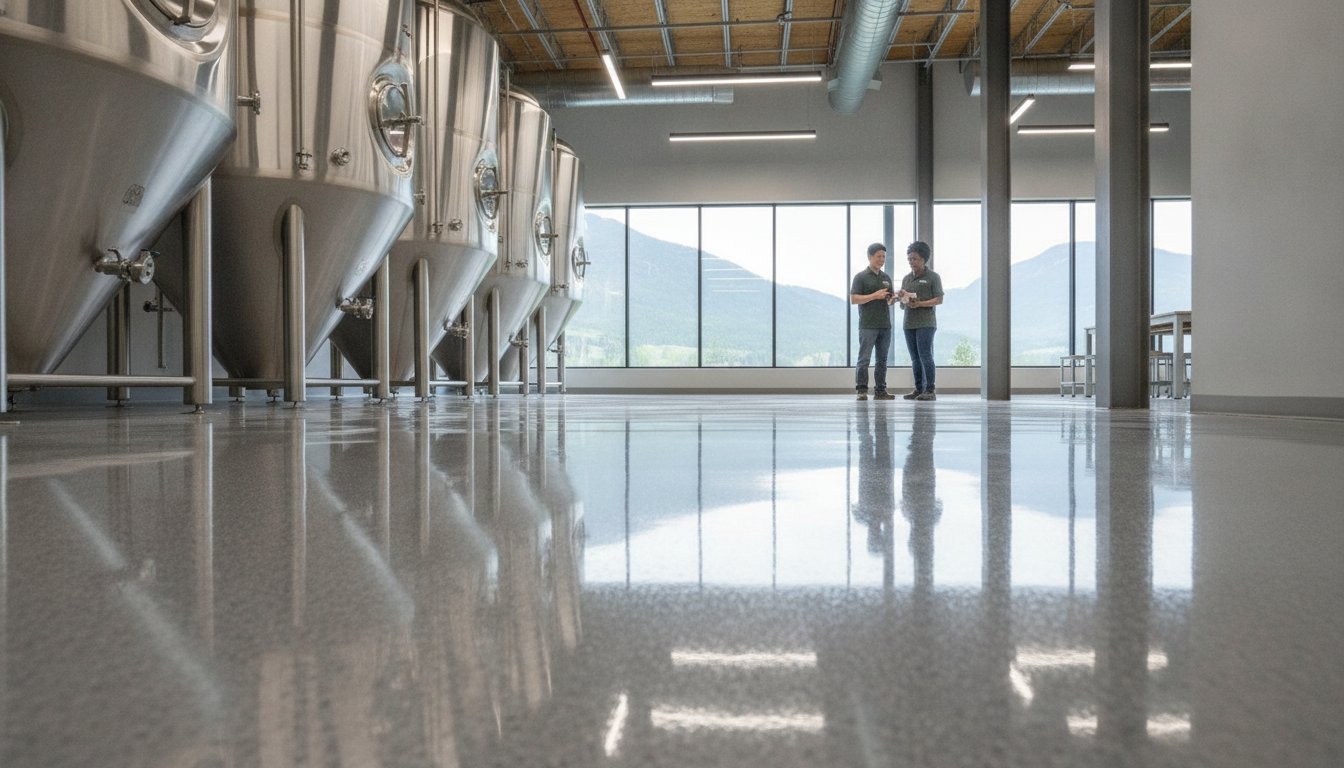
Can a floor really be both a chemical-resistant workhorse and a high-end design feature that defines your brand? Most owners looking for brewery floor coatings in the Fraser Valley realize that the production floor is the most abused surface in their facility. You've likely seen the consequences of a poor installation: peeling coatings caused by thermal shock, slippery surfaces that compromise safety, or unsightly acid damage from fermentation byproducts. It's a frustrating reality that often leads to expensive downtime and constant repairs.
We believe you shouldn't have to choose between industrial durability and aesthetic appeal. This guide will show you how to select and install high-performance systems that withstand the harshest conditions. You'll discover how a "Dual-System Strategy" using polyaspartic and quartz can provide a CFIA-compliant, slip-resistant finish that survives ten or more years of heavy use. We'll preview the essential role of meticulous diamond grinding and how specialized systems can protect your investment while creating an "industrial luxury" look that elevates your taproom's brand.
Key Takeaways
- Realize how a dual-system strategy optimizes your investment by separating high-impact production zones from decorative customer-facing areas.
- Understand why urethane cement serves as the essential foundation for resisting thermal shock and heavy equipment impact in active brewhouses.
- Identify the specific requirements for brewery floor coatings in the Fraser Valley to ensure your facility remains CFIA-compliant and slip-resistant.
- Recognize why professional mechanical diamond grinding is the critical factor in preventing premature coating failure and peeling.
- Discover how to balance industrial-grade durability with a premium aesthetic that elevates your brand’s presence in the tasting room.
Table of Contents
- Why Brewery Floor Coatings in the Fraser Valley Demand More Than Standard Epoxy
- The Science of High-Performance Brewery Systems: Polyaspartic and Urethane Cement
- Selecting the Right System for Every Brewery Zone
- Professional Installation: The Critical Role of Preparation and Coving
- Partnering with Drip Epoxy Flooring for Your Fraser Valley Brewery
Why Brewery Floor Coatings in the Fraser Valley Demand More Than Standard Epoxy
The brewing environment in British Columbia is one of the most punishing industrial settings for any floor. While a standard residential coating might look appealing initially, it lacks the chemical resilience required for a professional brewhouse. Selecting brewery floor coatings fraser valley means accounting for a cocktail of abrasive factors. Constant moisture, heavy keg traffic, and the frequent use of caustic cleaning agents quickly degrade inferior materials. In our local climate, high humidity and fluctuating concrete moisture levels in the Fraser Valley add another layer of complexity. Without meticulous mechanical preparation, even premium materials risk delamination.
Standard epoxy resins are often too brittle to handle the rapid expansion and contraction of concrete during a brew day. This is why we advocate for an "Industrial Luxury" standard. It's a philosophy that prioritizes technical precision and longevity without sacrificing the high-end aesthetic your taproom brand demands. By choosing industrial floor coatings designed for these specific loads, you protect your infrastructure from the ground up.
The Chemical and Thermal Reality of BC Craft Brewing
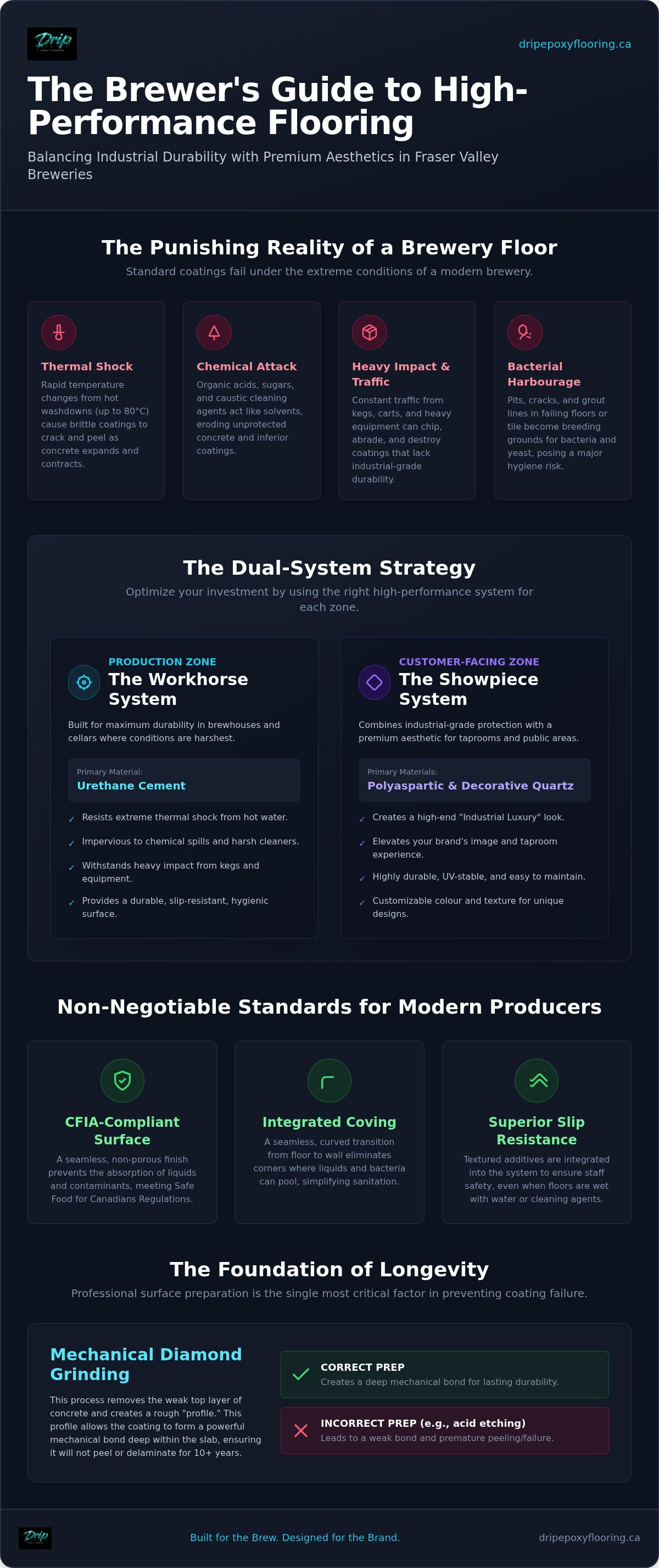
Professional brewing involves aggressive organic acids and sugars that act as slow-motion solvents on unprotected concrete. Carbonation acids and leftover mash can erode the substrate, creating pits where bacteria thrive. The most significant threat, however, is the daily cleaning cycle. When you blast a cold floor with 80°C water during a washdown, the concrete and the coating expand at different rates. Thermal shock is the primary cause of floor delamination in breweries. Without a specialized system like urethane cement or polyaspartic that is designed to move with the substrate, the coating will inevitably crack and peel under the pressure of rapid temperature shifts.
Compliance and Hygiene Standards for Local Producers
Meeting the Safe Food for Canadians Regulations (SFCR) is a non-negotiable requirement for modern producers. The Canadian Food Inspection Agency (CFIA) no longer pre-approves specific products; instead, it places the responsibility on the brewery operator to ensure their brewery floor coatings fraser valley are suitable for food-safe production. A seamless system is essential because it eliminates the grout lines found in traditional tile. These joints often act as reservoirs for yeast and bacteria harbourage. Choosing commercial epoxy floors with integrated coving ensures a hygienic environment that is easy to sanitize.
- Non-porous Finishes: High-performance coatings prevent the absorption of liquids and contaminants.
- Coving Integration: Creating a seamless transition between the floor and wall prevents liquid from pooling in corners.
- Slip Resistance: Textured additives ensure staff safety even when floors are saturated with water or cleaning agents.
By investing in a professional-grade system, you ensure your facility remains compliant with health inspections while providing a durable, hygienic foundation for your craft.
The Science of High-Performance Brewery Systems: Polyaspartic and Urethane Cement
Achieving an Industrial Luxury finish requires more than a generic topcoat. It demands a chemical bond that mirrors the resilience of the brewing equipment itself. When evaluating brewery floor coatings fraser valley, producers must distinguish between decorative aesthetics and structural integrity. A high-performance system should offer a seamless, non-porous surface that meets the most rigorous FDA food safety standards. By selecting materials like urethane cement and polyaspartic, you ensure your facility remains easily cleanable while projecting a premium brand image to every visitor who tours the brewhouse.
Urethane Cement: The Thermal Shock Workhorse
Urethane cement is the undisputed gold standard for production zones. Its unique molecular structure allows it to expand and contract at the same rate as the underlying concrete slab. This characteristic is vital in Fraser Valley breweries where floors are frequently exposed to boiling water during kettle cycles. Unlike brittle coatings that snap under temperature shifts, urethane cement absorbs the energy. It also provides exceptional impact resistance. When a full 50-litre keg is dropped, a thick cementitious system prevents the concrete from cracking or spalling. It's a foundational layer that protects your infrastructure for decades.
Polyaspartic Technology for Rapid Return-to-Service
Polyaspartic technology offers a sophisticated solution for breweries that cannot afford lengthy shutdowns. While traditional epoxy systems may require several days to fully cure, polyaspartic coatings reach full traffic capacity in a matter of hours. Local producers often prefer this for maintenance or taproom upgrades because it minimizes operational downtime. Beyond speed, polyaspartic is highly UV stable. This ensures your floors won't yellow or degrade near large roll-up bay doors or windows. It maintains its clarity and colour even under constant exposure to natural light, preserving that high-end look.
For wet zones where slip resistance is paramount, we often recommend quartz-reinforced systems. These involve broadcasting industrial-grade quartz into the coating to create a permanent, textured profile. This added grip is essential for safety in fermentation areas where water and yeast slurry are common. If you're unsure which material fits your specific layout, you can request a technical assessment to determine the best approach for your facility. Every square foot of brewery floor coatings fraser valley should be engineered to handle the specific mechanical and chemical loads of its zone.
Selecting the Right System for Every Brewery Zone
A strategic approach to brewery floor coatings fraser valley involves more than just selecting a durable material; it requires a tiered zoning strategy. Your facility isn't a monolith. Every area faces unique mechanical and chemical stresses. By categorizing zones, you can optimize your flooring investment while ensuring every square foot performs as intended. This ensures you aren't overspending on decorative finishes in the brewhouse or under-specifying durability in high-traffic retail areas.
Production Zones: Heavy-Duty Quartz and Urethane
The production floor is the most aggressive environment in your facility. Constant moisture, yeast slurries, and chemical washdowns require a surface that prioritizes safety and resilience. Industrial Epoxy Flooring Chilliwack specialists often recommend quartz-reinforced systems for these wet zones. The embedded quartz aggregate provides a permanent, high-traction profile that exceeds the requirements for nonabsorbent and easily cleanable surfaces.
These systems must be engineered to interact seamlessly with your stainless steel drainage. A properly sloped floor ensures that liquids move efficiently toward the drains, preventing the pooling that leads to bacterial growth. This meticulous attention to detail is essential for maintaining FDA food safety standards. In these areas, we prioritize a functional, matte or satin finish that can withstand the daily rigours of brewing without failing at the seams.
Taprooms and Tasting Rooms: Marrying Durability with Design
Your taproom is the face of your brand, where the "Industrial Luxury" aesthetic becomes a critical part of the customer experience. For these guest-facing areas, Metallic Epoxy Flooring offers a high-end, custom look that mimics the depth of natural stone or flowing water. While the visual appeal is paramount, these floors still require the same professional-grade durability found in the back of the house. They must resist spilled pints, heavy furniture movement, and constant foot traffic without losing their lustre.
Decorative flake systems provide another modern, easy-to-clean alternative for retail environments. These systems offer a balanced texture that provides slip resistance for customers while maintaining a sophisticated finish. By utilizing polyaspartic topcoats in these zones, we achieve a high-gloss look that remains UV stable and resistant to the yellowing often caused by large storefront windows or bay doors.
Packaging lines and cold storage areas demand a final, specific focus. These zones must balance slip resistance in cold, damp conditions with the extreme compressive strength required for heavy forklift traffic and pallet storage. Utilizing a solid-colour industrial coating with a specific grit additive ensures your team remains safe while the floor survives the constant impact of heavy kegs and machinery.
Professional Installation: The Critical Role of Preparation and Coving
The longevity of your flooring investment depends almost entirely on the work performed before the first litre of resin is poured. It's a stark reality in the industrial sector that 90% of brewery floor failures are caused by poor surface preparation rather than material defects. When installing brewery floor coatings fraser valley, cutting corners during the foundational phase leads to delamination, bubbling, and premature wear. We treat preparation as a surgical process, ensuring the concrete substrate is perfectly primed to accept the high-performance system. This meticulous approach is what separates a temporary fix from a ten-year industrial luxury floor.
Mechanical Diamond Grinding and Moisture Mitigation
Many general contractors suggest "acid washing" as a preparation method, but this is insufficient for the heavy mechanical loads of a brewery. We utilize professional concrete surface preparation services that center on mechanical diamond grinding. This process physically removes the "laitance" or weak top layer of the concrete, opening the pores to create a mechanical profile for the coating to bond with.
In the Fraser Valley, managing moisture vapour is a non-negotiable step. Our damp BC climate and high water tables mean that concrete slabs often hold significant internal moisture. Before any application begins, we test the concrete for moisture content. If levels are high, we install a specialized moisture vapour barrier. This prevents hydrostatic pressure from pushing the coating off the slab, a common cause of peeling in local facilities that skip this technical assessment.
Integrated Coving and Slope-to-Drain Solutions
The secret to a truly hygienic, easy-to-wash brewery lies in the details of the perimeter. An integral cove base is a seamless transition where the floor coating continues up the wall, usually by 4 to 6 inches. Health inspectors look for this feature because it eliminates the 90-degree corner where bacteria, yeast, and old wash water tend to collect. By creating a smooth, radiused curve, you ensure that every drop of water from your daily washdowns has nowhere to hide.
Professional installation also involves correcting minor floor imperfections to ensure proper drainage. We analyze the existing slab to identify low spots where liquids might pool. By strategically applying the coating system, we can often improve the slope-to-drain efficiency, ensuring all liquids head straight for your stainless steel drains. This level of precision ensures your facility remains dry, safe, and compliant with the highest sanitation standards. If you are ready to secure your facility's foundation, you can get a professional quote for your brewery project today.
Partnering with Drip Epoxy Flooring for Your Fraser Valley Brewery
Drip Epoxy Flooring understands that a brewery is a significant capital investment where every square foot must perform under pressure. We provide specialized brewery floor coatings fraser valley that bridge the gap between heavy-duty industrial performance and high-end design. Our approach centers on the philosophy of "Industrial Luxury," ensuring that your production environment remains a resilient workhorse while your tasting room serves as a sophisticated brand showcase. We don't just offer a service; we act as a technical guide to help you navigate the complexities of industrial resins and concrete preparation.
Locally Owned Expertise from Chilliwack to Langley
Being locally owned and operated in Chilliwack gives us a distinct advantage in understanding the regional industrial landscape. We realize that BC's unique climate requires specific moisture mitigation strategies that generic contractors often overlook. Our commitment to using premium materials ensures your floor survives the high humidity and temperature fluctuations common in the Lower Mainland. We understand local regulations and the expectations of health inspectors in our communities. To ensure your project starts on a solid foundation, you can Contact Drip Epoxy Flooring to schedule a comprehensive site visit and technical evaluation.
The Drip Guarantee: Precision, Durability, and Style
We manage the entire lifecycle of your flooring project, from the initial mechanical diamond grinding to the final application of UV-stable topcoats. Our strategic scheduling focuses on minimizing downtime, which we achieve through the use of fast-cure polyaspartic systems. This technology allows us to return your facility to service in hours rather than days, ensuring your production schedule remains on track. We also offer extensive customization options to match your floor's colour and texture to your brewery's specific brand identity, creating a cohesive look from the brewhouse to the tasting room.
Our portfolio of Commercial Epoxy Floors demonstrates our ability to handle complex installations in high-pressure environments. When selecting brewery floor coatings fraser valley, you deserve a partner who understands both the science of adhesion and the art of branding. We don't just apply a coating; we engineer a system that supports your operations for the long term. By choosing a partner who values craftsmanship and technical precision, you transform your facility into a high-performance showpiece that reflects the quality of the beer you produce. It's time to invest in a floor that works as hard as your brew team while providing the industrial luxury your guests expect.
Secure the Foundation of Your Craft
Protecting your brewery requires a strategic balance between heavy-duty resilience and premium design. By implementing a dual-system approach that utilizes thermal-shock resistant urethane cement in production areas and high-performance polyaspartic in taprooms, you ensure long-term durability without compromising on style. Success in this environment depends on precise mechanical preparation and moisture mitigation, which prevents the delamination and peeling that plague inferior installations.
As a locally owned and operated specialist in Chilliwack, Drip Epoxy Flooring understands the technical demands of brewery floor coatings fraser valley. We combine expert diamond grinding with industrial luxury finishes to create surfaces that are as beautiful as they are functional. Our team is committed to delivering precision-engineered solutions that meet strict health standards and reflect the quality of your brand. It's an investment that secures your facility's infrastructure for the next decade of growth.
Ready to elevate your facility with a high-performance showpiece? Request a Free Brewery Floor Site Visit & Quote today. We look forward to helping you build a safer, more durable foundation for your business.
Frequently Asked Questions
How long does a brewery floor coating installation take to cure?
Cure times vary by system, but polyaspartic coatings allow for a return to service in as little as 24 hours. While traditional systems may take several days to reach full chemical resistance, these fast-cure technologies minimize operational downtime significantly. It's essential to allow the material to reach its full Shore D hardness before moving heavy equipment or kegs back onto the surface to prevent indentations or surface marring.
Can brewery floor coatings be applied over existing, damaged concrete?
Professional systems are designed to rehabilitate compromised slabs through meticulous mechanical preparation. We use diamond grinding to remove contaminated layers and open the concrete pores for maximum adhesion. Deep cracks, pits, or spalled areas are filled with high-strength industrial polymers before the primary coating is applied. This ensures the final brewery floor coatings fraser valley have a level, structurally sound foundation that prevents future moisture-related failures.
Are these floor systems slip-resistant when covered in water or beer?
Slip resistance is achieved by broadcasting specialized aggregates, such as quartz or aluminum oxide, into the wet coating. These additives create a permanent texture that provides traction even when the surface is saturated with liquid or yeast slurry. We customize the grit level based on the specific zone, ensuring that production areas have aggressive grip while tasting rooms maintain a balance between safety and an easy-to-clean high-end aesthetic.
What is the difference between urethane cement and standard epoxy for breweries?
Urethane cement is engineered specifically to handle thermal shock, which is the rapid temperature change caused by hot washdowns. Standard epoxy is often too brittle and may delaminate when the concrete expands and contracts at a different rate than the coating. Urethane cement has a thermal expansion coefficient similar to concrete, making it the superior choice for brewhouses. It also offers enhanced resistance to the organic acids found in beer production.
Does my brewery floor need to be CFIA compliant?
Modern regulations require brewery operators to ensure all construction materials are suitable for their intended use in food-grade environments. While the CFIA no longer pre-approves specific brands, your flooring must be non-absorbent, seamless, and durable enough to withstand repeated sanitization. Our systems are designed to meet these performance-based standards, providing a hygienic surface that prevents the harbourage of bacteria and yeast in production zones.
How do I clean and maintain my new brewery floor coating?
Maintenance involves regular rinsing with warm water and a pH-neutral industrial cleaner to remove sugars and organic residue. Because the surface is non-porous and seamless, dirt and contaminants cannot penetrate the substrate. We recommend using soft-bristled brushes or automatic scrubbers for larger areas. Avoiding abrasive metal tools and ensuring that caustic chemicals are rinsed promptly will help preserve the high-performance finish and industrial luxury aesthetic for over a decade.
Can you install floor coatings in cold storage or walk-in coolers?
Specialized low-temperature resins allow for installation in refrigerated environments without compromising the chemical bond. These systems are designed to cure in temperatures as low as zero degrees Celsius, making them ideal for walk-in coolers and cold storage zones. The resulting finish provides the necessary slip resistance and durability to handle the constant movement of heavy kegs and pallet jacks in damp, cold conditions typical of Fraser Valley facilities.
Why is coving important for a brewery floor?
Coving creates a seamless, radiused transition between the floor and the wall, eliminating the 90-degree corner where liquids and bacteria collect. This feature is critical for hygiene because it allows wash water to flow directly toward the drains rather than pooling at the perimeter. Health inspectors prioritize coved bases during audits as they facilitate more effective sanitization and prevent moisture from seeping into the wall cavity, protecting your facility's structural integrity.